Crafting Stability: Foundations for Delray Beach Custom Homes
Why the Groundwork Matters
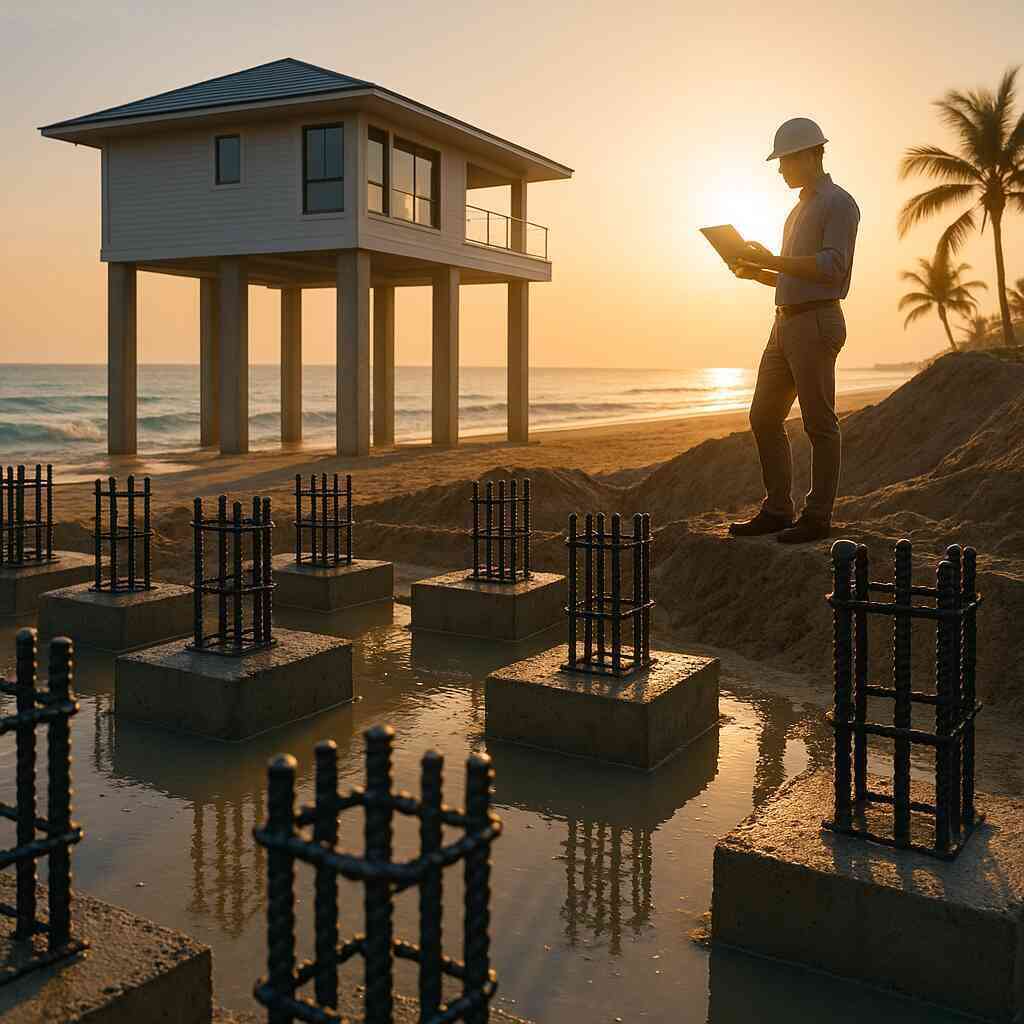
Building a custom residence on Delray Beach’s barrier island is more than an architectural exercise. The foundation must counter salt-laden air, shifting sands, a high water table, and hurricane forces that regularly top 170 mph. When the base is engineered well, everything above—marble floors, frameless windows, seamless millwork—stays in perfect alignment for decades.
Unique Coastal Challenges
- Loose, sandy soils resist compaction and can wash away during storm surge.
- Shallow groundwater threatens to weaken fresh concrete and create chronic moisture issues.
- Salt corrosion shortens the life of ordinary reinforcing steel.
- Wind-borne debris and uplift demand a continuous load path from roof ridge to footing.
Understanding these forces early ensures the project team selects the right foundation system instead of relying on one-size-fits-all slabs used farther inland.
Step 1: Read the Site Like a Map
Geotechnical Investigation
Engineers drill multiple borings across the lot, measuring bearing capacity, mapping sand lenses, and identifying any buried limestone voids that hint at sinkhole potential. A color-coded subsurface profile guides:
- Footing depth
- Pile spacing or grade-beam width
- Corrosion-resistant mix designs for concrete and rebar
Spending on soils data is often less than one percent of the total build yet prevents expensive mid-construction surprises.
Step 2: Choose the Right Foundation Type
Conventional Spread Footings
Suitable when borings confirm dense sand or limestone within a few feet. Wider footings distribute loads and include epoxy-coated rebar to fight salt.
Post-Tensioned Slab
High-strength cables compress the slab, minimizing cracking on expansive or uneven soils. Plastic sheeting plus an under-slab drainage mat protect against vapor.
Augered Cast-In-Place (ACIP) Piles
Where loose sand extends deep, ACIP piles drill below the scour zone, then fill with grout and steel. A grade beam ties piles together, creating a rigid platform above any shifting soil.
Helical Piers for Retrofits
For additions planned years after move-in, pre-installing helical pier connectors allows future loads to bypass the original footing without demolition.
Step 3: Control the Water
Temporary Dewatering
Sumps and well-points lower the water table long enough for concrete to cure at full strength.
Permanent Hydrostatic Relief
Perforated pipes wrapped in geotextile sit beneath the slab, channeling groundwater to daylight or a lift station. In flood zones, stem walls often rise higher than code minimums, reducing insurance costs and keeping living space dry during king tides.
Robust Moisture Barriers
A 15-mil vapor sheet, taped seams, and turned-up edges protect hardwood flooring and prevent mold within insulation.
Step 4: Create a Continuous Load Path
Florida Building Code now treats the foundation as the start of a steel spine that climbs to the ridge. Expect:
- Stainless anchor rods embedded in footings
- Simpson tie straps at every wall stud
- Shear panels that lock rim joists to sill plates
- Roof truss clips rated for 170 mph
When uplift tries to peel the roof away, that force is transmitted safely into the ground instead of tearing through the framing.
Future-Proofing From Day One
Delray owners often plan outdoor kitchens, guest casitas, or second-story view decks even before the first concrete truck arrives. Forward-thinking builders:
- Oversize grade beams where columns may land later
- Stub out electrical conduits beneath slabs for future pools or generators
- Leave knock-outs in stem walls for elevator shafts as families age
Spending a little more on steel and conduit today avoids jack-hammering luxury finishes tomorrow.
Code, Insurance, and Budget Realities
The 2025 code cycle asks coastal foundations to withstand higher storm-surge scour depths and mandates design by a licensed structural engineer. While this adds line-item cost, insurance carriers often credit homes that exceed code through lower premiums and faster policy underwriting. Over a 30-year mortgage the savings can dwarf the upfront engineering fee.
Key Takeaways for Delray Beach Custom Homes
- A foundation is not "just concrete"; it is a site-specific defense system against water, wind, and salt.
- Soil borings and lab tests are the cheapest risk-management tools in the project.
- Pairing the correct foundation type with proactive drainage keeps interiors level, dry, and mold-free.
- Continuous load paths and corrosion-resistant materials are non-negotiable in a hurricane zone.
- Designing for future additions during initial footing work protects both property value and lifestyle flexibility.
A Delray Beach custom home can showcase glass walls, sculpted pools, and rooftop lounges only if its hidden foundation performs flawlessly. Treating that concrete, steel, and soil interface as the true masterpiece ensures coastal living feels effortless—even when the Atlantic is anything but.
What Are the Foundations of Delray Beach Custom Homes
Comments
Post a Comment