Delray Beach Custom Home Essentials: Design & Build Guide
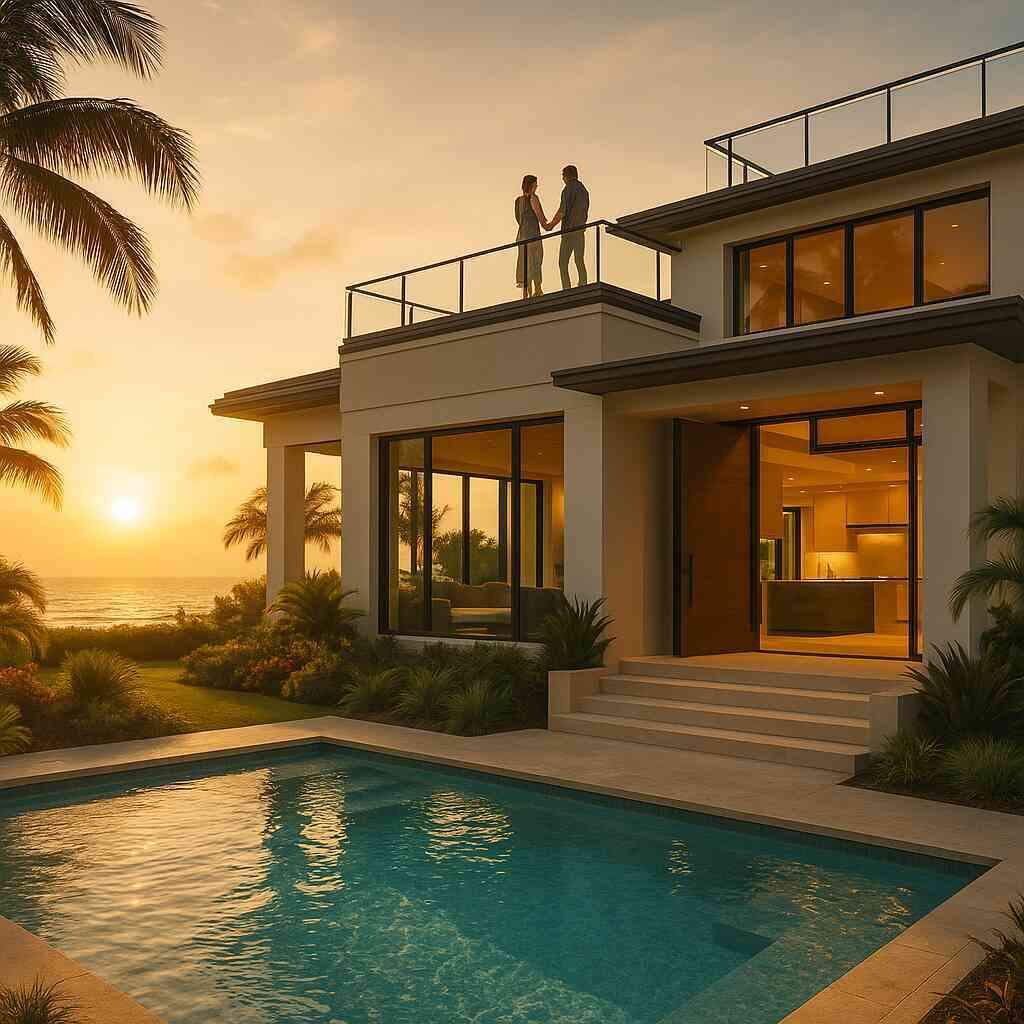
Building a Custom Home in Delray Beach
Designing a Delray Beach custom home means blending coastal beauty with materials and methods that thrive in Florida’s climate. This guide outlines the core features, design moves, and planning steps that turn an empty lot into a storm-ready, sunlight-filled retreat.
1. Start With Coastal Contemporary Concepts
Coastal contemporary remains the dominant style in 2025 because it fits how people live along the Atlantic shoreline.
- Light palettes. Soft whites, sandy taupes, and pale grays reduce glare yet keep rooms bright.
- Clean lines. Flat-panel cabinetry, oversized floor tiles, and minimal trim let ocean views take center stage.
- Organic accents. Rift-cut oak, rope lighting details, and matte brass hardware warm up modern edges.
- Sun management. Deep roof overhangs and slatted screens tame heat gain without sacrificing panorama.
A good designer considers these elements from day one so proportion, layout, and finish selections feel cohesive rather than forced.
2. Position the Home to Capture Breezes
Sea breezes arrive from the east in the afternoon and exit to the west as temperatures drop. Rotating living areas just a few degrees can funnel that natural airflow through the house and lower cooling loads.
- Align primary gathering spaces along the north–south axis.
- Place operable windows opposite each other to promote cross-ventilation.
- Use clerestory openings above sliding doors to vent rising heat.
Site orientation decisions are easiest to adjust before the slab is poured, so review wind and sun studies early.
3. Elevate for Flood Protection and Peace of Mind
Seasonal storms in Palm Beach County make a raised structure non-negotiable.
- Consult flood maps. Determine the base flood elevation and add at least one additional foot for a safety margin.
- Choose the right system. Pile, pier, or stem-wall foundations each suit different soil conditions; structural engineers can explain which delivers the best strength-to-cost ratio.
- Anchor everything. Stainless hurricane straps, threaded rod, and epoxy-set anchors connect roof to foundation in a continuous load path.
Proper elevation keeps living space, electrical panels, and HVAC equipment above surge levels, reducing downtime after a storm.
4. Specify Hurricane-Impact Openings
Impact-rated windows and doors perform two vital jobs: they resist penetration from flying debris and maintain interior pressure balance. When the envelope stays intact, the roof is far less likely to lift.
Key considerations:
- Glass type. Laminated layers sandwich a clear interlayer that holds shards in place if cracked.
- Frame strength. Aluminum or composite frames with reinforced corners prevent twisting.
- Testing standards. Verify products meet or exceed Miami-Dade or Florida Building Code protocols.
Though initial costs run higher, many insurers provide premium discounts that offset the investment within a few years.
5. Embrace Indoor–Outdoor Living
Delray’s mild winters encourage al-fresco meals and sunset lounging almost year-round. Thoughtful transitions erase the line between inside and out.
- Pocketing glass walls. Panels slide into the exterior wall for a 100-percent opening.
- Level thresholds. Recessed tracks allow wheelchairs, strollers, and bare feet to glide effortlessly.
- Covered lanais. A twelve-foot deep roofed terrace protects furniture from UV damage and afternoon showers.
- Frameless railings. Tempered glass guards upper decks without blocking the view.
Outdoor zones should include ample power, ceiling fans, and lighting controls so spaces remain usable long after sunset.
6. Choose Materials That Beat Humidity
Salt air, high humidity, and intense sun test finishes daily. Builders who specialize in Delray Beach custom homes lean on proven options:
- Standing-seam aluminum roofing resists corrosion better than galvanized steel.
- Fiber-cement cladding mimics wood but never rots or attracts termites.
- Porcelain pavers stay cool underfoot and withstand pool chemicals.
- Quartz countertops avoid the etching issues common to natural marble.
Selecting durable products up front reduces maintenance requirements and safeguards resale value.
7. Integrate Energy-Smart Systems
A well-sealed, elevated shell pairs nicely with efficient mechanical equipment.
- High-SEER heat pumps provide economical cooling and quiet operation.
- Variable-speed air handlers balance humidity for a crisp indoor feel.
- Spray-foam insulation along the roof deck keeps attic temperatures in check.
- Solar-ready conduits future-proof the home for panels when costs or incentives align.
Lower operating expenses free up budget for design splurges such as a chilled wine room or a saltwater pool.
8. Rely on a Design-Build Process
Traditional design-bid-build sequencing can create gaps between the architect’s vision and the contractor’s reality. With design-build, both functions collaborate from the outset, yielding several advantages:
- Single point of accountability. Questions get resolved faster, and change orders drop dramatically.
- Aligned budgets. Builders price concepts as they develop, so owners make informed selections rather than crossing fingers.
- Streamlined scheduling. Material lead times and trade sequencing are mapped months in advance, protecting move-in dates.
Because coastal lots often require special approvals, an integrated team keeps permitting timelines predictable.
9. Budget Benchmarks for 2025
Costs fluctuate with the market, yet most Delray Beach custom homes fall into similar ranges:
- Site prep and foundation: 15–20 % of total budget.
- Shell and envelope: 30–35 %, with impact openings a major driver.
- Interior finishes: 25–30 %, highly dependent on cabinetry and fixtures.
- Outdoor amenities: 10–15 % for pools, kitchens, and landscaping.
Contingency reserves of five to ten percent cover unforeseen conditions such as buried debris or utility upgrades.
10. Key Takeaways
Building on the Atlantic coast combines lifestyle ambition with rigorous engineering. Homeowners who prioritize elevation, impact protection, and climate-appropriate materials enjoy spaces that remain comfortable, efficient, and safe for decades. Partnering with a Delray Beach design-build team simplifies decision-making and keeps budgets transparent, all while ensuring your custom home captures the breezy elegance that defines this corner of South Florida.
By following the principles in this overview—coastal contemporary design, storm-ready construction, and carefully planned indoor-outdoor flow—you set the stage for a residence that feels like paradise every day of the year.
Envisioning Paradise The Prologue to Your Delray Beach Custom Home
Comments
Post a Comment