Designing Hurricane-Ready Custom Homes with RENOVA
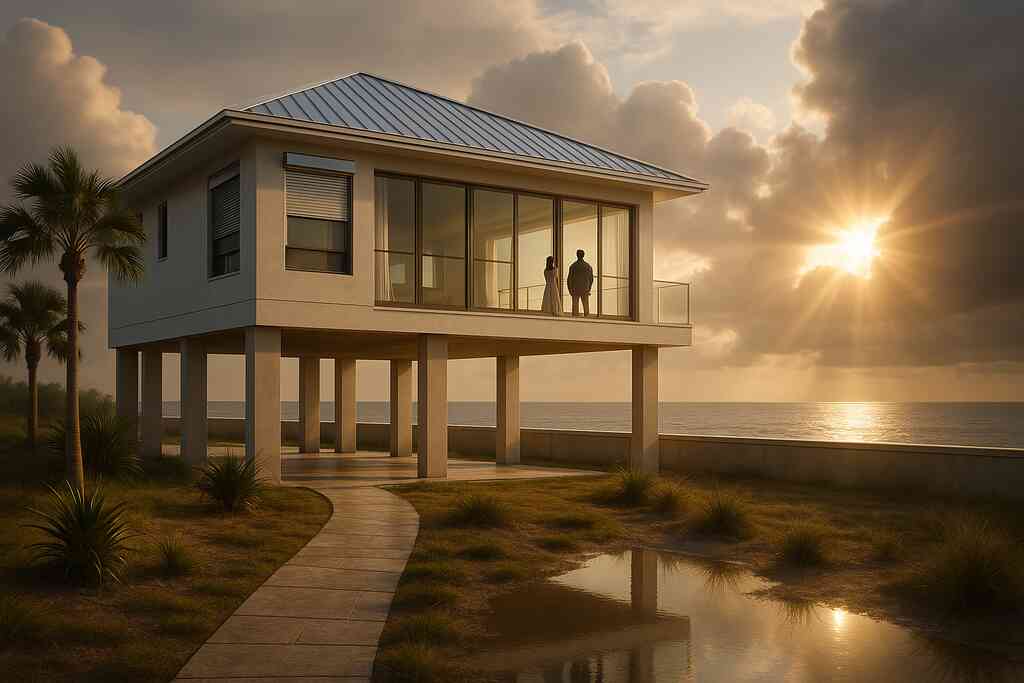
Building Luxury That Stands Up to the Storm
South Florida sits on the front line of Atlantic hurricanes. High winds, flying debris, and wall-like storm surges arrive every season, tearing through structures that rely only on minimum code. This guide explains how RENOVA Signature combines engineering, materials science, and a concierge design-build process to create hurricane-ready custom homes that protect families and preserve long-term value.
Why "Code Compliant" Is No Longer Enough
Building codes are written as a life-safety baseline. They rarely anticipate the rapid rise in sea level, the jump in insurance costs, or the super-charged storms now forming in late summer. Buyers across Palm Beach County are therefore asking for code-plus construction—details that push well beyond the printed minimums.
Common weak points in older or purely compliant homes include:
- Roof decking attached with smooth nails instead of screws or ring-shank fasteners.
- Windows rated for impact but installed with inadequate anchoring around the frame.
- Slab elevations set only one or two inches above the most recent FEMA flood map.
- Garage doors that meet pressure limits but lack redundant locking hardware.
RENOVA’s approach addresses every one of those gaps, starting at the dirt and moving all the way to the final smart-home touch panel.
Foundational Fortitude
Elevated Slabs and Deep Helical Pilings
Before a single block is laid, the site team studies soil density, historical flood data, and projected sea-level rise. Where most builders might raise the finished floor six inches above grade, RENOVA often targets two to three feet above today’s base flood elevation. The slab rests on helical pilings that spiral into stable layers far beneath the sandy coastal crust. This pairing resists both vertical settlement and the lateral scour that occurs when storm water races back to the ocean.
Key benefits:
- Utilities remain high and dry, reducing risk of electrical shorts.
- Finished flooring stays level even if nearby properties sink.
- Insurance underwriters frequently reward the extra elevation with premium credits.
The Storm-Tight Envelope
Walls, Openings, and Roof
A home can fail when just one piece of its envelope gives way. That is why RENOVA treats every surface as part of a continuous pressure skin.
Concrete Block Walls
- Reinforced with steel rebar and filled solid around openings.
- Continuous load path ties the roof diaphragm to the foundation.
Impact-Rated Glazing
- Miami-Dade-approved glass resists wind-borne debris at over 150 mph.
- Frames are anchored to surrounding block with stainless steel screws set on stringent spacing, not simply the minimum called for in the code tables.
Roofing Systems
- Self-adhered, high-temperature membranes create a secondary water barrier under tile or metal panels.
- Ridge vents are tested for cyclic wind pressure; hip and ridge caps receive bead-applied sealants rather than exposed nails.
- Every truss strap, clip, and structural screw is inspected on site by both the superintendent and a third-party engineer.
Seamless Gutter Drains
Oversized gutters channel water into buried PVC laterals that discharge well away from the foundation. This prevents hydrostatic pressure from building against block walls during extended deluges.
Intelligent Protection Systems
Mechanical strength is only part of the equation. Technology now allows homeowners to monitor and respond to storms from anywhere in the world.
- Smart Shutter Controls: Motorized Kevlar screens lower at the tap of a phone, sealing large lanais and two-story glass walls in minutes.
- Pressure Sensors: Real-time attic and interior pressure readings confirm that the envelope remains intact as a hurricane passes.
- Whole-Home Generators: Natural-gas units start automatically, keeping conditioned air flowing so humidity never reaches the point where mold can take hold.
Interior Luxury Without Compromise
Storm readiness does not have to look industrial. RENOVA designers integrate protection details behind finishes that feel at home in any magazine spread.
- Hidden Straps: Wall art covers structural steel connections, leaving sight lines clean.
- Acoustic Insulation: Dense-pack cellulose doubles as a wind-born debris barrier while cutting outside noise by up to 50 percent.
- Low-E, Laminated Glass: Provides 99 percent UV filtering, preserving fine fabrics and hardwood flooring.
The RENOVA Design-Build Advantage
One Team, One Schedule, Zero Finger-Pointing
Traditional construction separates the architect, engineer, and contractor into three silos. Miscommunication slips into the gaps, and critical fastening details can be unintentionally value-engineered out. RENOVA’s design-build model keeps every discipline under one contract and one roof.
Early Risk Modeling
- Wind-tunnel simulations run alongside conceptual sketches, not after permits.
Transparent Budget Tracking
- Clients see line-item costs for upgraded fasteners, elevated foundations, and generator systems. Decisions are data-driven instead of emotionally pressured.
Daily Site Reports
- Photos and notes document that hurricane-specific details are installed exactly as drawn. Homeowners can follow progress whether they live in Boca Raton or Boston.
Speed With Quality Control
Self-performed trades—concrete, framing, and roofing—allow RENOVA to hold the critical path while enforcing higher workmanship standards. Third-party inspections supplement in-house quality control, providing another layer of trust.
Looking Ahead to the 2025 Season
Meteorologists expect sea surface temperatures to stay well above average, a factor linked to stronger, longer-lived storms. Building your home—or renovating an existing residence—to a higher resilience standard now can prevent costly retrofits later.
Key takeaways for anyone planning a project this year:
- Elevate the slab above today’s minimum; futureproofing is cheaper than jacking a house later.
- Treat the roof as a system, not a single component. Membrane, decking, and fasteners must work together.
- Invest in smart monitoring. The ability to verify envelope integrity remotely offers priceless peace of mind during an evacuation.
Final Thoughts
Hurricane-ready custom homes fuse engineering rigor with architectural beauty. RENOVA Signature’s integrated process ensures no weak link is left unaddressed—from the helical piling beneath your foundation to the concealed fastener holding the last piece of standing-seam metal on your roof. The result is a residence prepared for blue-sky days and black-sky events alike, delivering comfort, efficiency, and enduring value to the families who call South Florida home.
https://www.renova-signature.com/blog/how-renova-signature-secures-hurricane-ready-custom-homes


Comments
Post a Comment