How RENOVA Drives Green Construction on Florida's Coast
Overview
Coastal construction in South Florida must do more than meet code. Salt-laden air, triple-digit heat indexes, and the yearly threat of hurricanes demand buildings that are both tough and efficient. This guide explains how RENOVA, a Delray Beach–based general contractor, is turning those challenges into opportunities for greener, more resilient homes.
Why Climate-Adaptive Building Matters in South Florida
- Extreme wind loads. Storms that reach Category 4 or 5 can push well above 150 mph. Structures must resist uplift, racking, and projectile impacts.
- Frequent flooding. Low-lying sites face tidal surge and heavy rainfall. Elevated foundations, flood vents, and back-up drainage are now standard rather than optional.
- High humidity and salt exposure. Moisture intrusion accelerates corrosion and mold growth. Smart detailing and durable materials reduce maintenance while protecting indoor air.
- Rising energy costs. A building that stays cool on less power helps homeowners control future utility bills, even as the grid strains under peak demand.
Ignoring any of these factors risks higher insurance premiums, premature repairs, and uncomfortable interiors. RENOVA’s climate-adaptive approach tackles all four at once, weaving resilience into every phase of design and build.
From Conventional Builder to Sustainability Partner
A decade ago RENOVA delivered code-compliant custom homes much like any other high-end contractor. Leadership soon saw that conventional practices burned through energy and resources without making properties tangibly safer. The firm pivoted.
- Project managers earned green building and hurricane-resilience certifications.
- In-house teams began running life-cycle assessments on concrete, framing, and roofing assemblies.
- Field crews adopted waste-sorting stations and lean scheduling to cut idle time and landfill trips.
Today RENOVA is recognized locally as a builder that marries coastal toughness with measurable environmental gains. The shift attracts architects, engineers, and owners who want their projects to set a higher bar for performance.
Core Practices That Deliver Resilient, Low-Impact Homes
Elevated foundations
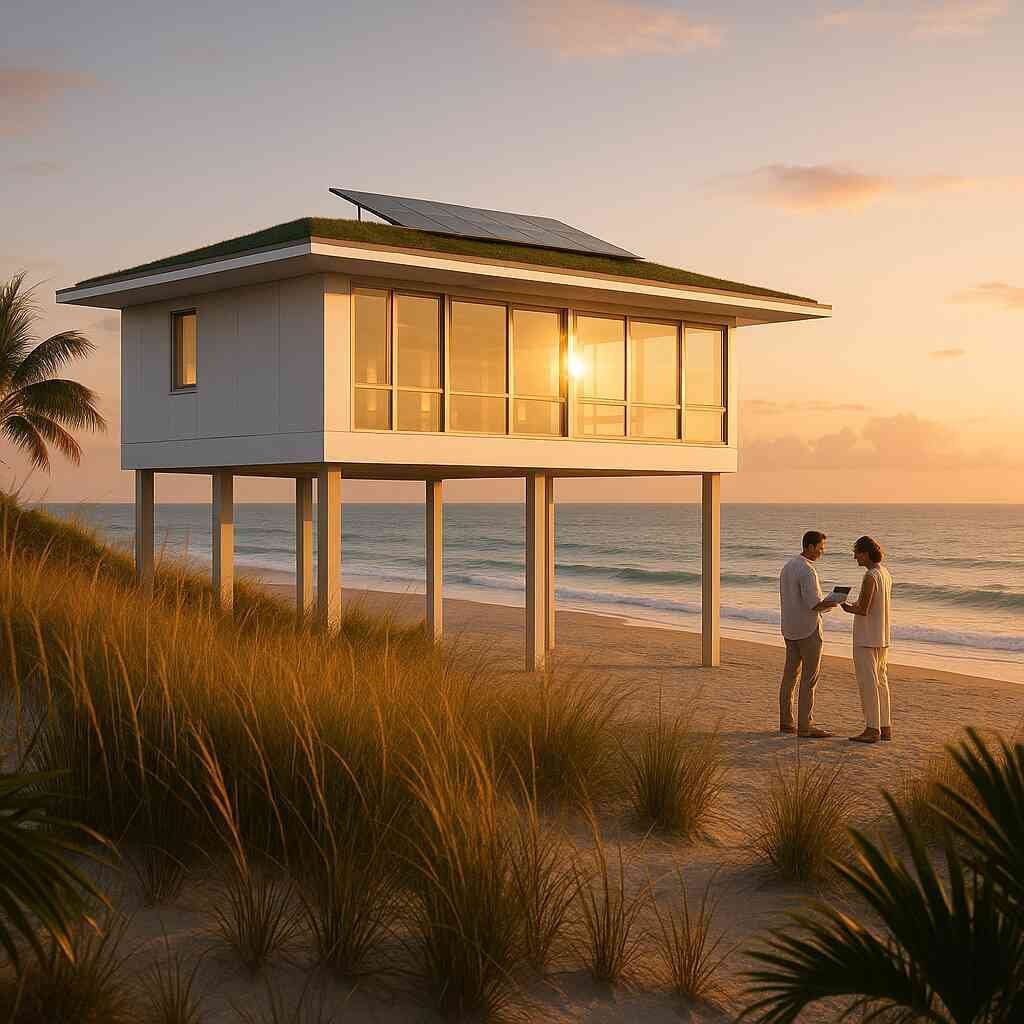
Piers or stem walls raise living areas above projected storm-surge heights. This lowers flood insurance costs and keeps mechanical equipment safely out of harm’s way.
Impact-rated openings
Every window and door meets or exceeds Miami-Dade large-missile standards. Laminated glass, reinforced frames, and quality flashing work together to protect the building envelope during wind events.
Passive cooling design
Roof overhangs, accurately placed awnings, and cross-ventilation layouts shade interiors and flush out heat. Proper orientation can drop interior temperatures by several degrees before the HVAC system ever switches on.
Smart energy systems
High-performance insulation, sealed ducts, and variable-speed heat pumps share the load with rooftop solar and home batteries. Homeowners gain resilience during power outages and a shorter payback on renewable upgrades.
Jobsite waste reduction
Pre-cut framing packages, on-site recycling bins, and digital plan sets mean fewer material offcuts and reprints. Crews track diversion rates in real time, keeping construction debris out of sensitive waterways.
Material Choices: Strength With Smaller Footprints
Certified wood and low-carbon concrete
Wood comes from forests verified for sustainable harvesting. That provides consistent quality lumber less prone to warping in humid climates. Concrete mixes swap a portion of Portland cement for recycled industrial by-products, cutting embodied carbon and enhancing sulfate resistance—ideal for salt-rich coastal soil.
Healthy interior finishes
Low-VOC paints, adhesives, and sealants dramatically reduce off-gassing. Families can close hurricane shutters without worrying about stale, chemical-laden air. Over time, cleaner indoor air supports better respiratory health and fewer allergy triggers.
Managing Projects for Long-Term Performance
RENOVA pairs material and design choices with robust construction management:
- Digital modeling forecasts heat gain, wind paths, and water movement before breaking ground.
- Third-party verification confirms blower-door targets, insulation depth, and renewable-system output.
- Owner manuals outline maintenance intervals for roofing, seals, and mechanical equipment so performance remains high well past the warranty period.
This disciplined process keeps schedules predictable and helps homeowners understand exactly how to care for their new high-performance space.
Looking Ahead: Continued Innovation in 2025
Research into carbon-storing concrete, biobased rigid insulation, and AI-driven energy controls is accelerating. RENOVA is already piloting these technologies on select remodels to gather real-world data. Expect future projects to:
- Push net-positive energy targets, exporting more power than they consume over a year.
- Embrace modular, panelized wall systems that further trim waste and shorten build times.
- Integrate water-harvesting roofs paired with on-site filtration, easing strain on municipal supplies.
Coastal communities face mounting climate risks, yet they also sit at the forefront of sustainable building innovation. By fusing green construction science with hurricane-ready craftsmanship, RENOVA shows how homes can stand strong, save energy, and tread lightly on Florida’s prized shoreline.
Choosing a contractor that understands both environmental stewardship and local hazard mitigation can feel daunting. Reviewing a firm’s track record of climate-adaptive features, material transparency, and third-party testing is a smart first step. Done right, the investment pays dividends in comfort, resilience, and lasting property value.
Understanding RENOVA's Role in Green Construction Trends


Comments
Post a Comment