RENOVA Kitchen Design: Proven Practices for South Florida
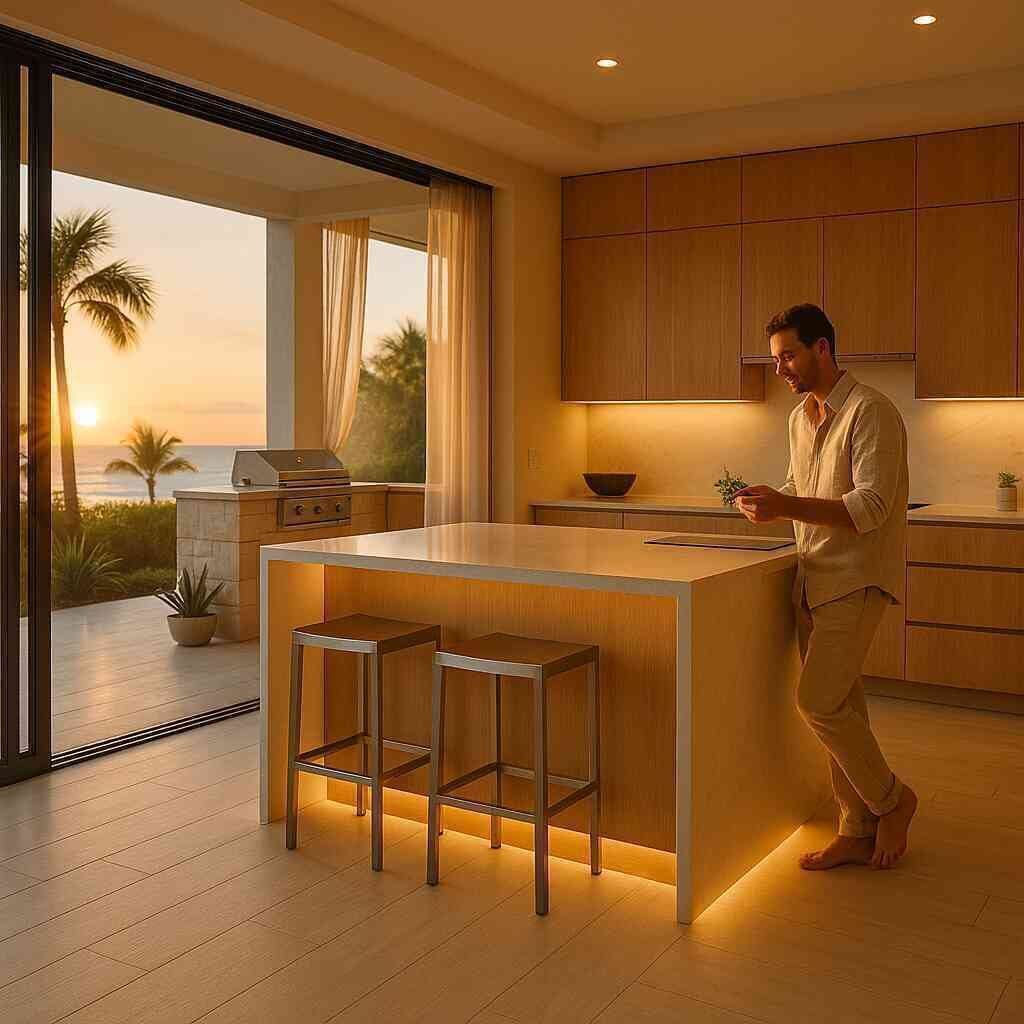
Climate-Ready Luxury Kitchens
South Florida kitchens confront salt air, year-round humidity, intense sun, and seasonal storms. Design decisions therefore emphasize materials and layouts that tolerate moisture, heat, and potential power interruptions while still presenting a refined appearance. RENOVA projects start with a durability checklist that reviews cabinet substrates, finishes, and fastener types for coastal performance.
Material Selections That Last
- Cabinet construction: Marine-grade plywood or high-density fiberboard with water-resistant laminates protects against swelling.
- Hardware: 316 stainless-steel pulls and soft-close hinges resist corrosion.
- Countertops: Non-porous quartz and sintered stone handle UV exposure through large glass doors better than many natural marbles.
- Flooring: Large-format porcelain tile offers slip resistance, low absorption, and easy cleaning after beach days.
These components together reduce maintenance and preserve resale value in a coastal market.
Spatial Planning Rooted in Flow Science
Ergonomic efficiency centers on a well-calculated work triangle. RENOVA layouts measure travel distance between sink, cooktop, and refrigeration, then validate clearances against household traffic patterns. A crowded social zone near the island often overlaps with the cooking zone, so walkways widen to at least 48 inches where guests congregate. Pantries, ovens, and dishwashers open without blocking each other, preventing bottlenecks during large gatherings.
Multigenerational Access
Inclusive design safeguards comfort for children, visiting relatives, and aging residents. Recommendations typically include:
- Minimum 42-inch turning radii for mobility aids
- Pull-down upper-cabinet inserts to reach high shelves safely
- Varying counter heights, such as a 30-inch baking station beside standard 36-inch prep surfaces
- Touch-free faucets and induction cooktops for burn prevention
Custom Cabinetry and Hidden Storage
Florida’s expanding families and frequent entertainers demand clutter-free surfaces. RENOVA millwork maximizes every cubic inch:
- Toe-kick drawers for trays or pet dishes
- Vertical dividers within tall pantry pull-outs for baking sheets
- Corner cabinets that rotate 360 degrees rather than the traditional “blind” reach
- Integrated spice niches behind the cooktop to shorten arm travel while seasoning
Interior lighting activates on soft-open slides, illuminating contents without harsh glare.
Ventilation, Power, and Safety
Subtropical cooking often pairs indoor meal prep with outdoor grilling. Proper ventilation prevents odors and airborne grease from migrating to living spaces. Best practices specify range hoods sized at 100–150 CFM per linear foot of cooktop, vented directly outside through corrosion-resistant ducts.
Electrical plans anticipate simultaneous appliance loads, backup generators, and surge protection against summer lightning. Dedicated circuits support induction ranges, steam ovens, and wine coolers without nuisance trips.
Construction Management Discipline
Precision craftsmanship relies on strict coordination among carpenters, plumbers, electricians, and inspectors. RENOVA schedules overlapping work phases, protecting surfaces with temporary coverings as soon as they reach final finish. Daily site reports record humidity levels to ensure wood acclimation before cabinet installation. This systematic oversight reduces costly punch-list items and aligns completion dates with client move-in goals.
Regional Aesthetic Adaptation
Neighborhood architecture guides style decisions:
- Mid-century cottages in Delray Beach often receive flat-panel doors, waterfall islands, and light oak accents that mirror coastal sand tones.
- Mediterranean estates in Palm Beach favor inset cabinetry, detailed corbels, and rich walnut stains that complement arched windows.
While finishes differ, the underlying construction details—ventilation, moisture protection, and storage ergonomics—remain constant across ZIP codes.
Technology Integration
Smart appliances, voice-controlled lighting scenes, and wireless refrigerator cameras require secure network hubs. RENOVA typically locates structured wiring panels in adjacent utility rooms, separating high-voltage and data lines to prevent interference. Surge-suppressed outlets behind refrigerators and microwaves guard delicate boards from power spikes.
Sustainability Considerations
Low-VOC cabinet finishes, LED task lighting, and high-efficiency induction cooktops contribute to indoor air quality and long-term operating savings. WaterSense-rated faucets and instant hot water recirculation further reduce resource consumption without altering the luxury experience.
Summary
RENOVA best practices balance climate resilience, ergonomic flow, inclusive access, meticulous project management, and neighborhood-specific aesthetics. The result is a kitchen that performs reliably in South Florida’s demanding environment while providing an elegant setting for everyday meals and upscale entertaining.
https://www.letrenova.com/what-are-renovas-best-practices-in-kitchen-design/


Comments
Post a Comment