Traditional vs Modern Home Design Styles in West Palm Beach
West Palm Beach’s Two Design Voices
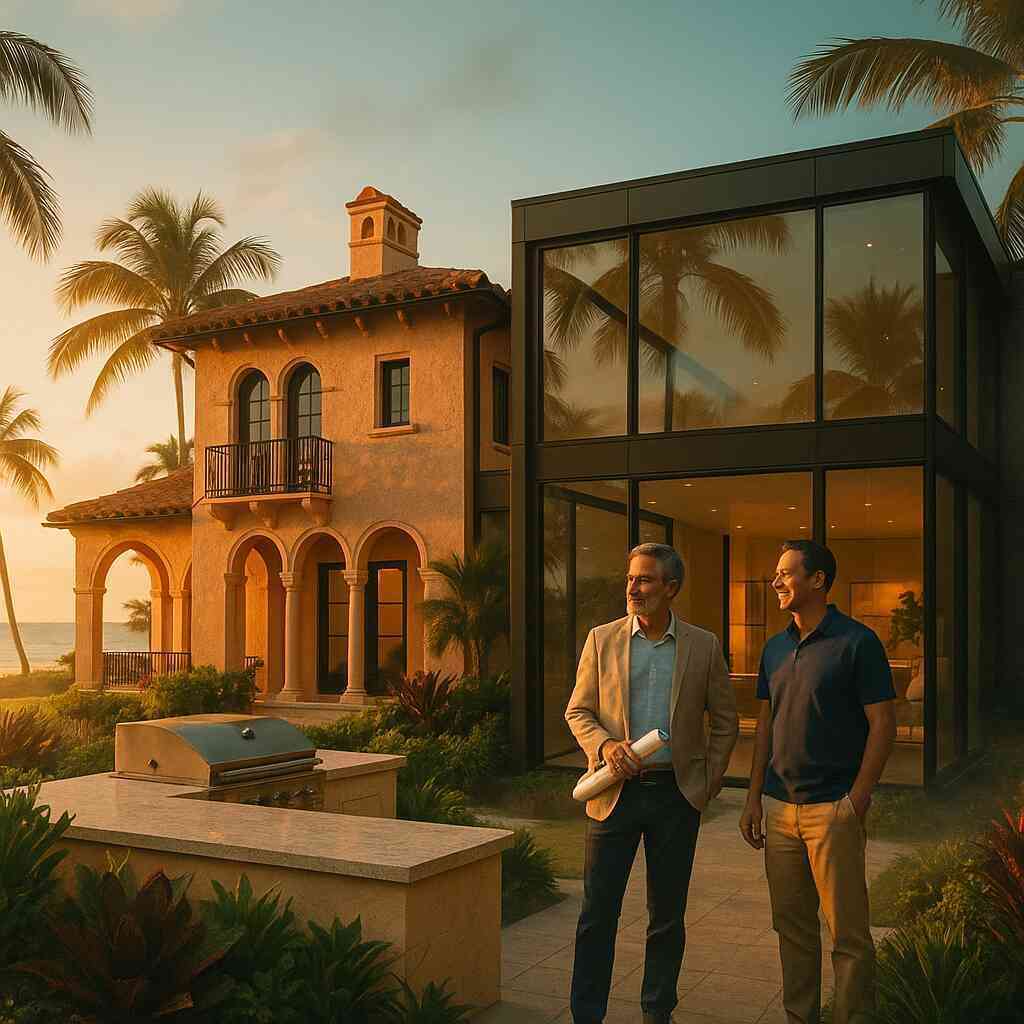
West Palm Beach architecture sits at a rare intersection. One lane leads back to Mediterranean-revival estates with clay tiles and carved stone. The other points forward to glassy coastal towers that chase sunrise views. This guide compares the two styles and shows how thoughtful renovation can let them speak in harmony.
What Makes a Home “Traditional” Here?
1. Mediterranean Revival DNA
- Barrel-tile roofs with generous eaves that shade walls
- Smooth stucco in warm peach, sand, or coral tones
- Arched loggias framing courtyards and fountains
- Heavy timber doors fitted with wrought-iron grilles
These elements were borrowed from Spain and Italy but adapted to Florida’s heat. Thick masonry stays cool at midday, and inner courtyards create cross-breezes long before air-conditioning was common.
2. Old-Florida Wood Craft
Inside, you find heart-pine floorboards, pecky cypress ceilings, and hand-turned balusters. Skilled millworkers once shaped each plank on site, leaving subtle tool marks that still catch the light.
3. Decorative Flourish
Painted Cuban cement tiles, ornate crown moldings, and leaded-glass windows add romance that buyers instantly recognize as “authentic Palm Beach.”
Defining the Modern Coastal Look
1. A Celebration of Light
Modern condos and infill houses push glazing to the limits. Floor-to-ceiling sliders erase corners and pull the Intracoastal into the living room.
2. Minimal Profiles
Where a revival home wears curves and texture, a modern shell prefers right angles, flush baseboards, and hidden door jambs. The beauty comes from proportion, not ornament.
3. Eco-Smart Materials
Engineered European oak, low-VOC cabinetry, and composite siding stand up to salt spray while meeting current energy codes. Home automation quietly manages shading, air quality, and security.
4. Flexible Interior Planning
Spaces flow without walls: kitchen islands double as dining tables, pocket doors convert a guest suite into a home office, and built-in storage eliminates the need for bulky furniture.
Why Preservation Still Matters
Zoning overlays and historical boards exist to protect character streets such as Flagler Drive. Alterations visible from the right-of-way often require review, especially if the property falls inside a heritage district. A contractor who understands these rules can save months of revisions and neighbor pushback.
Just as important, keeping original fabric reinforces neighborhood identity—and boosts resale value. Buyers know when a façade feels genuine versus staged.
Marrying Old and New in One Project
Successful Palm Beach renovations rarely choose sides. Instead, they take the following approach:
- Document First. Teams photograph every ceiling beam, staircase tread, and terrazzo border. This record guides restoration and helps duplicate details that cannot be salvaged.
- Update Systems Invisibly. New electrical runs hide behind baseboards; ductwork tucks into secondary attic areas; mini-split air handlers recess between rafters. The goal is modern performance without visual clutter.
- Respect Massing. If a rear addition is planned, its roof pitch, window rhythm, and sill heights echo the original structure even when cladding material shifts to contemporary fiber cement.
- Contrast With Intention. A sleek glass link between an old main house and a new guest wing can highlight, not diminish, the historic core. Contrast only feels jarring when proportions fight each other.
- Salvage & Re-Use. Reclaimed Dade County pine might become floating shelving in a modern kitchen. An iron balcony rail can transform into a powder-room mirror frame.
Cost Considerations
Renovating a century-old masonry villa costs more per square foot than finishing out a new-build shell. Expect:
- Selective demolition and hand removal to protect fragile plaster
- Custom millwork replication for missing casings
- Structural reinforcement where wood members have succumbed to humidity
Modern builds, on the other hand, may allocate budget toward high-performance glazing, solar integration, or elevated pilings that meet current flood maps. A clear scope and contingency line keep surprises manageable in either scenario.
Practical Tips for Homeowners
- Start with a thorough conditions report. Knowing what lurks behind stucco prevents change-order shock.
- Interview teams versed in both eras. A contractor who has never restored a Cuban-tile staircase may underestimate labor, while a strict preservationist might overlook smart-home needs.
- Mock up junctions. View a sample where old crown meets new flush drywall to fine-tune reveals and paint transitions.
- Phase work intelligently. You can often update mechanicals and structural elements in phase one, then circle back for finishes once budgets recover.
- Plan for hurricanes. Impact glazing, concealed shutters, and reinforced roof straps can be integrated without compromising style—essential peace of mind in 2025.
The Takeaway
Traditional Mediterranean revival and modern coastal minimalism are not opposing teams; they are two chapters in West Palm Beach’s architectural story. Renovations that honor craftsmanship while embracing current technology offer the best of both worlds: charm that feels rooted and spaces that live effortlessly today.
Whether you lean classic, contemporary, or an artful mix, a clear design vision paired with local expertise will ensure the final home fits both the neighborhood narrative and your everyday life.
Comparing Traditional vs Modern Designs in West Palm Beach


Comments
Post a Comment