Green Building Techniques for Sustainable Boynton Homes
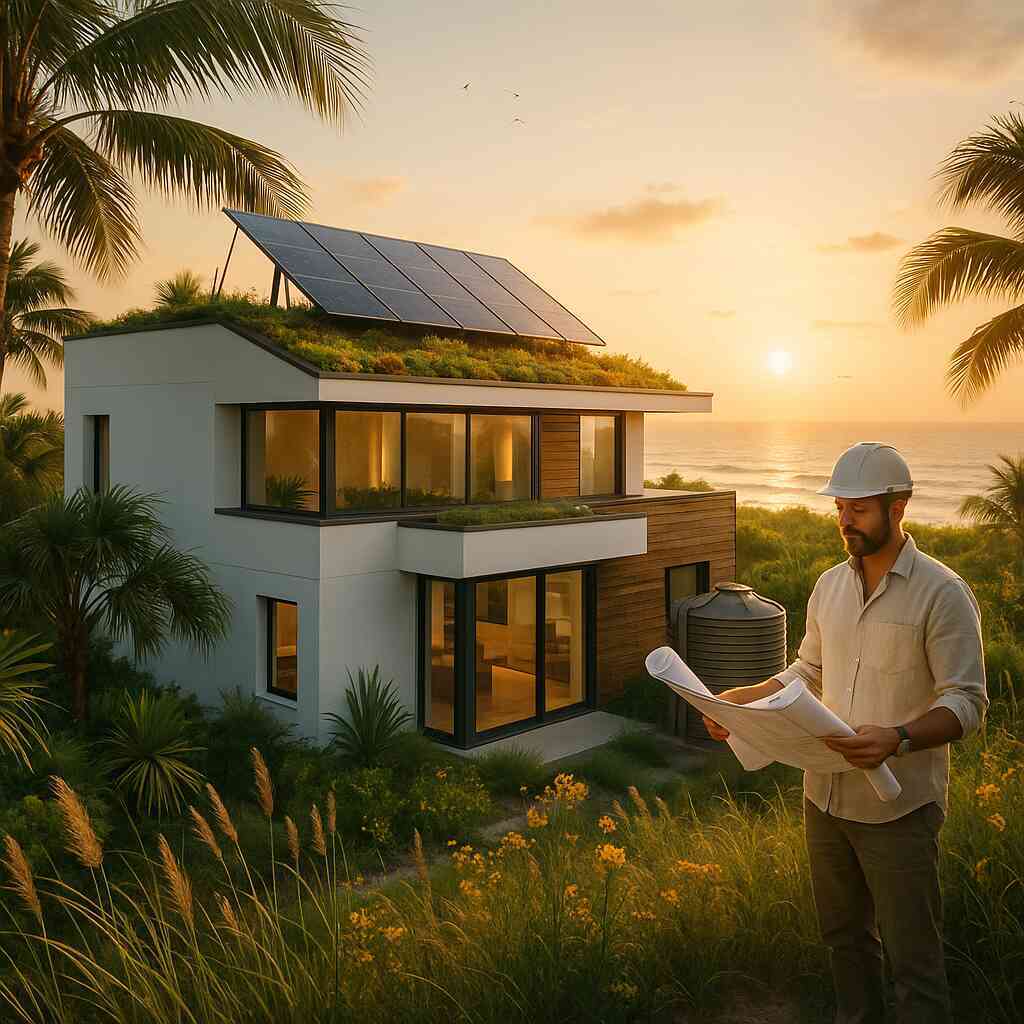
Why “Green Building” Matters in Boynton Beach
South Florida’s climate is brutally humid, sunny most of the year, and increasingly exposed to intense storms. That mix places daily stress on wall assemblies, roofing, and mechanical systems. Green building is not a marketing add-on here—it is the practical path to comfort, lower utility costs, and long-term resilience. This overview breaks down the core strategies that define sustainable construction from Delray to Boynton Beach in 2026.
1. Climate-Responsive Design Comes First
A truly green project starts with building science rather than product shopping. Designers analyze prevailing sea breezes, shade patterns, and flood maps before drawing a single wall line.
- Orient living spaces to capture Atlantic breezes and reduce mechanical cooling demand.
- Deep roof overhangs and louvered Bahama shutters block the high summer sun while letting low winter light in.
- Elevated finished-floor heights and flood vents protect against king-tide surge without relying on costly bulkheads.
By integrating these passive moves, a home can shave 15–25 % off its annual HVAC consumption before a solar panel is even discussed.
2. High-Performance Envelopes: Sealing, Insulating, Protecting
Humidity control is the make-or-break factor for comfort in Palm Beach County. A green envelope tackles it on three fronts.
Continuous Air Sealing
Advanced tapes, gaskets, and dedicated blower-door testing ensure the building shell stays tighter than the current Florida Energy Code baseline. Less outside moisture infiltrates, so AC equipment can be downsized.
Hybrid Insulation
Spray polyurethane foam at roof decking blocks radiant heat, while dense-pack cellulose or mineral wool in walls adds sound control and fire resistance. Combining materials allows each to do what it does best and keeps embodied carbon lower than an all-foam approach.
Impact-Rated, Low-E Windows
Laminated glass meets hurricane code, but the real performance gain comes from spectrally selective low-E coatings that bounce infrared heat while admitting visible light. Frames with thermal breaks further reduce conduction, giving a tangible reduction in peak cooling load.
3. Water Is a Resource, Not a Waste Stream
Landscape irrigation can swallow half of a coastal home’s potable water use. Sustainable projects attack the problem both inside and out.
- Smart drip systems tied to soil sensors prevent over-watering.
- Native dune grass, sea grape, and saw palmetto thrive without daily sprinklers.
- Indoors, WaterSense-labeled fixtures, dual-flush toilets, and whole-house leak detectors keep consumption in check.
- A simple 50-gallon rain barrel captures roof runoff for container gardens; larger cisterns feed irrigation pumps all dry season.
These steps often deliver the highest return on investment because Boynton Beach water rates keep climbing faster than electricity prices.
4. Renewable Energy and Storage Ready
Solar adoption in Palm Beach County rose sharply once net-metering rules settled, making rooftop PV almost a default line item. Green builders prep the structure so adding panels is painless—even if the owner waits a few years.
- Roof trusses are designed for the extra dead load.
- Conduit stubs run from the attic to the main electrical panel.
- South-facing planes are kept unobstructed by plumbing vents or dormers.
Many projects now reserve exterior wall space for a future lithium-ion storage cabinet. When a battery is finally installed, the home easily shifts to island mode during grid outages, a key resilience factor when hurricanes roll in.
5. Material Choices With a Story—and a Future
Sustainable construction is judged twice: on day one for aesthetics and decades later for durability.
Reclaimed and Rapidly Renewable Options
Reclaimed heart-pine flooring salvaged from old warehouses brings character without new logging. Where a contemporary look is desired, strand-woven bamboo and cork work well in humid interiors and regrow in a fraction of the time of hardwood.
Low-VOC Everything
Paints, adhesives, and sealants are specified under 50 g/L of volatile organic compounds. The payoff is healthier indoor air and fewer days of “new house” odor.
Concrete With Supplementary Cementitious Materials (SCMs)
Swapping 25–40 % of Portland cement with fly ash or slag cuts embodied carbon while increasing sulfate resistance—crucial near salty air.
6. Job-Site Practices That Close the Loop
Green intentions fall apart if debris ends up in a landfill. Boynton Beach contractors leading the pack adopt meticulous waste management plans.
- Framing cut-offs are sorted for on-site blocking.
- Concrete rubble is crushed into driveway base.
- Cardboard and metal go to dedicated local recyclers.
- Diesel equipment runs on biodiesel blends or idle-reduction timers to curb emissions.
Municipal inspectors appreciate these measures, and homeowners often see disposal line-items drop by double digits.
7. Verification and Long-Term Commissioning
Paper promises turn into real savings only when performance is measured.
- Blower-door and duct-leakage tests document envelope tightness.
- Infrared scans catch missing insulation before drywall closes.
- After move-in, a one-year commissioning visit fine-tunes thermostat schedules, irrigation runtimes, and breaker labeling.
Third-party verification (whether via ENERGY STAR, FGBC, or LEED pathways) builds trust. It also locks in insurance discounts and resale value, making the process financially prudent, not just eco-friendly.
Key Takeaways for 2026 Projects
- Start with passive design—orientation, shading, and elevation solve many challenges at no operating cost.
- A tight, well-insulated envelope is the best defense against humid heat.
- Manage water holistically from gutter to garden; it pays back quickly.
- Design roofs and electrical panels solar-ready even if panels are added later.
- Choose materials that balance low environmental impact with proven durability.
- Treat the construction site as part of the ecosystem, not a disposable zone.
- Verify everything. Tests and data turn green claims into documented performance.
Embracing these principles helps Boynton Beach homeowners live comfortably, lower monthly expenses, and strengthen property value in a region where climate pressures are only intensifying. Sustainable construction is no longer a niche; it is the new common-sense baseline for building and renovating along Florida’s Atlantic coast.
What Defines Green Building Techniques in Boynton Beach


Comments
Post a Comment