Hybrid Workplace Optimization with Boynton Beach Renovations
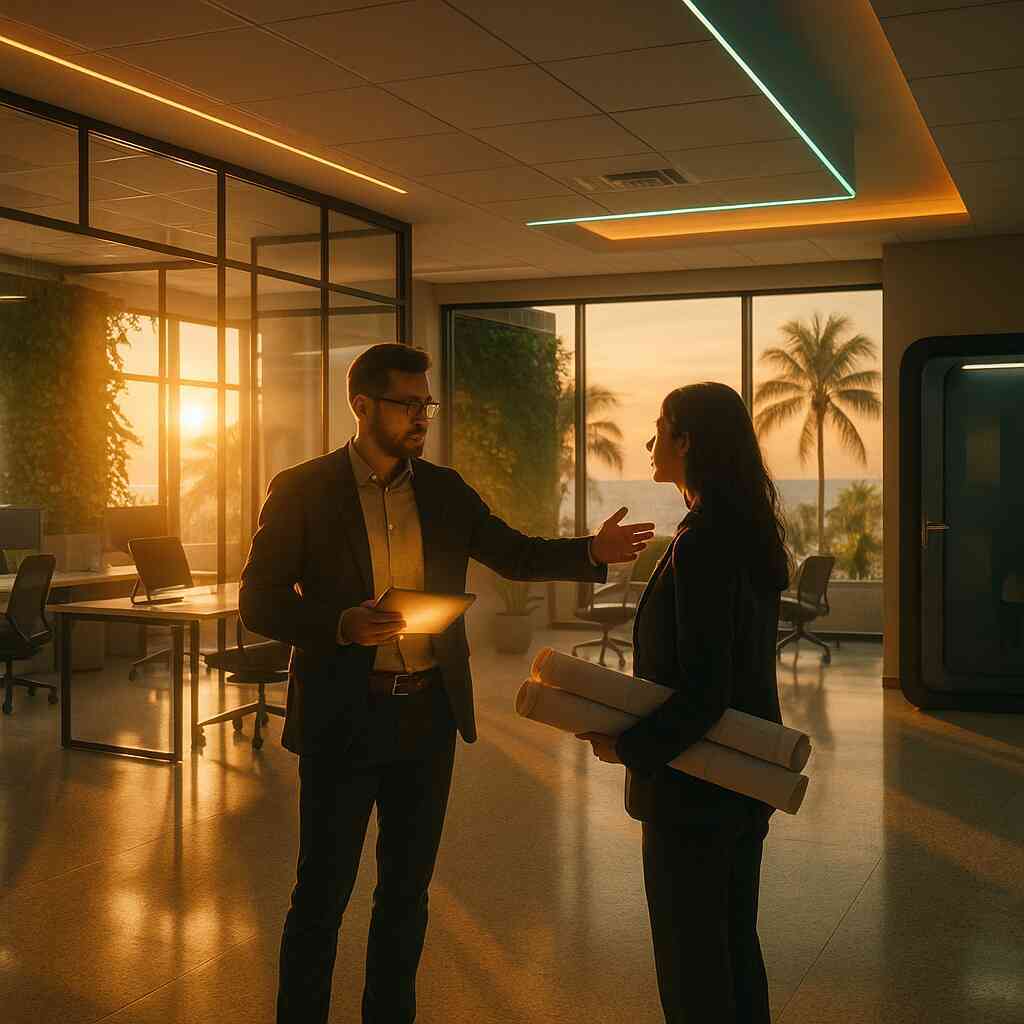
Rethinking the Modern Office in 2026
Every company in Boynton Beach now faces the same question: how can an existing office be reshaped for a workforce that splits time between home and headquarters? This guide explains the priorities, layout strategies, and material choices that local owners and facility managers are using to turn legacy spaces into agile, people-focused workplaces.
1. Start With Health and Resilience
One lesson from recent years is clear: business continuity depends on providing an environment that feels safe, clean, and adaptable. A successful renovation addresses three fundamentals before the first wall moves.
- Air quality first. Upgrading to MERV-13 or better filtration, adding needlepoint bipolar ionization, and specifying low-VOC finishes reduce airborne irritants while supporting ESG goals.
- Touchless circulation. Hands-free doors, sensor faucets, and voice-activated elevators trim germ transmission and speed daily traffic flows.
- Storm-ready facades. Impact-rated glazing and reinforced roofs protect people and data during Atlantic hurricane season, keeping downtime to a minimum.
These elements rarely excite employees on aesthetic grounds, yet they underpin confidence and productivity. They also lower insurance premiums, so they usually pay for themselves within a few seasons.
2. Let Data Drive Space Planning
Traditional head-count formulas (one desk per person) waste square footage when half the team works remotely on any given day. Local renovation teams are now using badge data, Wi-Fi heat mapping, and workstation reservations to reveal actual occupancy patterns. Common findings include:
- Desk usage hovering near 50 % on most weekdays.
- Meeting rooms booked solid on Tuesdays and Wednesdays but idle Mondays and Fridays.
- Corridors wider than code requires, representing built-in expansion space.
With this evidence in hand, architects can shrink fixed workstations, grow collaboration zones, and still leave a 10 % cushion for future hiring. The key metric shifts from square feet per employee to square feet per activity.
Practical layout moves
- Neighborhoods instead of departments – benching for focus work sits beside soft-seat lounges for brainstorms, so teams converge quickly.
- Hoteling bars along the core – mobile staff can plug in for 30-minute touch-downs without claiming a permanent desk.
- Modular meeting suites – demountable walls slide open for all-hands sessions or close to create two private huddle rooms.
3. Reflect South Florida Culture
Brand expression no longer stops at the lobby sign. Color, texture, and art all reinforce company identity while reminding staff why they enjoy working in Boynton Beach. Balanced correctly, local influence can be both sophisticated and fun.
- Palette – sandy neutrals, leafy greens, and ocean blues frame accent walls, making daylight feel brighter.
- Materials – rattan, reclaimed cypress, and terrazzo floors echo regional heritage and meet durability demands.
- Biophilia – potted palms, living moss panels, and views to new shaded patios strengthen employee well-being scores.
Designers should interview leadership and employees alike to uncover references that feel authentic rather than gimmicky. A fintech firm may feature abstract surf photography, while a medical start-up might commission a coral-reef installation highlighting its research mission.
4. Integrate Smart Building Technology
A hybrid office lives or dies on frictionless connectivity. The renovation phase is the best time to embed infrastructure that prevents daily tech headaches.
- Ceiling-mounted access points for blanket Wi-Fi coverage, paired with redundant fiber backbones.
- Occupancy sensors feeding dashboards that show open rooms in real time and help right-size the portfolio later.
- Power and data in raised floors so future furniture moves require minutes, not days of coring concrete.
- Automated lighting and HVAC zones that adjust to schedule changes, reducing energy use up to 30 %.
A bonus of this approach: facility teams gain hard numbers on which spaces earn their keep, making the next round of improvements easier to justify.
5. Convert Surplus Parking Into Outdoor Workspace
Hybrid work models are cutting daily vehicle counts across Palm Beach County. Rather than leave asphalt baking in the sun, owners are reclaiming prime edges for multi-use terraces. Typical upgrades include:
- Shade canopies engineered for hurricane loads.
- Permeable pavers that reduce storm-water runoff fees.
- Power pedestals and high-speed Wi-Fi for laptop use.
- Native landscaping that screens traffic noise and earns green-building points.
Employees gain an alternate setting for calls or informal meetings, and property values rise thanks to an amenity that photographs beautifully.
6. Budget Smarter With Value Engineering
Inflation and supply-chain swings remain real, so renovation teams in 2026 are stress-testing every specification. A disciplined value-engineering process does not mean stripping character; it means aligning dollars with priorities.
- Separate must-haves from nice-to-haves early in schematic design.
- Request multiple material alternates – for example, luxury-vinyl tile can mimic terrazzo at half the price and install faster.
- Phase noncritical items such as feature lighting or custom graphics, allowing move-in on time while artwork ships.
- Lock long-lead items first (mechanical equipment, glass systems) to avoid demolition standing idle.
7. Maintain Accessibility
True inclusivity covers both code compliance and user comfort. When reconfiguring the floor plate, confirm that:
- Circulation routes remain clear of furniture creep.
- Height-adjustable desks include control panels reachable from seated positions.
- Meeting rooms provide assistive-listening systems alongside video conferencing.
- Color-contrast signage guides visitors with low vision.
Thoughtful details here protect against retroactive fixes and demonstrate genuine respect for all team members.
Putting It All Together
An optimized Boynton Beach office in 2026 is a living system, not a static floor plan. It balances safety, flexibility, and regional personality while letting technology and daylight do the heavy lifting. By combining occupant data, resilient construction, and a clear brand story, owners can deliver a space that scales with business cycles and talent expectations.
When you approach renovations with this holistic mindset, square footage stops being a cost center and becomes a strategic asset—one that energizes employees, impresses visitors, and weathers whatever the next decade brings.
Guide to Optimizing Office Spaces with Boynton Beach Renovations
Comments
Post a Comment