Integrated Design-Build Benefits for Custom Jupiter Homes
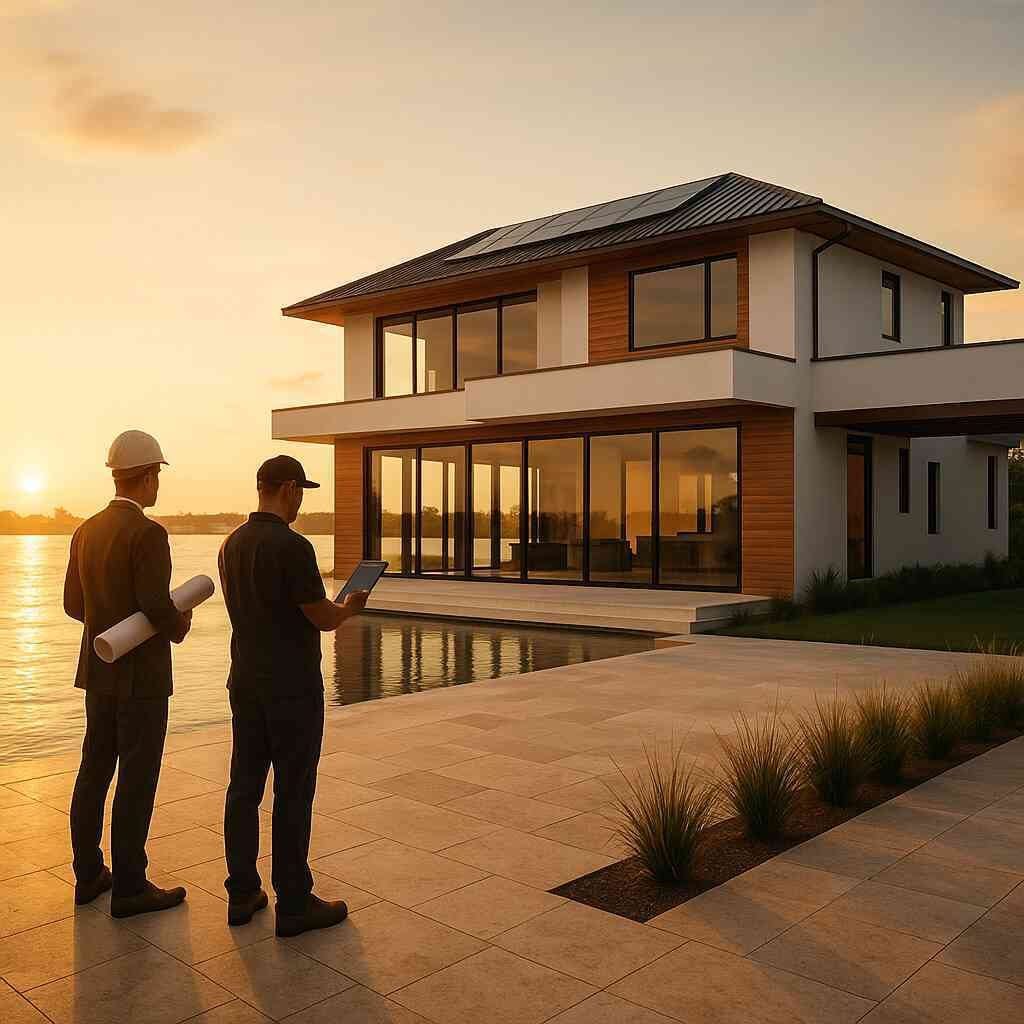
Why One-Team Design-Build Suits Jupiter’s Coastal Projects
Building or renovating along Florida’s Treasure Coast comes with spectacular views—and a long checklist of technical demands. High-velocity hurricane zones, shifting code updates, strict environmental setbacks, and a brisk real-estate market all push schedules and budgets to the limit. An integrated design-build delivery model meets those pressures head-on by uniting architecture, engineering, and construction under one contract.
This guide explains how a single-source approach streamlines every phase of a Jupiter custom home, from the first sketch to the final punch-list item.
1. Early Collaboration Locks in Budget Certainty
Traditional “design-bid-build” work flows in sequence: an architect completes drawings, bidders guess at costs, then a contractor delivers unfortunate surprises. Design-build flips the script. The architect, estimator, and field superintendent sit at the same table on day one. As ideas develop, each choice is priced and scheduled in real time.
- A revised roof pitch? The estimator updates material counts instantly.
- An upgraded window package? The superintendent verifies lead times before the client approves.
By the time construction documents are approved, the price is no longer an educated guess; it is a thoroughly vetted cost model that already fits the agreed budget. Clients gain cost clarity months earlier, which limits the ripple effect of mid-project “value engineering.”
2. Streamlined Permitting for Palm Beach County Codes
Palm Beach County enforces some of the country’s most rigorous coastal building standards. Height limits, turtle-friendly lighting, and flood-plane rules vary by neighborhood. When design and construction teams work separately, drawings often reach the building department lacking required studies or signatures, leading to costly resubmissions.
Within a design-build firm, a dedicated permit coordinator engages reviewers before final plans are printed. The coordinator can:
- Flag zoning conflicts while the architect can still adjust massing.
- Communicate directly with engineers about wind-load calculations.
- Upload revisions to a shared cloud portal so all parties track the same file set.
The result is fewer comment cycles and a faster Notice of Commencement, keeping the project on track for seasonal weather windows.
3. Construction Speed Without Sacrificing Resilience
Jupiter’s construction calendar revolves around two realities: afternoon storms and hurricane season. Phased, overlapping trade schedules—known as fast-tracking—minimize downtime between tasks. Because the build team helps craft the plans, they already know where critical path items lie and can preload purchase orders for impact-rated windows, standing-seam metal roofing, or marine-grade pilings.
Meanwhile, no corner is cut on durability. Integrated teams share one responsibility matrix, so no subcontractor can claim that detailing was “someone else’s job.” Continuous load paths, waterproofing transitions, and energy-efficient assemblies are inspected against the same set of BIM-generated details that guided design.
4. A Single Point of Accountability
When unexpected conditions surface—an unmapped utility line, a back-ordered tile, or a code interpretation—finger-pointing is common on fragmented projects. In a design-build setting, the client has one phone number. Whether the challenge is aesthetic or structural, the same leadership team resolves it. This clarity of responsibility produces two important benefits:
- Faster decisions. The project manager can authorize a field tweak within hours, not days.
- Reduced legal exposure. One contract limits disputes about scope gaps or professional liability.
5. Real-Time Transparency Through Technology
Modern design-build firms pair Building Information Modeling (BIM) with cloud project-management platforms. Homeowners receive login credentials that display:
- 3-D models for virtual walkthroughs.
- Daily photos and weather-related schedule shifts.
- Budget dashboards showing approved selections and contingency balances.
Because every discipline feeds the same database, changes cascade automatically across architectural sheets, structural framing plans, and MEP diagrams. The system reduces duplicate work and ensures the field crew is always working from the latest set.
6. Holistic Sustainability and Wellness Strategies
A custom waterfront retreat often pursues more than structural resilience—it aims for healthier indoor air, lower operating costs, and a lighter environmental footprint. Integrated teams can coordinate these priorities without causing scope creep.
- Energy Modeling: Engineers test glazing ratios and insulation R-values while designers still have freedom to relocate windows for better views.
- Material Vetting: Procurement specialists confirm availability of low-VOC finishes before specifications lock in.
- Smart-Home Integration: Electricians and automation vendors join early to allocate conduit pathways, avoiding costly retrofits.
7. Seamless Close-Out and Warranty Support
Nothing tarnishes the excitement of move-in day like lingering punch-list items. In a design-build environment, the same superintendent who framed the walls inspects cabinetry reveals, grout lines, and trim paint. Issues funnel into one digital list that auto-assigns tasks to the responsible trade. Because no outside party must “approve” the cost to correct an item, resolutions are faster.
After occupancy, warranty calls go to the same project team. They know the house intimately and can dispatch the proper technician with the right replacement part, whether it is a smart-lock sensor or a pool-equipment breaker.
Key Takeaways
- Design-build brings cost, schedule, and quality control under one roof.
- Early collaboration trims permitting time—a critical advantage in Palm Beach County.
- Fast-tracked schedules coexist with hurricanes by locking details in BIM and coordinating long-lead items.
- One contract eliminates scope disputes, keeping the homeowner out of cross-fire.
- Integrated technology gives real-time transparency, from concept to warranty.
For families planning a new custom residence or an ambitious coastal remodel, a single-team approach can replace stress with clarity. The streamlined workflow, deep accountability, and coastal-specific expertise of a design-build firm create a smoother path to enjoying Jupiter’s sun, sand, and sea views in a home that is as resilient as it is beautiful.
Why RENOVA Prefers Integrated Design Build for Jupiter Homes


Comments
Post a Comment