Navigating West Palm Beach Kitchen Codes: 10 Key Insights
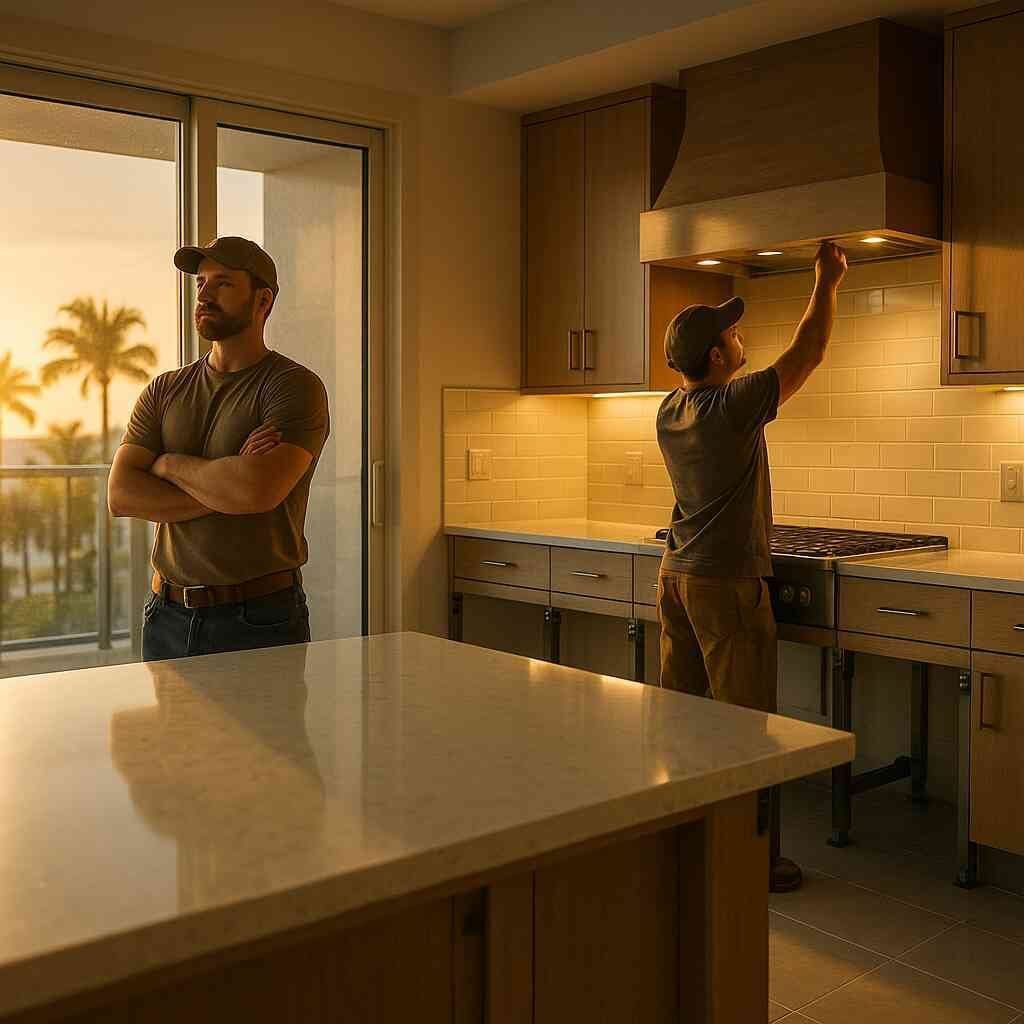
Building a Code-Compliant Kitchen in West Palm Beach
A kitchen remodel in West Palm Beach is more than cabinets and countertops. It is a tightly regulated project that must honor Palm Beach County’s building code, coastal wind-storm provisions, energy guidelines, and ADA considerations. The ten points below condense RENOVA’s on-site experience into a clear roadmap you can use to keep inspectors satisfied and timelines intact.
1. Bring a Licensed General Contractor to the Table First
A licensed general contractor does more than swing hammers. They translate code language into design decisions before drawings reach the city portal. That early involvement prevents red-line corrections, aligns structural loads with wind calculations, and keeps mechanical chases clear for required exhaust duct sizes. In practice, the contractor, architect, and interior designer meet together so electrical runs, plumbing stacks, and cabinet elevations already respect the code before a permit number is issued.
2. Map the Permit and Inspection Sequence
The county schedules inspections in a set order: foundation or slab modifications, rough plumbing, rough electrical, mechanical, insulation, drywall, waterproofing, and finally the comprehensive close-out. Laying these checkpoints on a visual timeline lets trades stack their work efficiently. Coordinating rough plumbing and rough electrical on the same day, for example, minimizes re-mobilization fees and keeps walls open for one combined review.
3. Master Receptacle and GFCI Spacing
Inspectors carry a tape measure the moment countertop framing begins. The local rule: no point along the counter may be more than 24 inches from an outlet, and GFCI protection is required for all receptacles serving the countertop. RENOVA’s practice is to overlay a four-foot outlet grid onto every elevation drawing so electricians know exactly where to rough in boxes before drywall.
4. Confirm Dedicated Circuits for High-Demand Appliances
Modern kitchens house two microwaves, an induction cooktop, and perhaps an under-counter wine fridge. Code requires each heavy load—dishwasher, disposer, range, and built-in microwave—to sit on its own circuit. Plan the electrical panel schedule early; service upgrades from 150 amp to 200 amp can take weeks to approve in older West Palm homes.
5. Design for Hurricane-Rated Anchorage
Palm Beach County applies coastal wind provisions even for interior renovations because window and door openings can influence structural loads. Upper cabinets, ceiling-hung hoods, and quartz waterfall islands all receive engineered anchor schedules. Stainless steel screws and blocking are specified to resist 150 mph gusts so elements stay secure if windows fail during a storm.
6. Integrate Plumbing Backflow and Air-Gap Protection
Ice makers and pot fillers must include backflow devices. A simple overlooked tee can trigger a failed inspection. RENOVA’s checklist flags every water connection, ensuring vacuum breakers or air-gaps appear in the plumbing riser diagram before permit submission.
7. Balance the Exhaust Hood to the HVAC System
Code sets minimum cubic-feet-per-minute (CFM) ratings for cooking exhaust but also caps how much air you can pull without introducing make-up air. For hoods over 400 CFM, you need a powered make-up air system tied to the HVAC blower. Coordinating these ducts early prevents last-minute soffits or bulkheads.
8. Meet Lighting and Energy Codes Without Sacrificing Ambiance
High-efficiency lamps are mandatory, yet warm aesthetics still matter. The solution is LED downlights with a color-temperature of 2700–3000 K and Energy Star certification. Under-cabinet LED strips must clear transformers from combustible surfaces by the distances cited in the low-voltage section of the electrical code.
9. Respect ADA Clearances—Even in Private Homes
While ADA rules mainly govern public spaces, Palm Beach County encourages universal design. Aisles should be at least 42 inches wide, and knee space under a prep counter improves accessibility for aging in place. Designing with these dimensions now avoids costly retrofits.
10. Keep a Living Checklist and Photo Log
Codes evolve. RENOVA maintains a cloud-based checklist that updates when new bulletins arrive. Crews photograph each hidden element—waterproofing membranes, anchor bolts, insulation R-values—and upload them for record-keeping. Should an inspector ask for proof once finishes hide the work, a time-stamped photo answers the question in seconds and prevents destructive exploration.
Practical Takeaways
- Align your design team around code requirements from day one.
- Use a visual inspection roadmap to sequence trades and inspections efficiently.
- Treat the code as a design partner, not an obstacle; it often sparks better solutions, such as healthier ventilation and storm-secure cabinetry.
Building a West Palm Beach kitchen that feels effortless once complete demands disciplined planning up front. Apply these ten insights, and your next permit journey will run smoother, cost less, and deliver a space ready to withstand coastal weather—and the inspector’s microscope.
Top 10 RENOVA Insights for West Palm Beach Kitchen Codes


Comments
Post a Comment