Office Retrofits in West Palm Beach: Modernizing Workspaces
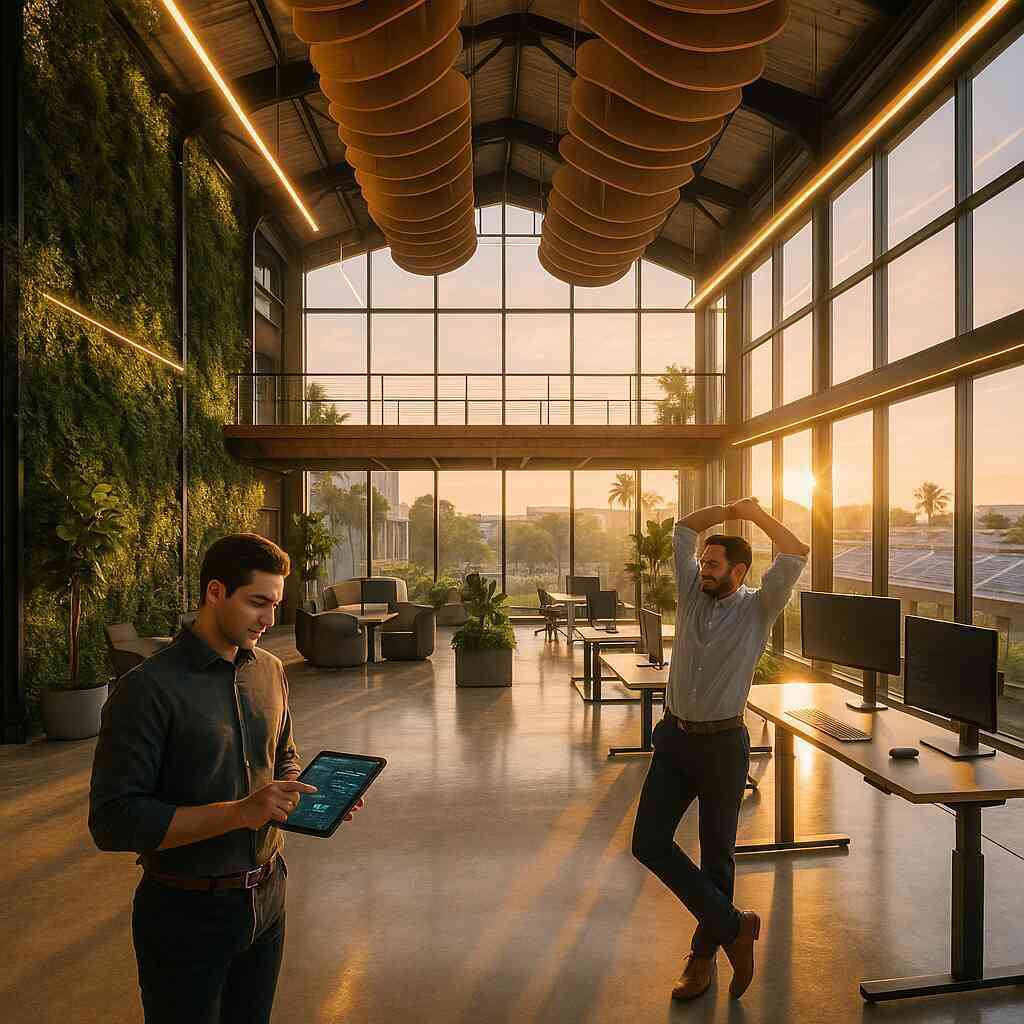
Rethinking the Local Office
Office retrofits transform an existing building into a workspace that feels new, performs better, and aligns with today’s flexible work culture. In West Palm Beach the practice is booming, driven by hybrid schedules, rising energy costs, and a regional push for climate-resilient construction.
Retrofit vs. Traditional Renovation
A conventional renovation often refreshes finishes or rearranges walls. A retrofit digs deeper, updating core systems—infrastructure, insulation, lighting, and data—to unlock long-term value. Think of it as surgery instead of a facelift. The approach is especially useful when:
- A tenant downsizes the footprint but needs higher collaborative density.
- Landlords reposition an aging property to compete with new builds.
- Companies target sustainability certifications without relocating.
Why West Palm Beach Is a Hotspot
Adaptive Reuse Potential
Disused warehouses, retail shells, and historic banks dot the urban fabric. Their tall ceilings, large windows, and central locations are ideal for creative offices once modern systems are installed.Climate Realities
High humidity, salt air, and hurricane risk demand robust envelopes and mechanical equipment. Retrofitting allows owners to correct weak spots and add storm-rated components without tearing a building down.Economic Incentives
Municipal rebates, utility programs, and insurance discounts reward efficiency upgrades such as variable-refrigerant-flow (VRF) HVAC and impact-rated glazing.
Key Goals Every Retrofit Should Address
1. Flexibility for Hybrid Work
Hot-desking, moveable walls, and digital booking tools let teams scale up or down each day. Installing under-floor power and modular furniture grids makes future rearrangements simple.
2. Energy & Operating Cost Reduction
- High-performance insulation closes thermal bridges.
- Smart sensors adjust lighting and cooling to real-time occupancy.
- Demand-controlled ventilation trims fan energy on low-traffic days.
Lower utility bills strengthen net operating income and property valuation.
3. Employee Wellness & Brand Culture
Lighting tuned to circadian rhythms, acoustic treatments, and biophilic features (living walls, natural textures) create an environment people enjoy. Healthy, engaged employees are more likely to commute in, justifying the real-estate investment.
Core Components of a High-Performance Retrofit
| Component | Typical Upgrade | Benefit |
|---|---|---|
| HVAC | VRF systems, DOAS with energy recovery | Zone control, reduced energy draw |
| Envelope | Closed-cell spray foam, reflective roofing | Lower heat gain, moisture resistance |
| Lighting | LED fixtures, daylight sensors | 50-70 % energy savings, better visual comfort |
| Data | Fiber backbone, PoE networking | Future-proof bandwidth, flexible device placement |
| Security & Access | Cloud-based badge readers, touchless entries | Simplified credential management, hygiene |
Planning and Budget Control
Define a Vision Early
Gather leadership, facilities, and end-user representatives. Map cultural goals (innovation, focus work, client hospitality) to spatial requirements.Commission an Energy & Envelope Audit
A data-driven baseline reveals which systems deliver the fastest payback. In humid climates, sealing the envelope often outranks solar panels for ROI.Layered Cost Modeling
Good-better-best estimates clarify trade-offs. For instance, shell-and-core insulation may cost more upfront but allow a downsized mechanical plant that offsets the premium.Procurement Timing
Lock materials and equipment early to avoid price spikes, especially for electrical gear with long lead times.
Working With a West Palm Beach Contractor
A licensed general contractor familiar with retrofits:
- Coordinates structural reinforcement for new loads (server racks, green roofs, or demountable partitions).
- Navigates local permitting, especially historic or coastal code requirements.
- Manages phasing so parts of the office remain operational when possible.
On complex projects, owners often choose a construction-manager-at-risk (CMAR) delivery method. The CM commits to a guaranteed maximum price while collaborating with the architect during design, reducing surprises later.
Typical Retrofit Timeline (Medium-Size Office)
- Pre-Design & Audit – 4–6 weeks
- Schematic & Budget Alignment – 6 weeks
- Design Development & Permitting – 8–10 weeks
- Construction – 16–24 weeks, depending on phasing
- Commissioning & Move-In – 2 weeks
Measuring Success After Move-In
- Energy dashboard shows actual kWh and chilled-water savings versus baseline.
- Indoor air quality sensors track CO₂, humidity, and VOC levels.
- Employee surveys gauge satisfaction with lighting, acoustics, and collaboration space.
- Space-utilization analytics refine desk-to-meeting-room ratios over time.
Final Thoughts
Office retrofits in West Palm Beach are more than cosmetic updates. They weave advanced building science, employee wellness, and brand storytelling into the existing urban fabric. By approaching each project with clear objectives, data-driven design, and disciplined budgeting, owners can unlock high-performing workplaces that attract talent, cut operating costs, and stand resilient against coastal challenges.
This overview can serve as a roadmap whether you are a tenant considering a footprint refresh or a building owner planning a full-scale repositioning. A thoughtful retrofit not only extends the life of a structure—it reimagines how people experience work for years to come.
What Are Office Retrofits by West Palm Beach Renovations


Comments
Post a Comment