South Florida Green Construction: RENOVA’s Sustainable Edge
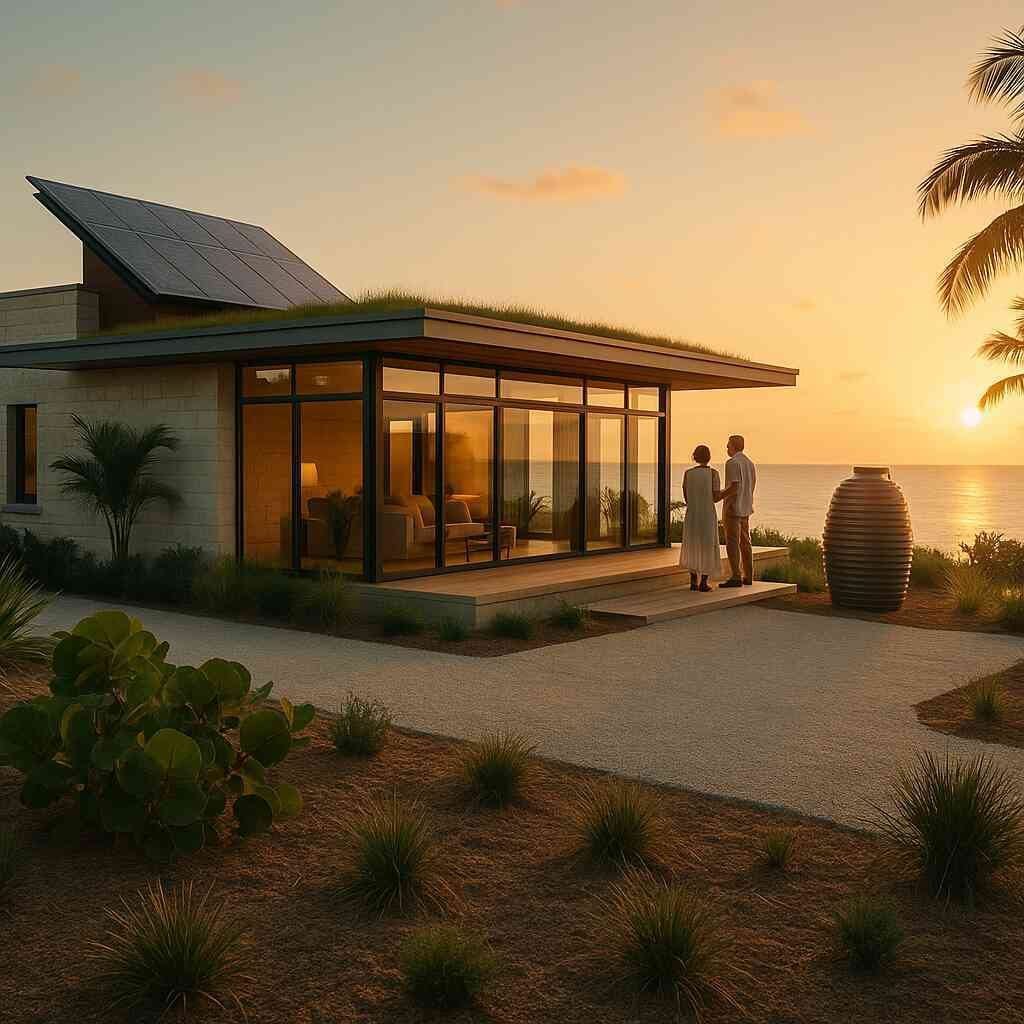
Building Smarter Along the Palm Beach Coast
South Florida’s construction scene is changing fast. Home-owners and developers now look beyond curb appeal to ask a tougher question: will this structure thrive in heat, hurricanes, and a carbon-conscious future? This guide explains how RENOVA applies modern green-building principles to meet that challenge.
Why Sustainability Matters in Coastal Neighborhoods
The Atlantic shoreline offers endless sun and ocean views, yet it also brings corrosive salt spray, storm surge, and extreme humidity. Conventional building methods often translate into higher insurance premiums, rapid material fatigue, and costly cooling bills. A well-designed green home tackles those issues simultaneously by:
- Fortifying the envelope against 150-mph winds and flying debris.
- Using thermal insulation and reflective roofing to cut air-conditioning loads.
- Managing rainwater on-site to reduce street flooding and algae blooms.
- Selecting finishes that keep indoor air clean even when windows stay closed for days.
When done right, sustainable construction does not add complexity for the owner—it subtracts long-term risk.
RENOVA’s Four Pillars of Eco-Conscious Craft
1. Life-Cycle Thinking
Every RENOVA project begins with a material inventory. Teams compare framing options, concrete blends, and finish products based on embodied carbon, regional availability, and eventual recyclability. Longer-lasting assemblies may cost a bit more upfront, yet they deliver decades of reduced maintenance and replacement waste.
2. Transparent Project Management
Clients receive clear milestones showing energy targets, air-sealing goals, and waste-diversion percentages. Field supervisors verify installation details with photos and blower-door data rather than vague checklists. That transparency helps owners understand exactly what they are paying for.
3. Job-Site Stewardship
Recycling starts the moment ground is broken. Crews separate concrete, metals, and wood into labeled bins. Salvaged doors, cabinets, and lighting fixtures are catalogued for donation. Portable generators run on calibrated load settings to curb diesel use, and dehumidifiers are set on timers to avoid needless runtime during mild nights.
4. Comfort Driven by Performance Metrics
A green home must first be a comfortable home. RENOVA specifies insulated concrete forms, high-impact windows with low-e coatings, and variable-speed HVAC equipment sized through manual load calculations—not rule-of-thumb tonnage. Indoor air is filtered through MERV-13 media, and humidity stays below 60 % even in August.
Beyond Code: Resilient Details That Pay Off
Building codes define the minimum. RENOVA’s standard package often exceeds those benchmarks:
- Raised Mechanical Platforms keep air handlers well above potential flood levels.
- Solar-Ready Conduits run from roof deck to electric panel, simplifying future photovoltaic installs.
- Permeable Pavers let driveways double as stormwater filters, relieving municipal drains during cloudbursts.
- Native Coastal Landscaping—sea-grape, muhly grass, and cocoplum—requires less irrigation and fertilizer than imported ornamentals.
Each small upgrade compounds into lower ownership costs and faster post-storm recovery.
Managing Heat Without Over-Cooling
Air-conditioning remains the largest energy expense for most South Florida homes. RENOVA addresses cooling loads with a layered strategy:
- Light-colored, high-albedo roofing pushes more infrared radiation back to the sky.
- R-10 continuous exterior insulation limits conductive heat gain through block walls.
- Deep eaves, trellises, and Bahama shutters shade glazing where solar heat is strongest.
- Smart thermostats learn occupancy patterns, easing compressor cycles when rooms sit empty.
The result is a steady interior temperature with fewer spikes that force the A/C to work overtime.
Healthier Interiors for Year-Round Living
Humidity can make even a brand-new home feel stuffy. Vapor-permeable yet water-tight coatings allow assemblies to dry outward without letting liquid water in. Low-VOC paints, adhesives, and cabinet finishes prevent off-gassing, while fresh-air ERV systems maintain oxygen levels without introducing unfiltered outdoor humidity. Homeowners report fewer allergy symptoms and less visible mold growth—clear quality-of-life wins.
The Value Proposition for Investors
Sustainable features are no longer niche add-ons. Lenders and insurers increasingly reward homes that demonstrate:
- Verified wind-mitigation measures.
- Documented energy savings through blower-door and duct-leakage tests.
- Durable materials that postpone major capital repairs.
Properties meeting those criteria often enjoy lower premiums and higher resale interest, especially among buyers concerned about climate risk.
How to Start a Green Build or Remodel
- Define Performance Goals Early. Energy, water, and durability targets guide every later decision.
- Choose an Integrated Team. Architect, builder, and trade partners must all share the same sustainability vocabulary to avoid cost overruns.
- Set Measurable Benchmarks. Blower-door numbers, waste-diversion rates, and water-use projections turn vague ideals into actionable checkpoints.
- Plan for Future Technology. Conduit stubs, battery backup clearances, and EV-charging rough-ins cost little during construction but save thousands later.
Key Takeaways
- Green construction in South Florida is first about resilience, then about efficiency.
- RENOVA blends code compliance with voluntary standards to create homes that outperform typical builds.
- Transparency—both financial and technical—helps owners track progress and verify results.
- Integrated details such as solar-ready roofs and permeable hardscapes provide immediate benefits while preparing properties for the next decade.
Choosing sustainable construction is no longer an ethical bonus feature; it is a practical strategy for protecting families, investments, and coastal ecosystems alike. By focusing on measurable performance and materials that last, RENOVA positions each project to weather the storms—literal and economic—that define life on Florida’s Atlantic edge.
RENOVA Guide to South Florida Green Construction Excellence


Comments
Post a Comment