Winter Kitchen Upgrades: 10 Luxe Trends by Renova
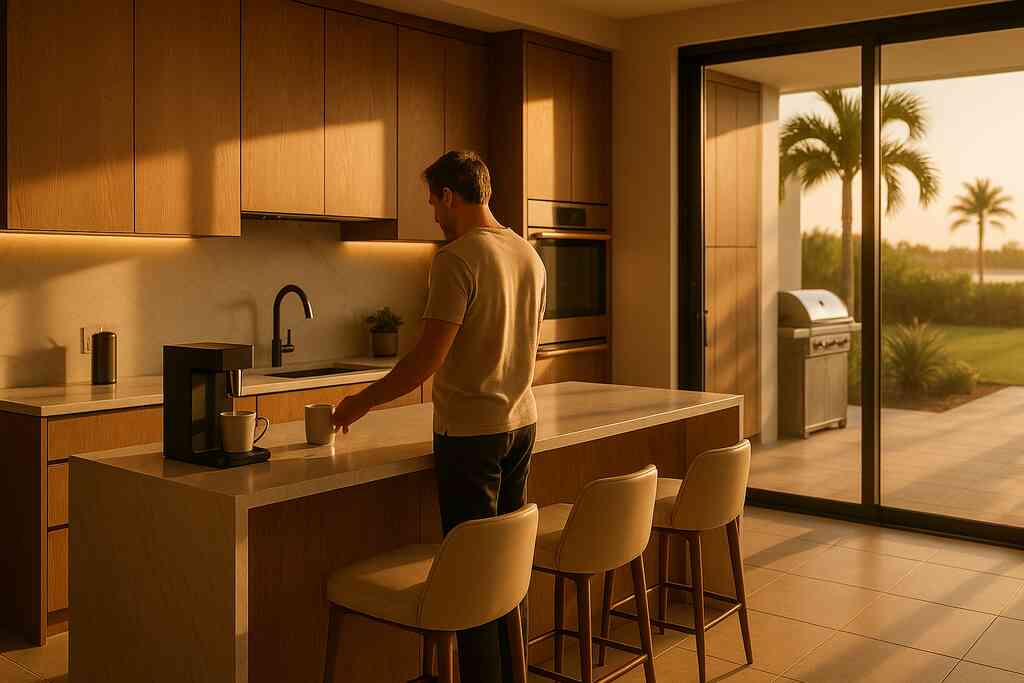
South Florida’s Perfect Season for a Kitchen Refresh
Cool mornings, lighter social calendars, and lower humidity make winter the best window for interior remodeling across Palm Beach County. Materials cure cleanly, subcontractor schedules open up, and local building departments process permits fast. All of that adds up to shorter project timelines and a smoother experience for homeowners who choose a full-service design-build firm like Renova.
Below, explore ten kitchen upgrades that bring immediate comfort in cooler months while adding year-round value.
1. Radiant Flooring Under Large-Format Porcelain
A heated floor eliminates the shock of cold tile on winter mornings. Electric mats bond directly to uncoupling membranes, so finished height barely changes—ideal for quick remodels. Hydronic tubing offers whole-home efficiency for larger estates fed by a heat-pump water heater. Either way, thermostats with motion sensors limit runtime and keep energy use modest.
2. Winter-Friendly Quartz With Warm Veining
Quartz remains the go-to surface for durability, but new colorways lean creamy rather than stark white. Soft taupe or sandy veining visually warms the space and hides flour dust during holiday baking. Matte leathered finishes cut glare from low winter sun that pours through eastern windows.
3. Steam-Assist Wall Ovens for Cold-Weather Comfort Food
Steam-convection hybrids roast a chicken with crisp skin and juicy meat in half the time of a traditional oven. Built-in water reservoirs remove the need for a separate countertop steamer, freeing space for prep. Most models now link to Wi-Fi, so you can preheat from the farmers market and walk into a ready kitchen.
4. Insulated Low-E Glass in the Coastal Zone
Even subtropical homes feel drafty when a January front rolls through. Replacing single-pane sliders with insulated impact glass keeps kitchens quieter and more temperature-stable. Low-E coatings bounce infrared heat back inside during cool evenings yet block UV rays that fade cabinets.
5. Walk-In Pantry With Passive Climate Control
A windowless pantry lined with continuous gaskets, insulated panels, and an ultra-quiet exhaust fan holds 55–65 °F without active refrigeration. That is perfect for wine, chocolate, and stone fruit that bruises in an over-stuffed fridge. Separate the door with a soft-close automatic sweep, and conditioned air stays put.
6. Layered, Energy-Smart Lighting Scenes
Shorter days spotlight the need for well-planned illumination. Combine toe-kick LEDs (nighttime safety), dimmable task strips under uppers (meal prep), and a sculptural pendant over the island (ambience). All tie into a single smart dimmer keypad. Tunable white options shift from crisp 4000 K at breakfast to warm 2700 K for late-night cocoa.
7. Appliance Garage and Morning Coffee Station
Visual calm equals perceived warmth. A pocket-door garage hides the toaster, mixer, and espresso machine yet keeps them plugged in on a deep quartz shelf. Add a hot-water tap and you have a barista-grade setup without counter clutter. Because everything stays inside the thermal envelope, steam never reaches upper cabinet faces.
8. Dual-Fuel or Induction-Plus-Gas Cooktops
Serious cooks like the immediacy of gas for wok work, but induction beats it for simmer control and safety. Many premium cooktops now pair a two-zone gas bridge with four induction rings under one pane of ceramic glass, giving the best of both technologies without enlarging the cutout.
9. Mixed-Metal Fixtures for Visual Warmth
Brushed bronze faucets, matte black pulls, and soft gold pendants create contrast against cool winter light. The trick is repeating each finish at least twice so the palette feels intentional. For example, match a bronze faucet with the apron-front sink grid and a bronze band on the range hood.
10. Heat-Recovery Ventilation Hood
An HRV hood exhausts cooking fumes while capturing outgoing warmth through a counter-flow core, then tempers incoming fresh air. Air quality improves without the energy penalty of an always-open window. In Florida’s humid climate, the unit also limits moisture spikes that can warp hardwood cabinet doors.
Why a Design-Build Approach Speeds Winter Projects
Traditional remodels juggle separate architects, engineers, and trades—coordination gaps that stretch timelines. A single-contract design-build firm delivers 3-D renderings, engineering, and on-site supervision under one roof. That means flooring crews arrive the day after drywall texture instead of a week later, and change orders are rare because specifications stay clear.
Added Comfort During Construction
Renova sets up dust walls, negative-pressure air scrubbers, and a temporary kitchenette so life proceeds with minimal disruption. Clear communication with neighbors keeps the job site respectful. When winter visitors arrive, your home feels calm, not chaotic.
Key Takeaways
• Winter’s low humidity helps finishes cure and speeds inspections.
• Heated floors, insulated glass, and steam-assist ovens make the kitchen cozier.
• Smart lighting, HRV ventilation, and efficient appliances lower energy costs.
• A unified design-build team compresses timelines and protects quality.
Upgrading a kitchen in the cooler months is not about rushing work before summer returns. It is about leveraging seasonal advantages to craft a space that feels welcoming in January yet performs effortlessly in July. With thoughtful planning and a trusted design-build partner, your winter renovation can deliver year-round luxury and efficiency.
Top 10 Winter Kitchen Upgrade Trends via RENOVA Signature


Comments
Post a Comment