Best Eco Materials for Resilient West Palm Beach Homes
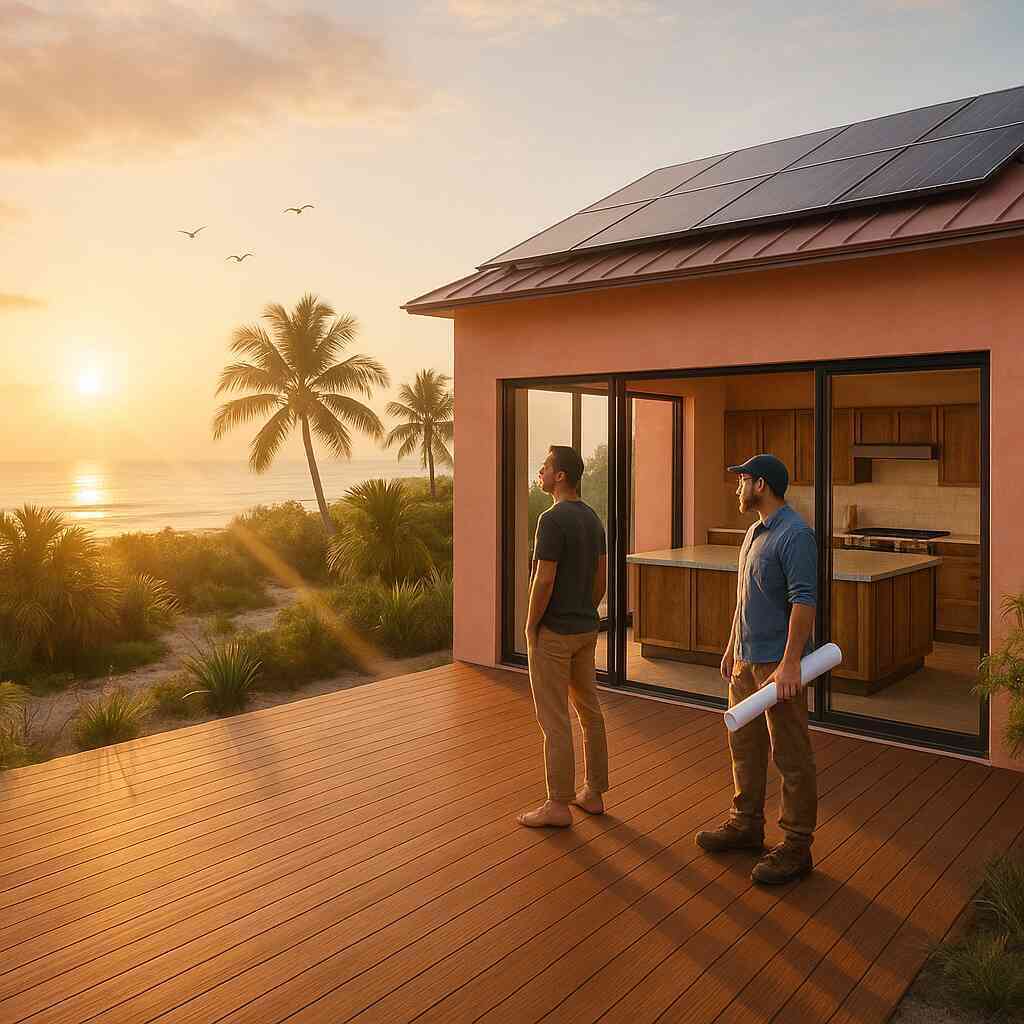
Building Green in a Coastal Climate
South Florida’s heat, humidity, salt air, and sudden storms expose every surface of a home to premature wear. Choosing durable eco-friendly materials is not just an environmental statement—it is often the smartest way to protect an investment. The overview below explains why sustainable products excel along the Atlantic shoreline and outlines five standout options that local contractors regularly specify.
Why Sustainable Materials Matter on the Coast
- Dimensional Stability – Many green products, such as strand-woven bamboo or composite decking, are engineered to stay flat even when relative humidity swings from 50 % to 90 % in a single afternoon.
- Lower Toxicity – Zero-VOC paints and formaldehyde-free cabinets help keep indoor air healthy when windows stay closed during hurricane season.
- Extended Service Life – Materials built from recycled glass, mineral binders, or rapidly renewable fibers resist mold, UV deterioration, and salt corrosion, reducing replacement cycles.
- Reduced Embodied Carbon – Sourcing locally or from fast-growing feedstocks cuts greenhouse-gas emissions, aligning with Palm Beach County resilience goals.
Five High-Performing Options for 2026 Renovations
1. Strand-Woven Bamboo Flooring
Bamboo matures in three to five years, making it one of the fastest renewable resources on the planet. When the stalks are shredded, compressed, and resin-bound under intense pressure, the resulting planks achieve hardness ratings that rival Brazilian cherry. Key benefits:
- Dimensional stability in humid rooms and near patio doors.
- Naturally resists insect activity common in subtropical zones.
- Accepts low-VOC, UV-cured finishes for added fade protection.
- Available in modern wide-plank profiles that complement coastal interiors.
Installation tip: Ask the installer to acclimate planks for at least 48 hours inside the home to equalize moisture content before nailing or floating the floor.
2. Recycled Glass Countertops
Crushed post-consumer bottles and mirror fragments are suspended in cement or resin bases to create vibrant terrazzo-style slabs. For kitchens and baths exposed to sunscreen, salt, and citrus spills, recycled glass offers:
- Non-porous surface that will not harbor bacteria or absorb stains.
- Heat resistance suitable for hot pans fresh off the cooktop.
- Color options ranging from sea-foam greens to pure white, echoing local seascapes.
- Lower landfill impact by giving glass a second life.
Care tip: Wipe acidic spills promptly and use a pH-neutral cleaner to maintain the glossy finish.
3. FSC-Certified Cypress or Accoya Cladding
Exterior siding takes the brunt of coastal wind and salt spray. Fast-grown Southern cypress, harvested under Forest Stewardship Council (FSC) guidelines, contains natural oils that repel insects and moisture. Another option is acetylated pine sold under brands like Accoya, where wood is chemically modified with vinegar-derived acetic anhydride to improve durability. Either choice offers:
- Class 1 durability rating comparable to old-growth hardwoods.
- Tight grain that holds paint or stain longer than typical pine.
- Sourcing within the Southeast, trimming transport emissions.
Design note: Mix vertical shiplap with horizontal accent boards to create depth while still relying on a single responsibly harvested species.
4. Mineral-Based Zero-VOC Paints
Conventional latex coatings may emit solvents for months. Newer formulations use potassium silicate or limestone binders that chemically bond to masonry or stucco, forming a vapor-permeable shell. Advantages include:
- Zero off-gassing, improving indoor air quality for allergy sufferers.
- High reflectance, lowering wall temperatures and easing HVAC loads.
- Algae and mold resistance without heavy biocide reliance.
- Matte, eggshell, and satin sheens suited to contemporary aesthetics.
Application advice: Because mineral paints cure by carbonation rather than evaporation, observe manufacturer guidance on humidity levels and substrate pH before rolling the first coat.
5. Composite Decking from Ocean-Bound Plastics
Outdoor living spaces are central to Palm Beach homes, yet traditional pine decks decay quickly in salty air. Boards made from recycled high-density polyethylene blended with agricultural fibers remove thousands of pounds of plastic from the waste stream and deliver:
- 25-year or longer fade and stain warranties.
- No splintering, making them barefoot-friendly around pools.
- Hidden-fastener systems that speed installation and create sleek lines.
- Color palettes that mimic teak, mahogany, or modern driftwood gray.
Maintenance reminder: A light soap-and-water wash each spring keeps the surface looking fresh—no sanding or sealing required.
How Local Contractors Curate a Sustainable Palette
A licensed West Palm Beach general contractor begins with a moisture and wind-load audit of the existing structure. Data from that inspection shapes a material matrix balancing aesthetics, code compliance, and carbon footprint. Important steps include:
- Verifying third-party labels such as FSC, FloorScore, or GreenGuard.
- Prioritizing vendors that manufacture within 500 miles to reduce trucking emissions.
- Scheduling deliveries just in time so pallets do not absorb excess moisture on site.
- Segregating job-site waste—bamboo cutoffs, paint cans, packing foam—for proper recycling.
Collaboration is essential. Designers, structural engineers, and the homeowner meet early to set performance targets: wind speed ratings, solar-heat-gain coefficients, allowable VOC thresholds. Clear benchmarks prevent costly mid-project substitutions.
Practical Tips for Homeowners Planning a Green Remodel
- Ask for product data sheets up front. A reputable supplier will provide emissions and durability testing results without hesitation.
- Budget for air-sealing and insulation alongside flashy finishes. A bamboo floor still feels clammy if the subfloor traps moisture.
- Combine small upgrades. Replacing siding? Run conduit for future solar panels before the walls close.
- Consider lifecycle cost, not only purchase price. Many eco materials carry longer warranties that offset higher upfront expense within a few hurricane seasons.
Key Takeaways
Sustainable building products are no longer fringe options. In the challenging coastal environment of West Palm Beach they often outperform conventional choices while reducing environmental impact. Strand-woven bamboo, recycled glass, responsibly harvested wood, mineral paints, and recycled-plastic decking each solve a specific problem posed by salt, sun, or moisture. Partnering with an experienced local contractor ensures these materials are specified, sourced, and installed for maximum resilience. The result is a home that feels fresh, healthy, and ready to face the next tropical afternoon—as well as the next decade—with minimal maintenance.
Top 5 Eco Materials by West Palm Beach Renovations


Comments
Post a Comment