BIM-Driven Retail Construction in Delray Beach Explained
Quick Overview
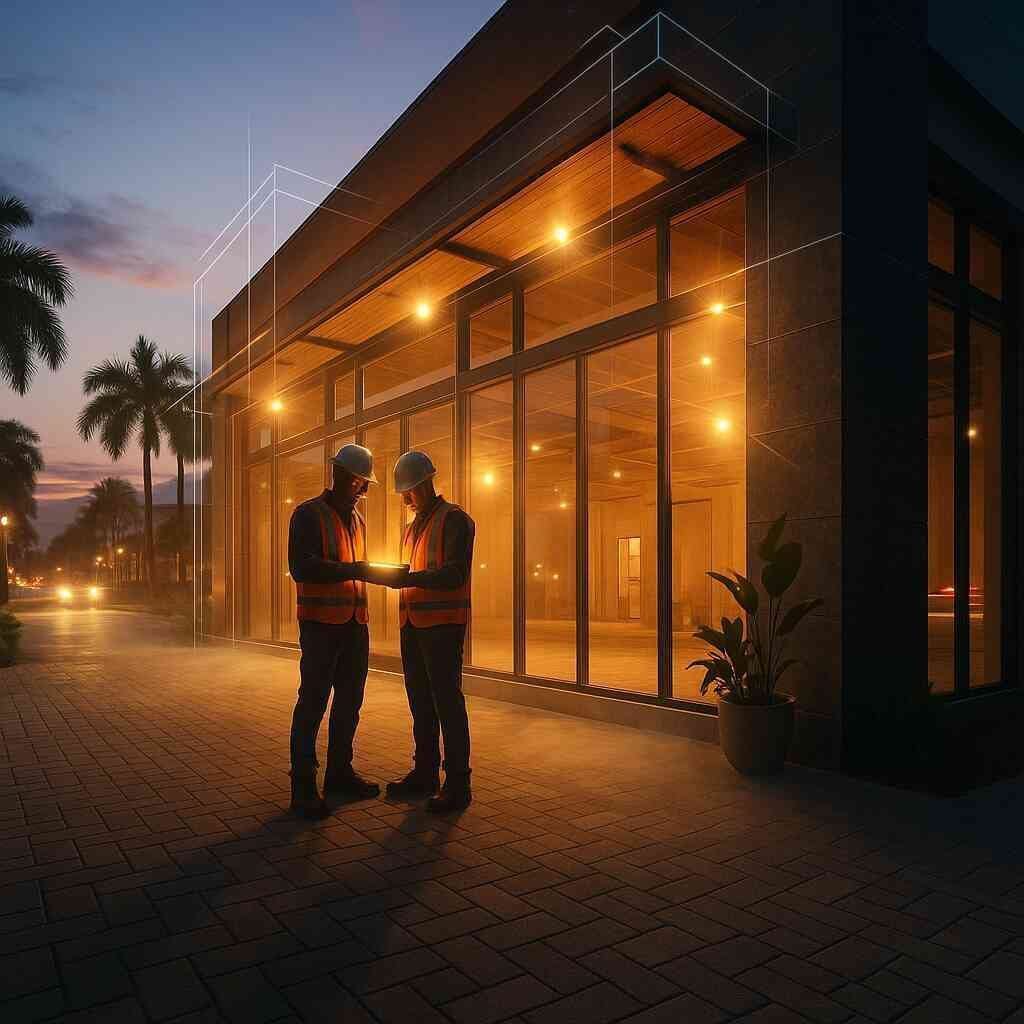
BIM-driven retail construction pairs Building Information Modeling (BIM) with lean, collaborative delivery methods. In Delray Beach, where retail spaces must pivot with seasonal crowds and strict hurricane codes, the approach offers owners clearer insight, faster schedules, and tighter cost control.
This guide breaks down how a licensed general contractor such as RENOVA applies BIM to renovate or build new storefronts along Atlantic Avenue and beyond.
1. Why Delray Retail Needs Digital Precision
Delray Beach shops often occupy narrow footprints tucked into mixed-use buildings. Every inch of back-of-house space taken by ductwork or electrical gear reduces rentable floor area. Traditional 2-D drafting hides those conflicts until demolition begins. BIM allows the project team to:
- Layer zoning setbacks, wind-load requirements, and landlord criteria in a single model.
- Visualize clearance around MEP systems before a single hanger is bought.
- Share exact quantities with estimators so cost exposure appears early, not during the final buy-out.
City examiners are also growing accustomed to 3-D submissions. Clear life-safety views shorten review cycles and can eliminate an entire round of resubmittals.
2. From Laser Scan to Coordinated Model
The process starts with a high-density point cloud of the existing shell space. Scans record slab elevations, column plumb, and even minor deflections in the underside of the deck. That data matters when a future millwork soffit must sit level across forty feet of storefront.
Key Steps
- Scan & Validate
Crews capture millions of points in a single night after store hours. Survey control pins keep the scan tied to state plane coordinates. - Model Authoring
Architects trace walls, floors, and roofs. Structural and MEP trades add their layers next, using agreed-upon tolerances so overlaps are obvious. - Issue Tracking
When a sprinkler main clips a lighting cove, the model flags the violation. Responsible parties receive a ticket, propose a fix, and close the item—all before steel is ordered. - Prefabrication
Once clashes are resolved, trades export shop-ready files to CNC routers or pipe cutting machines. Field installation becomes an assembly exercise, not a discovery mission.
The result is a federated model that doubles as a living owner’s manual, complete with finish schedules, part numbers, and warranty dates.
3. Elevating the In-Store Customer Experience
Modern shoppers expect climate comfort, strong Wi-Fi, and curated visual moments worthy of social media posts. BIM helps designers test these touchpoints in advance.
- Path-of-Travel Analysis – Simulate circulation to spot bottlenecks near fitting rooms or cash wraps.
- Lighting Scenarios – Virtually dim fixtures to preview focal points on product displays.
- Acoustic Zoning – Map speaker coverage and ambient noise, ensuring music energizes without overpowering conversation.
Mechanical units remain hidden yet serviceable. Return-air plenums nest inside sculptural soffits that align with brand aesthetics, all confirmed in the model before framing starts.
4. Collaboration That Reduces Rework
Weekly model reviews replace old-fashioned plan room meetings. Participants fly through sections on a shared screen, measure clearances in real time, and assign tasks instantly. Benefits include:
- Lower Contingency – When uncertainties disappear, contingency budgets shrink accordingly.
- Shorter Schedules – Prefab assemblies ship just in time, trimming trade overlaps.
- Stronger Trade Buy-In – Subcontractors who help solve problems digitally are more invested in field success.
5. Data-Rich Handover for Owners
At turnover, the retailer receives a model that is far more valuable than a box of paper as-builts. Typical embedded data fields include:
- Equipment serial numbers and warranties
- Finish material maintenance guides
- Energy performance targets for lighting and HVAC zones
Facility staff can click a diffuser in the ceiling view, read the CFM design value, and link directly to the service manual. When a seasonal layout change is planned, the same model helps confirm that new shelving will not block return-air paths or egress widths.
6. Practical Takeaways for 2026 Projects
- Engage BIM Early
Savings increase when clash detection happens before procurement. - Insist on Open Communication
Cloud-based platforms keep architects, engineers, and trades viewing the same information set. - Leverage the Model Post-Occupancy
Treat BIM as a facilities tool, not just a design phase deliverable.
Closing Thoughts
BIM-driven delivery turns the complex choreography of retail construction into a transparent, data-rich process. For Delray Beach owners balancing hurricane code, tourist peaks, and brand storytelling, that clarity is worth more than any single cost line. It compresses schedules, protects margins, and—most importantly—creates shopping environments that feel effortless to the customer while operating with engineered discipline behind the scenes.
Comparing RENOVA BIM Driven Retail Builds in Delray


Comments
Post a Comment