Delray Beach Kitchen Ventilation Code Guide for Spring 2026
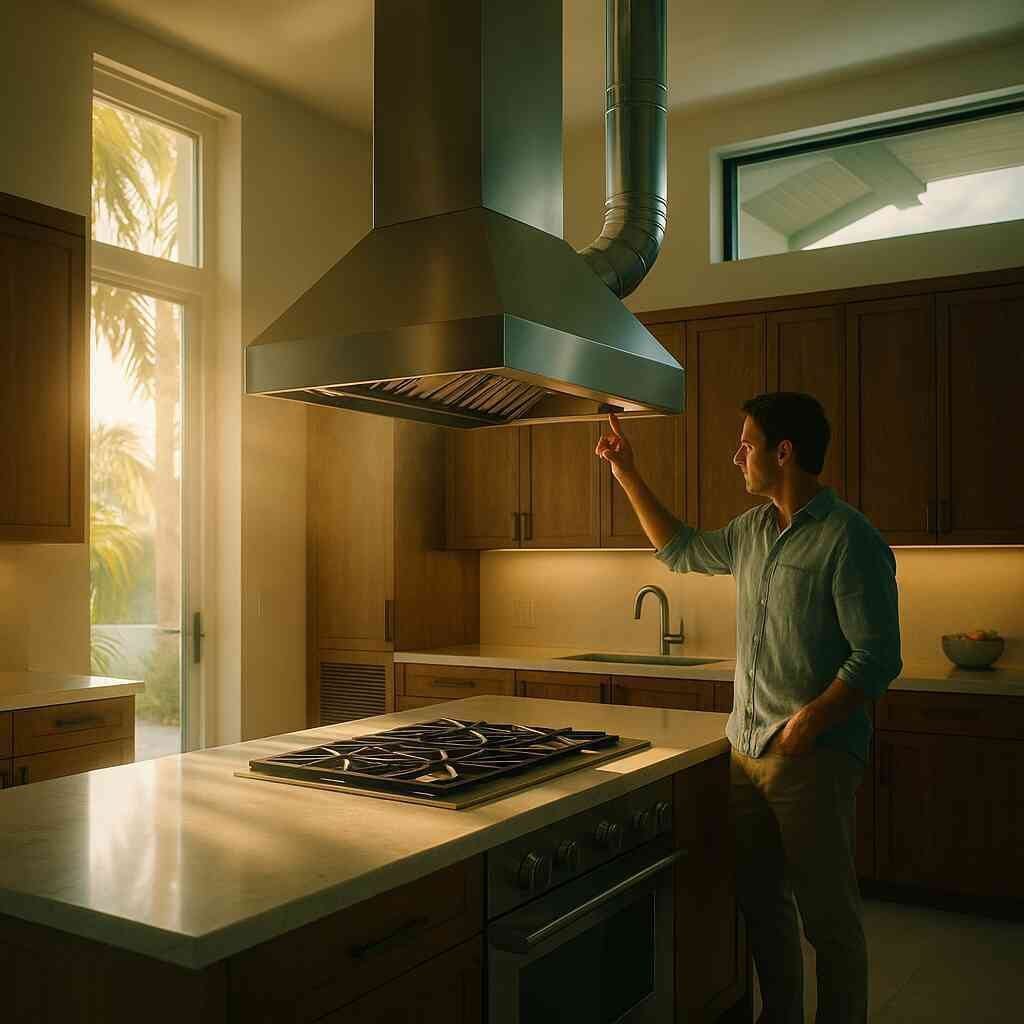
Understanding Kitchen Ventilation in Delray Beach
Spring 2026 remodeling season is the ideal time to refresh a kitchen, yet new cabinets and counters will only shine if the air above them stays clean. This guide explains how the latest Delray Beach and Palm Beach County codes shape every range hood, duct, and roof cap so your project passes inspection and feels pleasant the moment you start simmering.
Why Spring Renovations Start With Airflow
South Florida’s warm, humid air traps cooking smoke and moisture longer than drier climates. When outdoor temperatures rise, negative pressure inside a sealed, air-conditioned home can pull pollen and grill smoke through every gap. A properly sized kitchen exhaust system prevents that tug-of-war by removing heat and odors while balanced make-up air replaces what leaves. Beginning design with these calculations keeps walls free of condensation and doors from slamming each time the blower starts.
Minimum Capture and Exhaust Rates
- The Florida Building Code (Residential) sets a baseline of 100 CFM of exhaust per linear foot of cooktop. A 36-inch range therefore needs at least 300 CFM.
- High-performance gas or professional-style ranges often require 600 CFM or more. Local officials look for manufacturer specifications attached to the permit set.
Designers must also verify that the chosen hood width extends at least three inches beyond each side of the cooktop for reliable capture of rising vapors.
Key Requirements in the Florida Building Code
- Dedicated Ducts: Kitchen exhaust lines may not tie into bath fans, dryer vents, or soffit returns.
- Outdoor Termination: Recirculating hoods are not allowed in new construction or full-gut remodels. All air must discharge outdoors through a roof or wall cap with a gravity damper.
- Smooth Interior Surfaces: Flexible foil duct is prohibited. Rigid 22-gauge stainless or 18-gauge galvanized steel is required once the system exceeds 400 CFM.
- Accessible Clean-Outs: Every change in direction beyond 45° needs a service panel within 3 feet so grease buildup can be inspected yearly.
Palm Beach County Amendments to Know
Palm Beach County adopts the state code and adds performance checks aimed at maintaining balanced indoor pressure:
- Pressure Testing: At rough-in, technicians must prove that supply air equals exhaust within 10 percent. The measurement is taken with a calibrated digital manometer before drywall goes up.
- Sound Limits: Hoods cannot exceed 70 dB on their highest setting when measured three feet from the front edge. Moving the blower into the attic or onto the roof is a common strategy.
- Lighting Criteria: Integrated task lighting must be dimmable, rated for damp locations, and deliver at least 80 CRI with a preferred color temperature near 3000 K for accurate food presentation.
Failing any of these tests often delays cabinets and tile installation, so contractors schedule them early.
Material and Installation Standards
Residential kitchens rarely see the extreme grease loads found in restaurants, yet county fire marshals still demand commercial-grade discipline:
- Gauge and Joint Quality: Welded or lock-formed seams prevent grease seepage. Foil tape is only acceptable on exterior insulation jackets, never on inner duct runs.
- Equivalent Length Limits: Each 90-degree elbow counts as 15 feet of straight duct. Keeping total equivalent length under 45 feet ensures the blower delivers its rated CFM without excess noise.
- Clearances Through Combustibles: Where a duct passes through wood framing, installers leave a one-inch air gap or use listed fire-stop sleeves. Chases are framed slightly oversized so inspectors can see the clearance.
Noise, Lighting, and Make-Up Air
A quiet kitchen encourages cooks to use the fan instead of ignoring it. Inline or remote blowers reduce motor whine, while acoustically lined ducts mutely carry air outdoors. Every exhaust system larger than 400 CFM must include an interlocked make-up air unit that powers on automatically. These devices temper incoming air so the HVAC system is not overwhelmed and prevent negative pressure from drawing conditioned air out through window gaps.
Working With a Licensed General Contractor
Ventilation crosses framing, electrical, mechanical, and roofing disciplines. A licensed general contractor coordinates the schedule so each trade arrives at the right moment and no one closes a wall prematurely. The same professional often supplies the sealed duct drawings, structural calculations for roof penetrations, and the pressure-balancing test results that reassure plan reviewers. Having all of that under one contract streamlines both accountability and timeline.
Typical Coordination Timeline
- Design Phase: Architectural plans include hood size, blower location, duct route, and termination point.
- Permit Submittal: The contractor files duct sizing spreadsheets and the make-up air specification alongside structural drawings.
- Rough-In Walkthrough: HVAC crew installs rigid duct, fire collars, and remote blower curbs before insulation.
- Pressure and Noise Test: Balance is measured; corrections happen while walls remain open.
- Finish Phase: Hood canopy, lighting, and controls are mounted after cabinets but before final paint.
Quick Checklist Before You Submit Plans
- Hood width extends at least 3 in. beyond cooktop on each side
- CFM calculation meets the 100 CFM per linear foot minimum
- Duct gauge, route, and total equivalent length noted on drawing
- Make-up air unit specified if exhaust exceeds 400 CFM
- Pressure-balancing test method listed
- Lighting specs show 80 CRI and 70 dB sound compliance
- Roof or wall cap height meets required clearances above the roof deck
Verifying each item early prevents costly redraws once the building department reviews your package.
Final Thoughts
Kitchen ventilation may not be as glamorous as waterfall islands or hand-made backsplash tiles, yet the comfort of a new space relies on it. By following Delray Beach and Palm Beach County’s spring 2026 code updates—dedicated ducts, welded joints, balanced make-up air, and quiet operation—you ensure that seared tuna aromas exit quickly while fresh, tempered air drifts back in. A licensed general contractor who understands these details can turn code language into a silent, dependable system that lets the beauty of your renovation take center stage.
RENOVA Guide to Delray Spring 2026 Kitchen Vent Codes


Comments
Post a Comment