Delray Beach Remodeling: Designing Kitchens for 2026 Flow
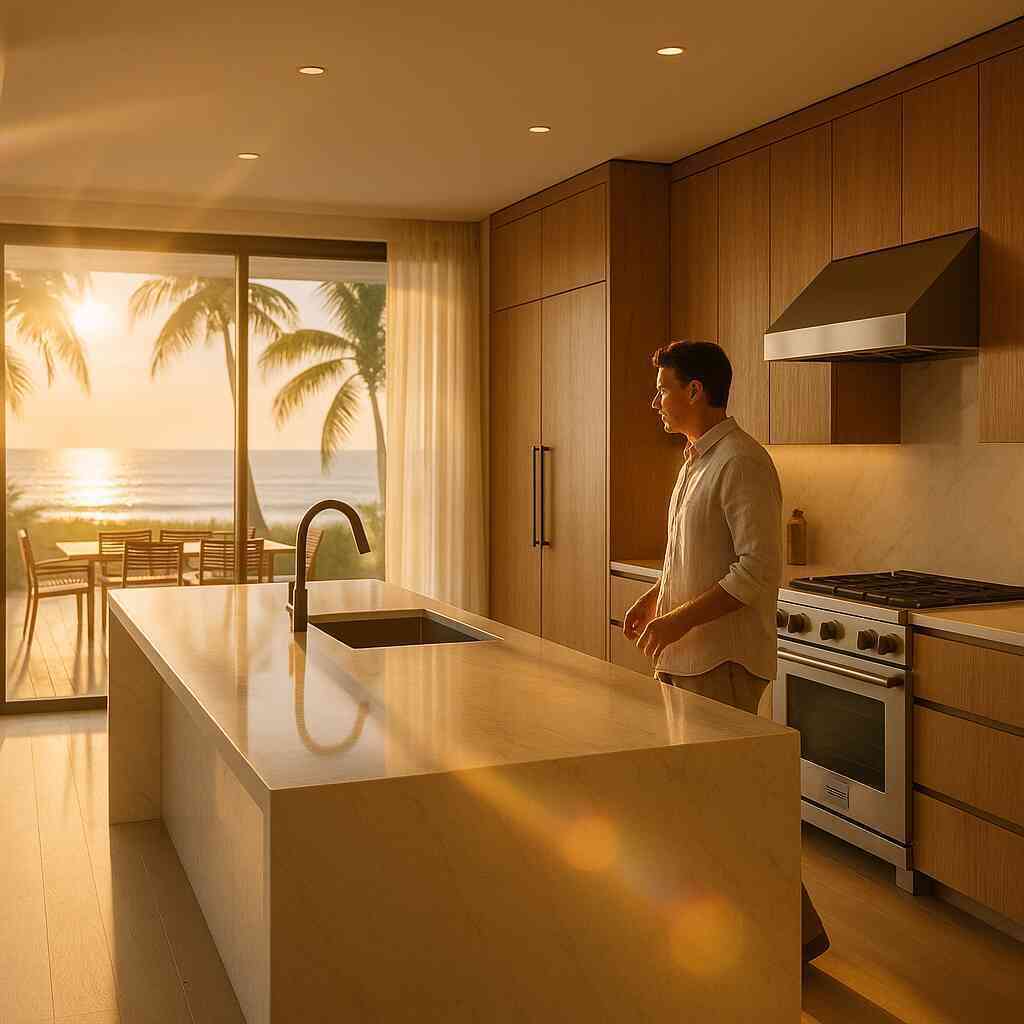
Coastal Flow: Why 2026 Kitchens Begin With Movement
The newest Delray Beach remodels do more than update finishes—they choreograph how people, supplies, and fresh ocean air move through the room. This overview explains the principles local builders use to create kitchens that feel effortless during a quiet weekday breakfast or a packed sunset party.
1. Map the Natural Routes First
Every successful plan starts with a traffic sketch. Designers walk the space with homeowners, pretending to unload groceries, rinse produce, and plate hors d’oeuvres. Those imaginary laps reveal tight corners, clashing appliance doors, or island stools that block a pivot. Once the routes are clear, cabinetry and utilities lock into place around them.
Key checkpoints:
- Place the refrigerator, sink, and cooktop so none is more than a few steps apart—an updated take on the classic work triangle.
- Keep main aisles at least 42 inches wide; 48 inches is ideal when two cooks share the line.
- Avoid dead ends. A peninsula works in small condos, but only if a secondary exit lets guests circulate without crossing the prep zone.
2. Anchor the Room With a Multi-Task Island
In coastal modern style, the island is both centerpiece and roundabout. Waterfall quartz or sintered stone visually grounds the room, while the overhang invites conversation. Under the surface, purpose outweighs ornament:
- Drawers for mixing bowls and small appliances trim back-and-forth steps.
- A prep sink or beverage fridge keeps toddlers and guests out of the chef’s main lane.
- Stool placement respects the 12-inch “knees-in” rule, so seating never jams walkway clearance.
3. Choose Materials That Survive Salt and Humidity
Delray’s subtropical climate challenges standard finishes. Remodelers specify products proven to stay stable when windows are wide open to the sea breeze.
- Marine-grade plywood boxes prevent cabinet warping.
- Low-porosity countertops shrug off citrus acids and sunscreen splatters.
- Powder-coated hardware resists pitting when salt air sneaks inside.
Durability protects the look, but it also preserves smooth drawer slides and soft-close hinges—the mechanical heart of any easy-moving kitchen.
4. Integrate Tech That Speeds, Not Distracts
Smart features earn their keep only when they remove friction.
- Touchless faucets let cooks switch from marinating mahi-mahi to slicing herbs without smearing handles.
- Induction ranges heat fast yet keep the room cooler than gas, easing airflow on humid nights.
- Under-cabinet LED strips adjust from bright task lighting to soft evening ambiance with a palm-sized remote.
All wiring is pre-planned, so outlets land exactly where blenders, phone chargers, and outdoor speakers need them—no counter-cluttering extension cords.
5. Conceal Storage; Reveal Space
Open-concept living demands clear sightlines to the patio and beyond. That doesn’t mean sacrificing pantry capacity.
- A flush, push-latch panel can hide a full walk-in pantry right beside the fridge.
- Vertical spice pull-outs slide between studs, leaving the backsplash uninterrupted.
- Deep toe-kick drawers capture seldom-used platters without raising upper cabinets to unreachable heights.
When everything has a discreet home, counters stay free for prep and the room breathes easier.
6. Borrow the Breeze With Flexible Boundaries
Sliding glass walls that pocket into the structure erase the line between cookspace and terrace. Indoors, ceiling coffers or a subtle floor inlay suggest pathways so guests instinctively know where to stand—no half walls required.
Outdoor considerations:
- Position the grill downwind of the main opening to keep smoke away from seating.
- Duplicate a small sink or drink station outside, reducing cross-traffic back into the kitchen.
- Choose porcelain pavers that match interior flooring heights to avoid trip hazards.
7. Fine-Tune With Human-Scale Ergonomics
Palm Beach County contractors use anthropometric data, not guesswork, to size every element:
- Countertops hover at 36 inches for most tasks; baking zones drop to 32 so rolling pins leverage body weight.
- Microwave drawers install at hip level, ending the overhead reach with hot dishes.
- Handles for dishwashers and fridge columns align horizontally, letting hands locate them by feel during a busy gathering.
These micro-adjustments add up to noticeable comfort, especially for homeowners who cook daily.
8. Simulate the Party Before Demo Day
Advanced remodelers run digital walk-throughs that predict congestion when ten guests crowd the island or when children race in from the pool. Virtual tweaks cost nothing compared with moving plumbing after framing. The result is a plan that behaves as elegantly during peak use as it does on a quiet morning.
9. Blend Aesthetics With Acoustics
Smooth circulation also relies on a pleasant soundscape. Designers specify quiet-close cabinet hardware, low-sonic range hoods, and acoustic panels disguised as art. Conversations stay clear even when the ice maker dumps a fresh batch or the dishwasher hums after dinner.
10. Maintain Flow Long After Move-In
Finally, homeowners receive a zoning map and care checklist. Seasonal decluttering sessions keep drawers light. Door hinges get a quick rinse of fresh water when salt fog settles. A well-planned kitchen is an investment; simple upkeep defends the original flow for years.
Key Takeaways
- Begin with circulation paths, then locate appliances and storage around them.
- An island doubles as visual anchor and traffic roundabout.
- Climate-ready materials and smart tech support seamless movement.
- Hidden storage and flexible indoor-outdoor boundaries keep sightlines clean.
- Human-scale ergonomics and acoustic planning finish the experience.
Designers in Delray Beach treat a remodel like plotting tides: understand the natural currents, and the kitchen will feel effortless in 2026 and beyond.
How Delray Beach Remodeling Defines 2026 Kitchen Flow


Comments
Post a Comment