Delray Beach Smart Home Remodeling: Retrofit Guide 2026
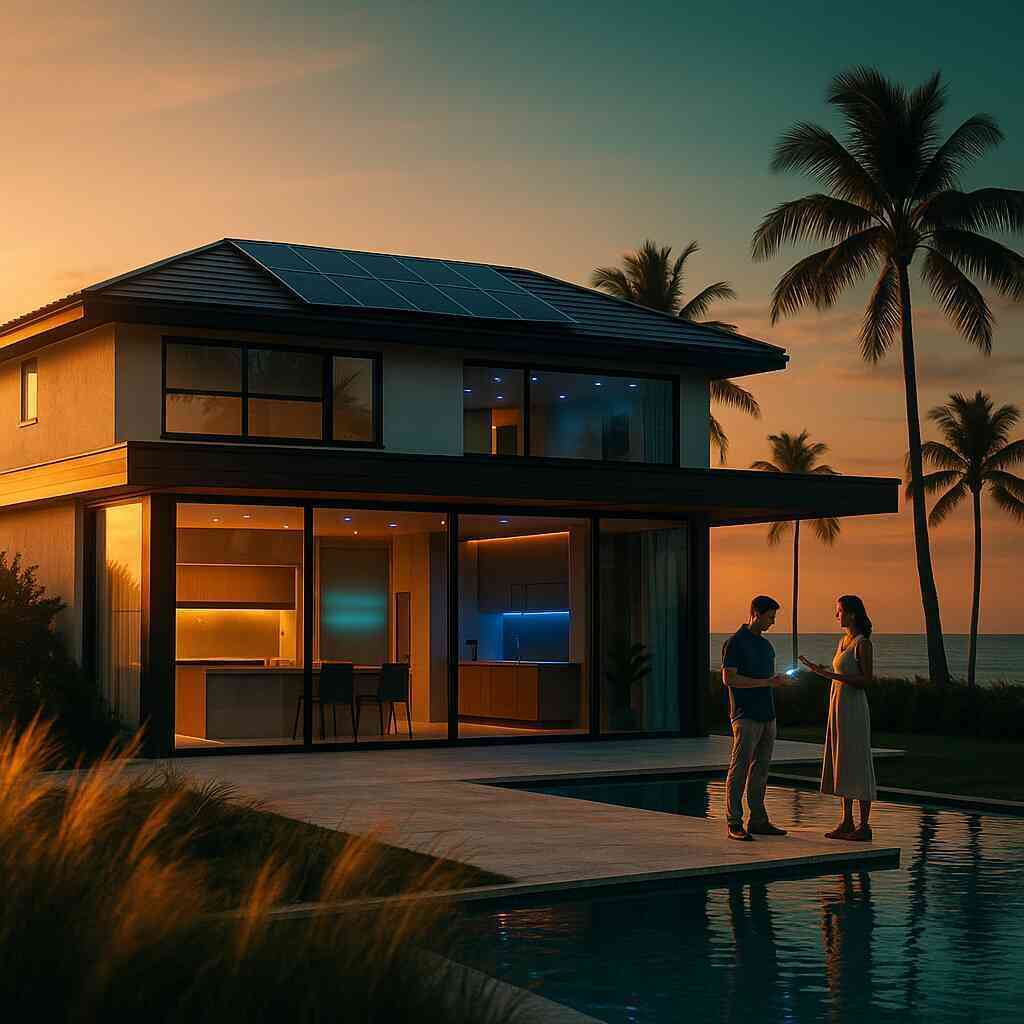
Bringing Smart Home Comfort to Delray Beach
Delray Beach smart home remodeling is no longer a futuristic talking point—it is a practical way to blend coastal-casual living with dependable technology. This guide explains why a thoughtful automation retrofit matters, how to plan budgets and timelines, and which infrastructure choices keep a South Florida residence relevant for years to come.
Why Retrofit During a Renovation?
Older properties along the Atlantic were designed long before cloud backups, streaming platforms, and EV chargers. Adding automation while walls are already open lets a contractor:
- Install structured cabling without extra demolition.
- Hide sensors, speakers, and hubs so décor stays uncluttered.
- Upgrade safety with discreet surveillance, leak detection, and smart locks.
- Raise property value by marketing a ready-made connected lifestyle.
Residents gain everyday conveniences—such as voice-controlled lighting, predictive climate control, and remote monitoring—while preserving the character of a charming beach cottage or Mediterranean revival home.
Balancing Lifestyle Goals With Technical Reality
A successful smart home feels almost invisible. Start by mapping real routines rather than copying generic “good morning” scenes. A discovery meeting often covers:
- Morning rush: open shades gradually, raise AC a few degrees, and cue news audio only in the kitchen.
- Beach day return: trigger a sanitation cycle on touchless faucets, power up outdoor fans, and illuminate the entry path when a geofence detects an approaching phone.
- Entertaining night: pre-chill the wine fridge, set landscape lighting to subtle amber, and stream playlists outdoors—all from one button.
Discuss these scenarios with both the general contractor and the integration specialist early. When everyone understands the experience goal, trim carpenters can conceal speakers, designers can select switch plates that match fixtures, and electricians can dedicate circuits for amplifiers or racks.
Setting a Realistic Budget and Timeline
Smart components add layers of engineering, sourcing, and programming. A clear scope typically breaks down into three cost blocks:
- Infrastructure – low-voltage wiring, conduits, network cabinet, and UPS.
- Hardware – sensors, controllers, smart appliances, and motorized shades.
- Labor & Commissioning – device installation, software setup, and on-site testing.
Phasing can soften costs. For example, run fiber and Cat6A everywhere now, install core devices (network, climate, lighting), and leave pre-wired points for future outdoor audio or solar monitoring. Always include a five-to-ten-percent contingency for firmware delays or swapped parts.
Timelines shift once firmware updates and certification visits enter the mix. Many integrators create a stand-alone “technology schedule” that slots between drywall inspection and final paint touch-ups. Typical milestones:
- Rough-in cabling complete
- Trim-out plates and bracket install
- Rack build and network activation
- Device pairing and scene programming
- Client walk-through and handover
Padding each step prevents a scramble when a back-ordered thermostat arrives two weeks late.
Future-Proof Cabling Basics for South Florida Homes
Salt air, humidity, and the occasional tropical storm demand robust materials. Consider these best practices:
- Cable grade: Shielded Cat6A handles 10-gig traffic and resists interference from pool pumps or elevator motors. Multimode fiber offers headroom for decades.
- Conduit choice: Schedule-80 PVC or ENT in exterior walls protects against corrosion. Inside, leave pull strings in conduits for upgrades.
- Labeling: Heat-shrink numbers at both ends tie into a master panel legend, saving hours during service calls.
- Slack loops: Extra length in accessible attic bays allows expansion for rooftop solar inverters or satellite dishes.
- Power over Ethernet (PoE): Running a single cable that delivers both data and low-voltage power simplifies cameras, touch screens, and occupancy sensors.
Network Reliability Is Non-Negotiable
A gorgeous renovation can feel frustrating if devices drop offline during a summer thunderstorm. Integrators now treat WiFi the way builders treat plumbing: as a central utility. A typical architecture includes:
- Dual-WAN modem with automatic failover
- Rack-mounted firewall and managed switch stack
- Ceiling-mounted WiFi 6 or WiFi 6E access points placed by heat-map, not guesswork
- Whole-home battery-backed UPS protecting gateways and critical controllers
Testing signal strength before furniture arrives avoids dead zones behind concrete block or metallic wallcoverings.
Choosing Devices That Survive Coastal Conditions
Not every gadget survives salt spray and high heat. Look for:
- Corrosion-resistant outdoor cameras rated IP66-plus
- Motors with sealed bearings for salt-laden breezes
- Touch panels featuring conformal-coated boards
- Thermostats with humidity sensors capable of dehumidification calls
Indoors, prioritize open standards such as Matter, Zigbee, or Z-Wave for flexibility if a vendor exits the market. Voice assistants—whether built into the rack or distributed in room speakers—should default to local processing for privacy and quick response.
Coordination With Designers and Craftspeople
Technology should enhance, not distract. Early collaboration allows:
- Millworkers to hide amplifier racks behind ventilated panels.
- Tile installers to recess waterproof speakers in a steam shower.
- Landscapers to integrate low-glare path lights with motion sensors.
Aesthetic mock-ups during the design phase help homeowners visualize how a Lutron keypad matches brass hardware or how a black-glass touch panel complements quartz countertops.
Maintenance and Long-Term Support
Even the best systems need updates. Build a care plan that includes:
- Quarterly remote firmware checks
- Annual site visits to clean filters, test battery backups, and review scene tweaks
- Secure cloud monitoring that alerts the integrator before a device fully fails
Proactive service keeps the experience smooth and shields homeowners from the dreaded “please reboot” routine.
Key Takeaways
- Retrofits during remodeling combine convenience with minimal disruption.
- Clear goals, a phased budget, and a realistic timeline ensure success.
- Robust cabling and a rock-solid network form the backbone of every feature.
- Device choices and placement must respect Delray’s coastal environment.
- Ongoing maintenance preserves both comfort and investment value.
Smart home integration is most satisfying when it blends into the background—ready to lower shades against the afternoon glare or cool the house before guests arrive, all while letting the ocean breeze and relaxed Delray Beach vibe take center stage.
Review Delray Beach Remodeling Smart Home Tech Methods


Comments
Post a Comment