Energy-Wise Materials: Delray Builders Elevate Green Homes
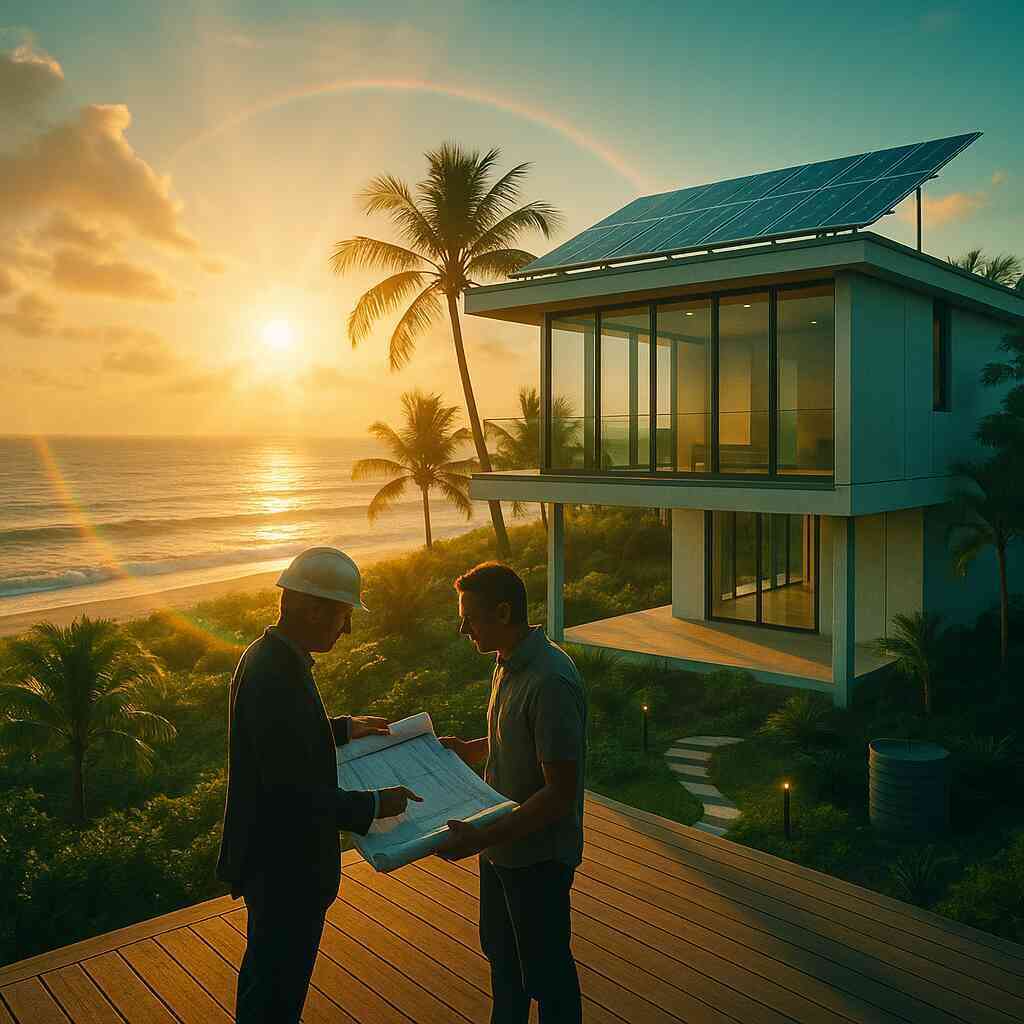
Why Energy-Wise Materials Matter in Delray Beach
Delray Beach sits on a sun-soaked, hurricane-tested coast. Homes here must stay cool through long humid summers, withstand high winds, and keep energy bills predictable. Local custom builder RENOVA has turned those challenges into an opportunity: pair advanced building science with durable, low-impact materials so each residence becomes a comfortable, resilient, and efficient place to live.
This overview unpacks the strategies that make energy-wise construction practical in 2026. It looks at the decision process from site study to finishing trim, showing how thoughtful material choices translate into lower operating costs and higher long-term value.
1. Starting With Climate Data, Not Brochures
RENOVA’s design team opens every project by modeling wind direction, solar angles, and humidity trends. That information drives orientation, window placement, and roof shape before any product is selected. A well-sited structure can cut cooling demand by 15–20 percent without a single high-tech upgrade.
Key steps include:
- Rotating the footprint to capture prevailing breezes for passive ventilation.
- Extending south-facing overhangs to shade glass during peak summer sun.
- Reserving west walls for service areas or storage, reducing afternoon heat gain in living zones.
Once those passive measures are locked in, the team specifies materials that complement, rather than fight, the local climate.
2. The Core Thermal Envelope
Closed-Cell Spray Foam
For coastal conditions, closed-cell spray foam is the workhorse. It stops air leaks, resists wind-driven rain, and adds structural stiffness. Although the upfront cost per square foot is higher than fiberglass, RENOVA’s internal tracking shows the premium paying for itself in roughly five cooling seasons through lower HVAC loads.
Installation details that protect performance:
- Moisture content of framing checked below 15 percent before spraying.
- Foam temperature and pressure monitored digitally to avoid voids.
- Continuous coverage across rim joists and attic slopes to eliminate thermal bridges.
Structural Insulated Panels (SIPs)
Where architectural style allows, the firm swaps conventional framing for SIPs. Factory-laminated foam cores sandwiched between OSB provide R-values of R-26 to R-40 in a wall only 4–6 inches thick. Thinner walls free up interior floor area while keeping the same exterior footprint—an often-overlooked bonus in tight lots near the beach.
3. Durable, Low-Carbon Structure
Recycled Steel Framing
Humidity and termites are relentless in South Florida. Light-gauge recycled steel studs solve both issues and arrive straight, minimizing on-site waste. Because studs are roll-formed to length, offcuts drop by as much as 30 percent versus lumber packages. The embodied carbon of recycled steel is also lower than newly milled wood once longevity is factored in.
Green-Certified Concrete Mixes
Florida code already calls for strong concrete, but RENOVA further reduces Portland cement (the most carbon-intensive ingredient) by substituting fly ash or ground slag. These supplementary materials improve strength and sulfate resistance—critical for salt-air exposure—while dropping CO₂ emissions by up to 40 percent.
4. Smart Systems That Match the Envelope
A tight, well-insulated shell allows smaller mechanical equipment. Engineers run energy-modeling software to size HVAC within a tight 5 percent tolerance. Benefits include:
- Lower upfront equipment cost and reduced electrical service size.
- Longer run cycles that improve dehumidification and indoor comfort.
- Quieter operation because smaller compressors and fans create less noise.
Balanced ventilation completes the package. A dedicated energy-recovery ventilator (ERV) exchanges stale indoor air for fresh outdoor air while capturing conditioned energy that would otherwise be lost.
5. Roofing That Works Harder
Cool roofs are more than white paint. RENOVA specifies multi-layer assemblies:
- High-reflectance membrane reflects up to 0.80 solar radiation.
- Above-deck rigid insulation stops heat before it reaches the attic.
- A vented air gap under the final roof surface drains moisture and further cuts heat gain.
Together, these layers can lower attic temperatures by 30 °F on peak days, boosting overall system efficiency.
6. Windows Built for Glare, Storms, and Savings
Low-emissivity laminated glass has become the standard, but not all coatings are equal. RENOVA selects spectrally selective films that block infrared heat while allowing visible light, keeping interiors bright without the greenhouse effect. Frames use thermally broken aluminum or fiberglass to avoid the warping and swelling common with vinyl in hot climates.
Impact-rated glazing means no secondary shutters, trimming maintenance and preserving clean exterior lines.
7. Financial Incentives and Code Alignment
Florida’s Energy Conservation statutes, municipal rebate programs, and Property Assessed Clean Energy (PACE) financing can defray 10–20 percent of upgrade costs. RENOVA maintains an internal matrix of active incentives so homeowners see real-time payback estimates during design. Aligning with code revisions early also prevents redesign delays, a frequent budget buster when hurricanes prompt mid-cycle rule changes.
8. Renovations: Bringing Older Homes Up to Speed
Existing homes rarely have straight walls or uniform cavities, so RENOVA begins with a blower-door test and infrared scan. This reveals moisture pockets and air leaks before demolition. Selective deconstruction then isolates problem areas so resources go toward performance, not wasteful gutting.
Common retrofit tactics:
- Injecting closed-cell foam into empty CMU block cores.
- Adding a fluid-applied air barrier to the exterior before repainting.
- Replacing attic batt insulation with spray foam applied to the roof deck, turning the attic into a semi-conditioned space and protecting ductwork from 120 °F air.
9. Design Freedom Through Efficiency
A high-performance envelope lets architects stretch creativity. Because the structure already controls heat, moisture, and wind, façades can feature large glass walls, slender overhangs, and clean modern lines without sacrificing comfort or code compliance. Appraisers often document resale premiums tied to verified energy data, not just curb appeal.
Key Takeaways
- Begin with climate-responsive orientation before picking products.
- Invest in a continuous air and thermal barrier; spray foam and SIPs excel along the coast.
- Combine recycled-content steel and low-carbon concrete for longevity and resilience.
- Downsize mechanicals once the envelope is tight; savings compound over time.
- Use up-to-date incentive tables to offset premium materials.
- Detailed audits make energy retrofits surgical instead of sweeping.
Energy-wise materials do more than lower utility bills—they unlock design possibilities and long-term value. Builders in Delray Beach who integrate these principles from the first sketch are delivering homes ready for the heat, the storms, and the market expectations of 2026 and beyond.
Review Energy Wise Materials by Delray Beach Home Builders


Comments
Post a Comment