How 3D Printed Homes Are Reshaping Boynton Beach Renovations
How 3D Printed Homes Are Reshaping Boynton Beach Renovations
Boynton Beach homeowners and contractors are discovering that 3D printed construction is no longer a distant concept — it is an active shift in how coastal homes are built and renovated right now. This overview explores how additive manufacturing fits the South Florida lifestyle, what materials make it work, and why local general contractors are taking it seriously in 2026.
Why 3D Printed Construction Makes Sense on Florida's Coast
The Atlantic coastline demands a lot from any structure. Homes in Boynton Beach face salt air, high humidity, intense heat, and the annual threat of major storms. Traditional masonry handles those pressures reasonably well, but it comes with rigid geometry and lengthy build timelines.
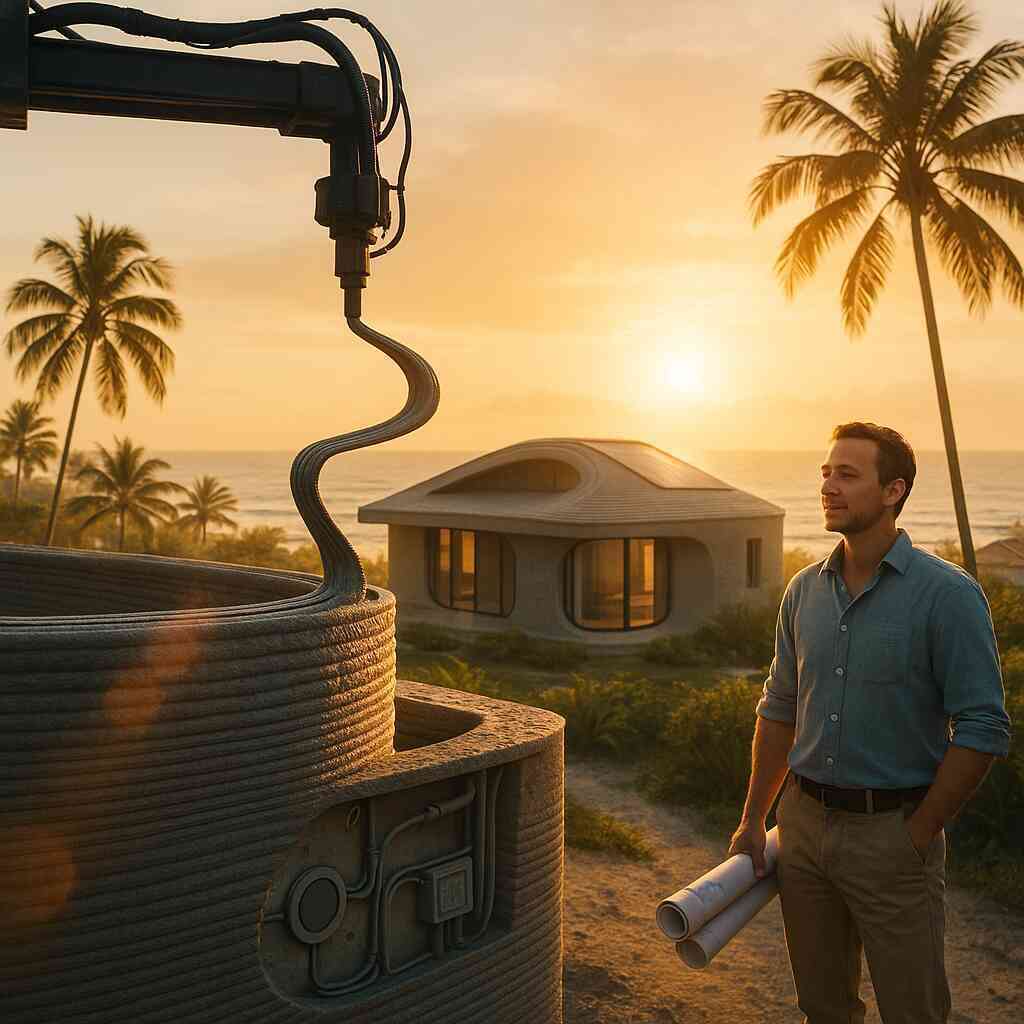
Additive manufacturing changes that equation. Instead of stacking rectangular blocks, a robotic extruder deposits a continuous mix of concrete-based material in precise layers. The result is a wall that can be curved, sculpted, or angled — all while curing faster than conventional pours.
For coastal living, this matters in a few specific ways:
- Storm resilience: Printed structures eliminate many of the mortar joints that can fail under wind pressure.
- Design flexibility: Curved facades, built-in shading overhangs, and arched openings become practical rather than expensive luxuries.
- Faster timelines: Structural walls can be completed in days, letting interior trades begin rough-in work much sooner.
The Materials Behind Sustainable Concrete Printing
Not all concrete mixes are created equal. The printing mixes used in modern additive construction typically blend Portland cement with supplementary materials like fly ash or ground glass pozzolan. These additions serve two purposes: they reduce the carbon footprint of the mix, and they improve how smoothly the material flows through an extruder nozzle.
Once walls are in place, they behave as thermal mass. In South Florida's humid subtropical climate, thick printed walls absorb heat during the day and release it gradually at night. That behavior reduces the workload on air conditioning systems and keeps interiors more comfortable without relying entirely on mechanical cooling.
Some engineers are now incorporating phase-change microcapsules into the mix. These tiny particles store latent heat during temperature peaks and release it during cooler hours, pushing printed homes even closer to passive house performance levels.
For Boynton Beach homeowners focused on energy efficiency and lower utility costs, that combination of thermal mass and eco-friendly additives is a meaningful advantage.
How Local Contractors Are Adapting
General contractors across South Florida have been watching supply-chain volatility affect project schedules for years. Lumber, manufactured goods, and imported fixtures have all caused delays at various points. Printed concrete construction sidesteps many of those risks because the core materials — sand, cement, and recycled aggregates — are largely sourced regionally.
That reliability gives construction management teams a stronger foundation for accurate project timelines. When a homeowner asks when they can move in, a contractor using additive manufacturing can answer with more confidence.
Competitive pressure is also a factor. Contractors in nearby Boca Raton and Delray Beach have already piloted robotic extruder systems on smaller demonstration projects. Boynton Beach renovation firms that develop in-house expertise now rather than waiting will be better positioned to attract clients who want modern, efficient builds.
There is also a workforce angle. Younger tradespeople who grew up comfortable with digital tools tend to find additive manufacturing appealing. Contractors who master this technology early are more likely to recruit and retain that talent.
What This Means for Home Additions and Renovations
Not every project calls for printing an entire structure from scratch. In many cases, additive manufacturing fits neatly into partial renovations and additions.
Robotic gantry systems follow BIM (Building Information Modeling) files to millimeter-level accuracy. That precision allows a printed addition — a new guest suite, an extended lanai, or a second-floor bump-out — to align cleanly with an existing home's footprint. The transition between old and new construction can be nearly seamless.
For bathroom renovations and kitchen expansions, printed walls can incorporate channels and recesses designed around plumbing and electrical rough-ins before the trades even arrive on site. That kind of pre-coordinated construction reduces rework and keeps projects on schedule.
Looking Ahead
3D printed construction is not a replacement for skilled trades or thoughtful design — it is a powerful tool that amplifies both. In a community like Boynton Beach, where the environment demands durable, energy-conscious building and homeowners expect distinctive results, additive manufacturing fits naturally into the next generation of renovation work.
For anyone exploring a major renovation, addition, or custom build in Boynton Beach, understanding what printed construction can offer is a worthwhile starting point before finalizing any plans.
Boynton Beach Renovations on Future-Ready 3D Printed Homes


Comments
Post a Comment