Office Reuse Made Easy by Boca Raton Renovation Experts
Why Boca Raton Offices Are Getting a Second Life
Vacant or under-used office space is no longer viewed as a liability in Boca Raton. With the right renovation strategy, those square feet can become productive, tenant-friendly, and highly profitable again. This guide explains how experienced Boca Raton renovation contractors approach adaptive reuse, what drives the shift toward mixed-use, and the practical steps that owners and asset managers can put in motion today.
From Cubicle Farms to Agile Workplaces
Traditional offices built around dense rows of fixed cubicles do not match the way modern teams operate. Growing firms want:
- Flexible zones that transition from focus work to collaboration in minutes.
- Daylight and biophilic design to promote wellness and retention.
- Technology integration that keeps wires and equipment out of sight.
A renovation contractor starts by mapping current circulation patterns and identifying bottlenecks. Glass demountable partitions, movable walls, and ceiling-mounted wireless power hubs allow quick reconfiguration without downtime. Because the base building stays in place, improvements focus on user experience rather than expensive structural changes.
Market Forces Behind the Shift
Several 2026 trends are pushing Boca Raton property owners toward reuse instead of ground-up construction:
- Tenant Mix Evolution – Tech startups, medical device firms, and boutique financial services all want amenity-rich environments near talent pools.
- Reduced Entitlement Risk – Renovations sidestep the lengthy approvals often required for new builds on undeveloped land.
- Higher Net Operating Income – Converting single-use floors into a blend of office, light retail, and hospitality creates multiple revenue streams that stabilize cash flow.
- Sustainability Mandates – Investors and corporate occupiers track embodied carbon. Reusing an existing structure preserves most of the carbon already locked in concrete and steel.
When those factors converge, an adaptive reuse project can outperform a comparable new development in both time to market and long-term valuation.
Cost and Carbon Advantages
An experienced contractor regularly sees hard-cost savings of up to 30 percent compared with new construction of equal size. Savings typically come from:
- Existing foundations and superstructure that require only localized reinforcement.
- Shorter schedules because selective demolition and phased turnover let parts of the building remain operational.
- Lower financing costs as fewer months of interest accrue before spaces generate rent.
On the environmental side, the embodied carbon locked in the original concrete frame persists. Pair that with high-efficiency HVAC, LED lighting, and water-saving fixtures, and the asset often meets or exceeds corporate ESG targets without premium material upcharges.
Design Moves That Attract Premium Tenants
Boca Raton’s lifestyle appeal sets a high bar for workplace quality. Contractors focus on these design elements to command top lease rates:
1. Daylight Corridors
Knocking out perimeter private offices and replacing them with interior glass lets sunlight penetrate deep into the floorplate. Staff notice the difference immediately in reduced eye strain and elevated mood.
2. Biophilic Touches
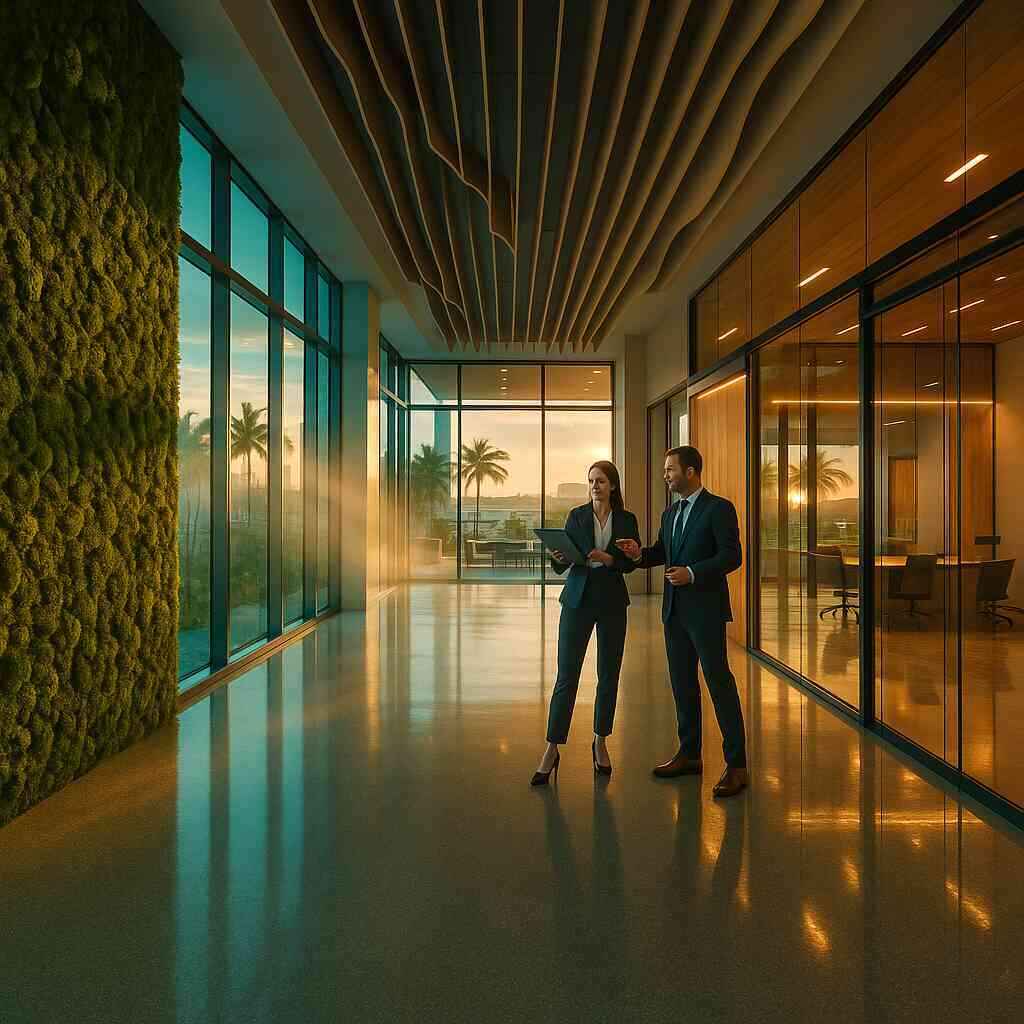
Live moss walls, reclaimed cypress trim, and shaded outdoor terraces blur the line between inside and outside. Studies continue to show lower stress and higher creativity when nature is obvious in the workspace.
3. Integrated Amenities
A small ground-floor café, a tenant-only fitness studio, or a rooftop lounge can be the deciding factor for hybrid employees choosing where to spend their in-office days.
4. Smart-Building Systems
Touch-free entry, real-time occupancy sensors, and mobile room-booking apps help facilities teams keep energy use low while giving staff a seamless experience.
Navigating Palm Beach County Regulations
Changing an office building to mixed-use introduces new code triggers. A contractor well-versed in local rules will address:
- Zoning and parking ratios when adding retail or assembly occupancies.
- Life-safety upgrades such as fire-rated separations, egress travel distances, and standby power for critical systems.
- Accessibility compliance as restrooms or circulation paths shift.
Early coordination with city planners is essential. A preliminary code summary reviewed in the concept phase can prevent redesigns later in the permit set.
The Contractor’s Role in Feasibility
Before design ever reaches 50 percent, a general contractor can offer:
- Reality-based budgeting – Field walks reveal hidden mechanical or structural conditions that affect cost.
- 3-D scans and logistics plans – Digital models identify crane locations, debris routes, and temporary exits to keep existing tenants safe.
- Transparent dashboards – Live schedules, procurement logs, and cost reports reduce surprises and build owner confidence.
- Local supply chain leverage – Established relationships with South Florida millworkers, glazing firms, and specialty trades keep both quality and timelines on track.
Step-by-Step Roadmap
Owners evaluating a reuse opportunity can follow this practical sequence:
- Initial Assessment – Commission a building condition report covering structure, MEP systems, roofs, and façades.
- Market Study – Verify demand for proposed new uses and target rent levels.
- Concept and Budget – Engage an architect and contractor to generate programming diagrams and an order-of-magnitude cost model.
- Regulatory Check – Hold a pre-application meeting with Palm Beach County staff to confirm change-of-use requirements.
- Schematic Design – Develop 3-D blocking plans, energy models, and a phasing strategy if portions of the building stay occupied.
- Guaranteed Pricing – Lock in major trades early to hedge against material volatility.
- Construction and Turnover – Phase the work to release finished areas to tenants as soon as possible, generating revenue months before total completion.
Key Takeaways
- Adaptive reuse can shorten schedule, reduce carbon, and boost NOI compared with building new.
- Flexible interiors, daylight, and biophilic details help differentiate renovated space in a competitive leasing market.
- A contractor experienced in Boca Raton codes, logistics, and supplier networks is critical for a smooth conversion.
Reimagining an existing office tower may feel daunting at first glance, yet with the right team and a data-driven plan, the transformation can be faster and more cost-effective than expected. For owners and asset managers eyeing vacant square footage, 2026 remains an opportune moment to unlock hidden value and meet the evolving expectations of today’s workforce.
Boca Raton Renovation Contractor Guides Local Office Reuse


Comments
Post a Comment