RENOVA's Blueprint for Net-Zero Homes in Palm Springs
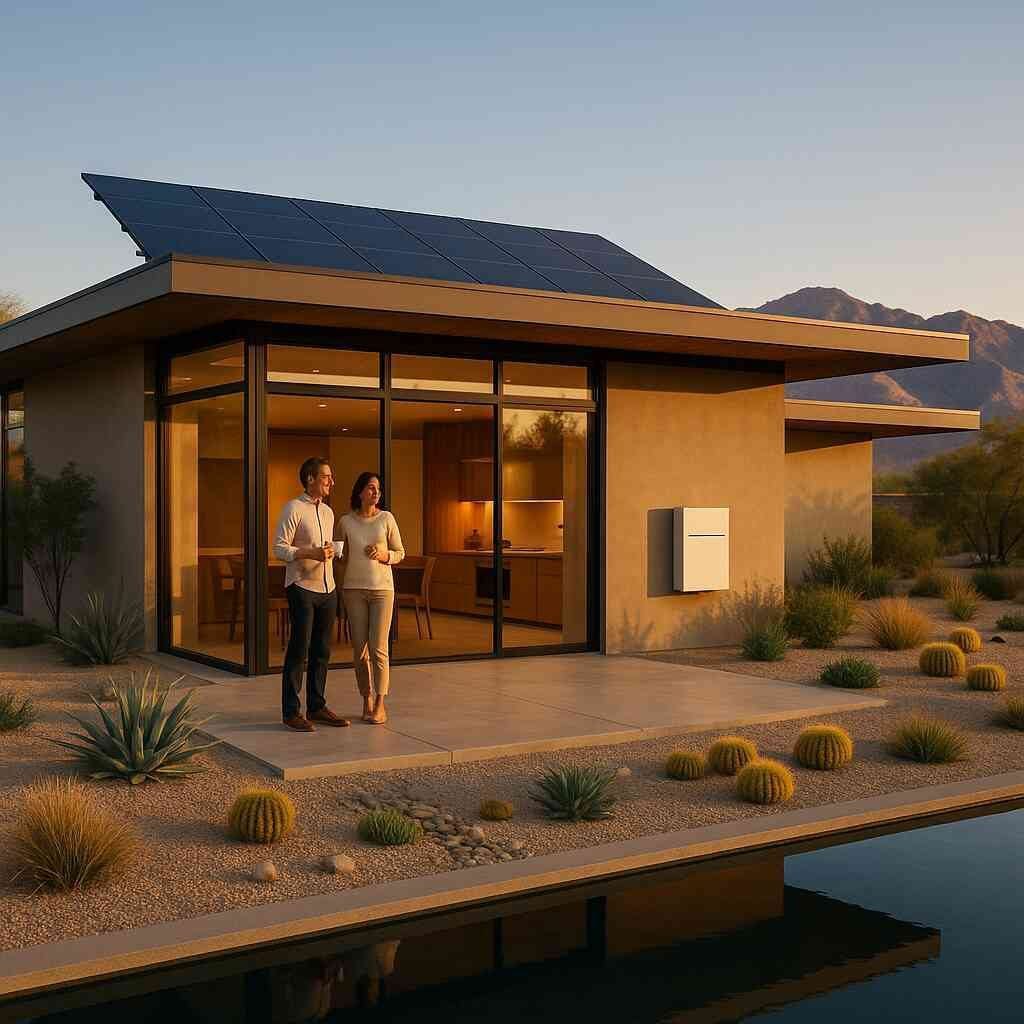
Net-zero homes near Palm Springs combine relentless sunshine with modern desert architecture. This guide explains how RENOVA defines, designs, and builds residences that generate as much energy as they use — and often a little more.
Why Palm Springs Is Ideal for Net-Zero Living
Palm Springs averages more than 300 clear days each year, providing a solar resource that most regions can only envy. Large lots allow new construction to face the optimal directions without shading from neighboring buildings. Even the desert’s dramatic temperature swing is useful: thick walls or interior masonry can absorb daytime heat and release it after sunset, smoothing indoor comfort with minimal mechanical help. Finally, mid-century modern design already favors deep eaves, clerestory windows, and simple rooflines — all features that marry naturally with photovoltaic arrays and passive shading.
RENOVA’s Definition of Net-Zero
RENOVA frames net-zero as a performance promise, not a marketing slogan. A completed residence must meet three benchmarks:
- Annual on-site renewable production ≥ annual on-site consumption, measured in kilowatt-hours.
- Indoor air quality that consistently meets or exceeds ASHRAE 62.2 ventilation guidelines.
- Durability that allows the structure to operate safely during grid interruptions or extreme weather.
Those criteria grew out of years of hurricane-tested construction in South Florida. The same discipline now guides every detail in the desert: meticulous air sealing, right-sized heating and cooling, and electrical rough-ins sized for future battery expansion.
Blending Desert Modern Style With Performance
Mid-century homes emphasize horizontality and glass. RENOVA’s design team preserves that aesthetic while upgrading the envelope:
- Continuous exterior insulation hides behind stucco or cement panels, preserving clean lines.
- Slim thermally broken frames hold low-emissivity glass that blocks infrared heat but maintains the hallmark “indoor-outdoor” feel.
- Flat or single-slope roofs accept flush-mounted solar modules. Parapets conceal inverters and conduits so the array reads as part of the architecture.
Inside, exposed block or polished concrete floors pull double duty as thermal mass, storing solar gain and releasing it overnight. The result is an authentic Palm Springs vibe with thirty-to-sixty-percent lower mechanical loads than a code-minimum build.
Passive Strategies Come First
Before specifying equipment, RENOVA models the building’s geometry in relation to the sun:
- South-facing glazing welcomes low winter rays.
- Overhangs sized by simple trigonometry block the high summer sun.
- Short east and west facades reduce harsh morning and evening heat.
- Clerestory windows placed high on the north wall admit diffuse daylight without raising cooling demand.
A ten-degree rotation during site planning can cut thousands from annual energy costs. By lowering the load at the drawing board, smaller HVAC units and solar arrays later complete the equation with less capital outlay.
Active Systems Seal the Deal
Once the enclosure is optimized, RENOVA layers efficient hardware on top:
- High-efficiency heat-pump HVAC provides both heating and cooling using a fraction of the electricity of conventional split systems.
- An energy-recovery ventilator supplies fresh air while reclaiming conditioned energy that would otherwise be exhausted.
- Rooftop photovoltaic panels paired with lithium-iron-phosphate batteries store midday surplus for evening use. The battery also delivers resilience during utility outages.
- A smart electrical panel monitors circuit-level use, allowing occupants to view real-time performance and fine-tune habits.
Every appliance — from induction cooktop to heat-pump water heater — is selected for its efficiency and compatibility with clean electricity.
Construction Details That Beat the Desert
Temperature swings, sand, and ultraviolet radiation can punish a building. RENOVA addresses each stressor:
- Double-gasketed windows and doors maintain airtightness during high winds or dust events.
- Light-colored cool roofs reflect infrared heat, preserving membrane life and lowering attic temperatures.
- Mineral-based plasters and breathable sealants handle the arid climate without cracking.
- Drip irrigation paired with drought-tolerant landscaping slashes water use while protecting foundations from soil movement.
Documented quality-control checklists cover everything from proper flashing at parapets to the torque specification of solar racking. These measures keep long-term maintenance predictable and costs low.
Is Net-Zero Affordable?
Upfront, high-performance glazing and thicker insulation do add cost. However, Palm Springs’ electricity rates are above the national average, and cooling is a year-round need for many homeowners. When energy bills approach zero, the monthly cash flow often rivals or beats a conventional mortgage-plus-utility scenario. Federal tax incentives for solar and battery systems further shorten payback, while California’s Title 24 compliance requirements already push builders toward many of the same upgrades.
Key Takeaways
- Palm Springs’ climate — abundant sun, dry air, and wide sites — creates a near-perfect setting for net-zero construction.
- RENOVA defines success by measured annual performance, indoor air quality, and resilience, not just theoretical modeling.
- Desert modern architecture and high-performance envelopes are surprisingly compatible; one complements the other.
- Passive solar design shrinks the energy pie, and efficient electric systems let rooftop PV finish the job.
- Thoughtful detailing against sand, UV, and temperature swings preserves the investment for decades.
Designing an energy-positive home in 2026 is less about futuristic gadgets and more about orchestrating proven strategies at the right scale. For builders and homeowners who value comfort, style, and environmental stewardship, RENOVA’s approach shows that the dream of a net-zero desert retreat is both achievable and financially sound.
What Does RENOVA Mean by Net Zero Homes Near Palm Springs


Comments
Post a Comment