Smart Office Retrofits in Boynton Beach: Cost-Wise, Future-Ready
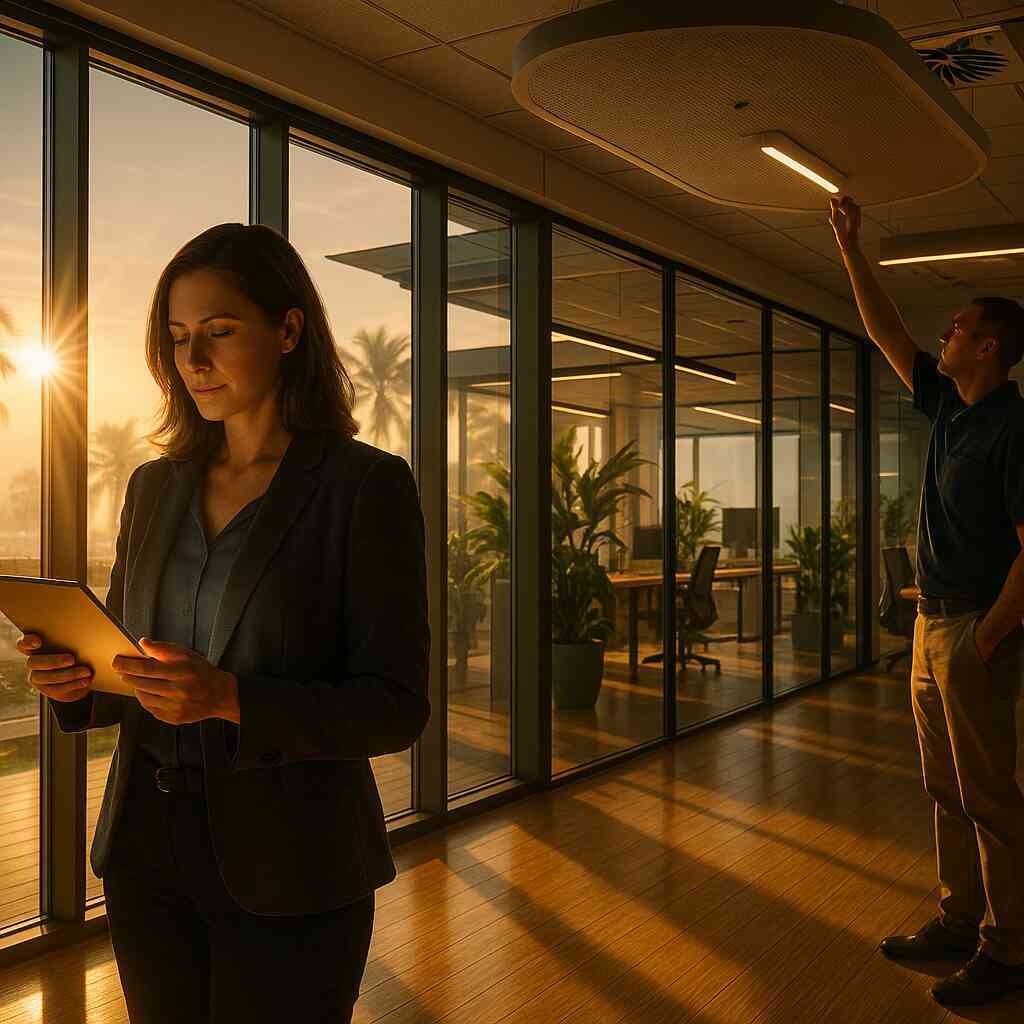
Smart Office Retrofits: Why Updating Beats Rebuilding
Smart office retrofitting—the practice of modernizing an existing workplace instead of building from scratch—has become the preferred strategy for many Boynton Beach companies. This overview explains how a well-planned retrofit protects budgets, accelerates occupancy, and elevates sustainability without sacrificing Florida’s coastal character.
Faster Turnaround Protects Revenue
A ground-up commercial build in Palm Beach County can take 18–24 months once you factor in land preparation, coastal permitting, and supply-chain delays. By contrast, most retrofit projects reopen doors in a fraction of that time because:
- Foundations, utilities, and parking are already in place.
- Permits focus on interior alterations instead of new zoning approvals.
- Selective demolition limits the scope of structural reviews.
Every week shaved off the schedule keeps staff productive and lease income flowing, an advantage that small and midsize enterprises value just as much as large tenants.
Lower Upfront Cost, Predictable Cash Flow
Reusing an existing shell avoids land acquisition, major site work, and thick concrete pours. The budget can instead target high-impact upgrades such as:
- LED lighting tied to daylight sensors.
- Low-voltage cabling that supports hybrid video collaboration.
- Touchless access controls that align with WELL certification goals.
Spending where it matters delivers a space that looks and functions like new, yet it often comes in 20–40 percent below the cost of building new square footage. Ongoing savings then start on day one through lower energy bills and reduced maintenance.
Community Context and Property Value
Boynton Beach’s coastal corridors already boast convenient transit links, walkable amenities, and ocean-influenced breezes. Retrofitting lets businesses keep those locational perks while adding modern interiors, fresh façades, and curb appeal that boosts appraised value. A revitalized building can command higher rents or resale prices because future tenants inherit updated systems rather than dated infrastructure.
The Contractor’s Role in Adaptive Reuse
Converting yesterday’s floor plates into tomorrow’s flexible workplace is not a plug-and-play exercise. A seasoned local contractor must bridge heritage fabric and high-tech ambition. Key competencies include:
- Structural Insight – Understanding how older concrete masonry walls accommodate new penetrations for data runs, additional HVAC, or expanded glazing.
- Systems Integration – Coordinating electricians, low-voltage installers, and mechanical trades so IoT sensors, zoned air handlers, and photovoltaic window films work in unison.
- Supply-Chain Savvy – Leveraging Boynton Beach’s network of regional distributors to shorten lead times for recycled acoustic panels, low-VOC paints, and FSC-certified millwork.
When the contractor speaks both the language of beams and bandwidth, owners avoid change-order spirals and hit performance targets the first time.
Set Benchmarks Before Design Begins
A smart retrofit succeeds by beginning with metrics, not materials. Stakeholders should define:
- Carbon reduction percentage and projected kWh savings.
- WELL or LEED certification level, if any.
- Indoor air quality targets (CO₂, VOCs, humidity).
- Space allocation ratios for focus, collaboration, and social zones.
Those benchmarks steer every downstream choice, from sensor placement to ceiling height adjustments. Clear objectives also make it easier to document eligibility for state and county tax incentives tied to energy efficiency and wellness.
Space Utilization Analytics: Finding Hidden Square Footage
Before the first wall is moved, unobtrusive occupancy sensors track how staff actually use corridors, huddle rooms, and storage closets. Heat-map data often reveals that as much as 30 percent of a typical office sits idle during core hours. Converting those low-traffic areas into:
- Bookable focus pods,
- Modular training rooms, or
- Day-lit touchdown benches
adds usable capacity without leasing additional real estate. Analytics inform the demolition plan so only the square feet that need intervention see a sledgehammer.
Energy and Wellness Upgrades That Pay for Themselves
A retrofit is the ideal moment to splice sustainability and employee wellbeing into the same DNA:
Daylight Harvesting
Ambient light sensors dim LED fixtures when Florida’s abundant sunshine is available. Staff enjoy better circadian cues, and electricity use drops.
High-Efficiency HVAC With Zonal Control
Demand-controlled ventilation adjusts outside air volumes based on real-time CO₂ readings. Separate zones let west-facing conference rooms cool down during afternoon heat without over-conditioning the entire floor.
Biophilic Touches
Living green walls, reclaimed-wood accents, and ocean color palettes reference the local ecosystem and reduce perceived stress.
The combined impact often trims utility bills 20 percent or more while supporting healthier, more engaged teams.
Phased Construction for Operational Continuity
Many Boynton Beach companies cannot vacate their premises for months. A phased retrofit keeps revenue streams alive by isolating work areas sequentially:
- Pre-construction prep – Inventory existing systems, finalize BIM models, and pre-order long-lead gear.
- Swing space setup – Convert a conference room or adjacent suite into a temporary office hub.
- Zone-by-zone build-out – Tackle one quadrant at a time, completing finishes after hours when needed.
- Commissioning and training – Validate sensor calibration and teach facilities staff to manage new dashboards.
A disciplined schedule minimizes downtime and tempers occupant disruption.
Future-Proofing for Technology and Talent
Workplace tech cycles now turn every three to five years. A thoughtful retrofit plans for change by:
- Running extra conduit and cable trays for emerging PoE devices.
- Choosing raised-floor systems that allow easy reconfiguration.
- Installing software-based building controls that update over the air.
When the next generation of collaboration hardware arrives, or when staffing ratios shift, the space adapts with modest capital expense instead of wholesale renovation.
Key Takeaways
- Speed: Retrofitting leverages existing infrastructure to reopen faster than new construction.
- Cost: Lower capital outlay plus energy savings support stronger ROI.
- Sustainability: Reuse limits demolition waste and supports carbon-reduction goals.
- Wellness: Daylight, air quality, and ergonomic planning improve employee satisfaction.
- Resilience: Future-ready wiring paths and flexible layouts guard against obsolescence.
A smart office retrofit is not merely a facelift; it is a strategic investment that pairs coastal charm with modern performance. By combining clear benchmarks, data-driven space planning, and contractor expertise tailored to Boynton Beach’s building stock, local enterprises can secure a workspace that supports both today’s hybrid workflows and tomorrow’s innovations.
Smart Office Retrofit Practices by Boynton Beach Renovations


Comments
Post a Comment