Space-Saving Design Ideas for Delray Beach Custom Homes
Coastal Living on a Compact Footprint
Building near the Atlantic rarely affords large lots. That limitation has turned Delray Beach into a laboratory for compact luxury. Architects working here study breeze patterns, hurricane codes, and neighborhood setbacks before drawing the first line. The result is homes that live far larger than their square footage suggests—without sacrificing the open, airy vibe people move to the coast to enjoy.
This guide walks through ten proven strategies that local custom-home professionals use to unlock every inch. While the examples come from Delray Beach, the principles translate to any tight site where style and function must coexist.
1. Full-Height Built-In Walls
Floor-to-ceiling cabinetry replaces bulky furniture and turns storage into architecture. Continuous vertical grain, touch-latch doors, and integrated LED uplighting pull the eye upward so rooms feel taller. Millwork can be sized to fit between structural columns, hiding shear walls and mechanical chases that hurricane codes require.
Quick Tip
• Specify marine-grade finishes to protect veneers from salty air.
2. Sliding Partition Cores
Instead of fixed hallways, pocket or barn-style panels glide to create privacy on demand. During the day, owners slide everything open for cross-ventilation. At night, the panels close, turning one living zone into two sleeping suites. Because tracks are recessed into the ceiling plane, the floor remains flush and trip-free.
3. Integrated Stair Storage
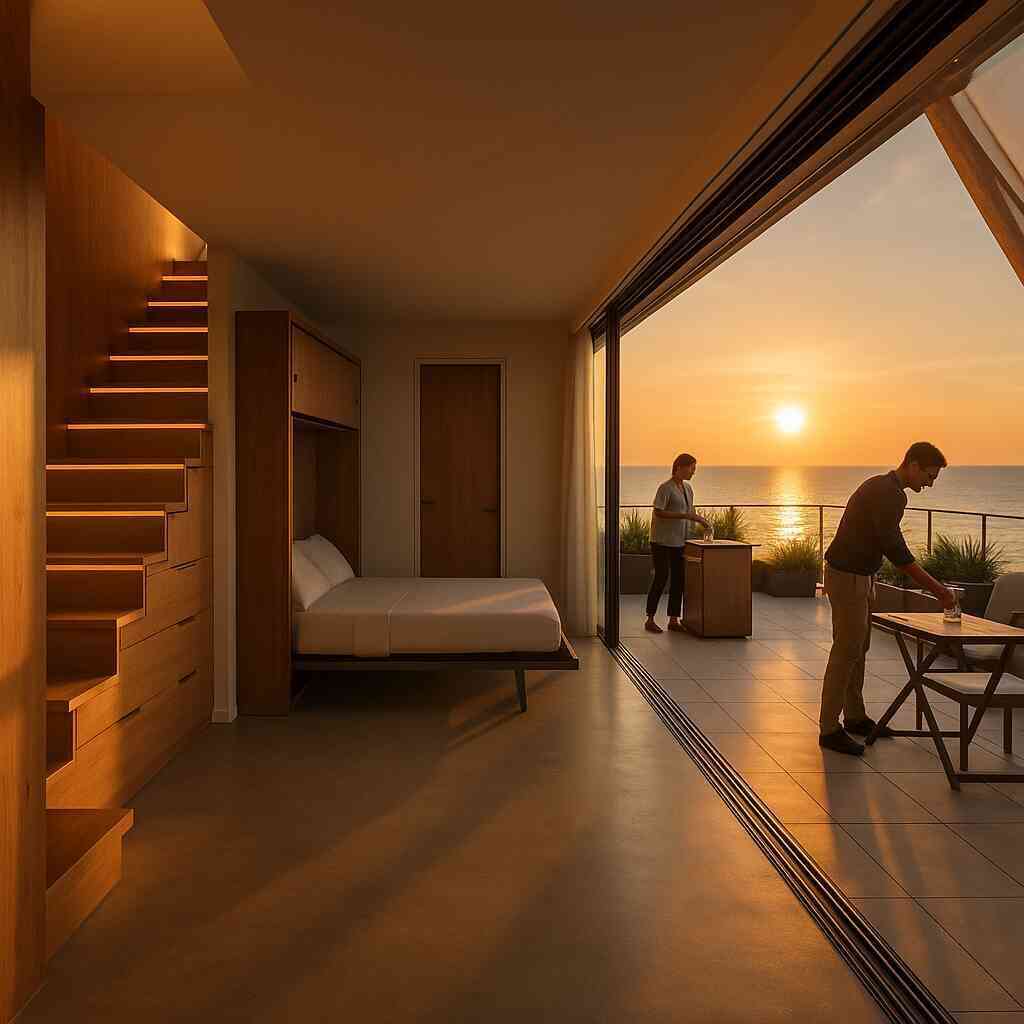
Every riser and stringer can do double duty. Pull-out drawers under each tread stash beach towels; side panels conceal a broom closet. For even greater payoff, a tall wine cabinet or book niche can fill the volume beneath switchback stairs, eliminating the need for a separate cellar or library wall.
4. Multilayer Outdoor Rooms
Lot coverage rules often cap indoor square footage, but covered patios do not always count toward that total. Designers extend roof planes just far enough to create shaded dining zones, outdoor showers, and surfboard lockers. Large sliding doors then blur the line between interior and exterior, so a 1,800-square-foot cottage can entertain like a 2,400-square-foot house.
Quick Tip
• Use impact-rated pocket doors so openings can disappear completely while still passing code.
5. Cantilevered Overhangs for Shade and Storage
A carefully engineered cantilever can protect glazing from intense sun and add dry storage below. Builders often tuck paddleboard racks or generator enclosures into this protected notch, keeping the main floor clear of clutter while maintaining ocean views.
6. Climate-Controlled Hidden Pantries
In humid zones, food storage must stay dry. Concealed pantry rooms lined with antimicrobial quartz and whisper-quiet dehumidifiers slide behind seamless millwork panels. Shallow, pull-out trays prevent forgotten items while stainless toe-kick vents distribute conditioned air evenly.
7. Convertible Furniture Anchored to Structure
Wall-mounted Murphy beds, drop-leaf desks, and fold-flat dining tables save space only if they feel rock-solid. Local craftsmen bolt hardware into the home’s shear walls, ensuring pieces withstand both daily use and tropical storm vibrations. Upholstered wall panels double as acoustic dampers when beds fold away.
8. Mechanical Mezzanines
Where height limits allow, builders slip a lightweight steel loft over kitchens or baths. This mezzanine holds HVAC air handlers and seasonal storage while keeping service runs short. Ladders or alternating-tread stairs minimize the footprint yet satisfy code for equipment access.
Quick Tip
• Paint structural steel the same color as the ceiling to make the mezzanine disappear.
9. Wet-Core Consolidation
Grouping kitchens, baths, and laundries along one plumbing spine saves on pipe runs and frees perimeter walls for windows. In Delray Beach, that spine often doubles as the hurricane-resistant core, thick enough to conceal pocket doors, linen niches, and even a stacked washer-dryer behind flush panels.
10. Tech-Driven Lighting Zones
Good lighting can make a small room feel expansive. Tunable LEDs recessed into coves wash walls evenly, eliminating dark corners. App-based controls let owners adjust scenes for cooking, working, or entertaining without additional lamps. Fewer fixtures mean less visual noise and more free surfaces.
Putting It All Together
The best space-saving homes treat constraints as creative fuel. By merging structural, mechanical, and furniture decisions from day one, Delray Beach teams craft dwellings that live larger, stay resilient in storms, and maintain the breezy optimism of coastal Florida.
Whether you are planning a waterfront cottage or a city pied-à-terre, consider adopting one or two tactics above. Small moves—like full-height millwork or a sliding core—often unlock the greatest sense of freedom inside a compact envelope.
Top 10 Space Saving Tactics from Delray Beach Custom Home


Comments
Post a Comment