Luxury Smart Home Integration for Renovation Projects
Luxury Smart Home Integration for Renovation Projects
Smart home integration for luxury renovations works best when it is planned early. The most elegant homes do not just look refined. They also function smoothly because lighting, climate, security, audio, and network systems are designed together from the start.
In a high-end remodel, technology should support the architecture, not compete with it. That is why smart home decisions belong in the same conversation as floor plans, cabinetry, millwork, and lighting design. When those choices are delayed, the result can be visible devices, awkward wiring paths, or expensive changes after walls are already closed.
1. Centralized lighting control
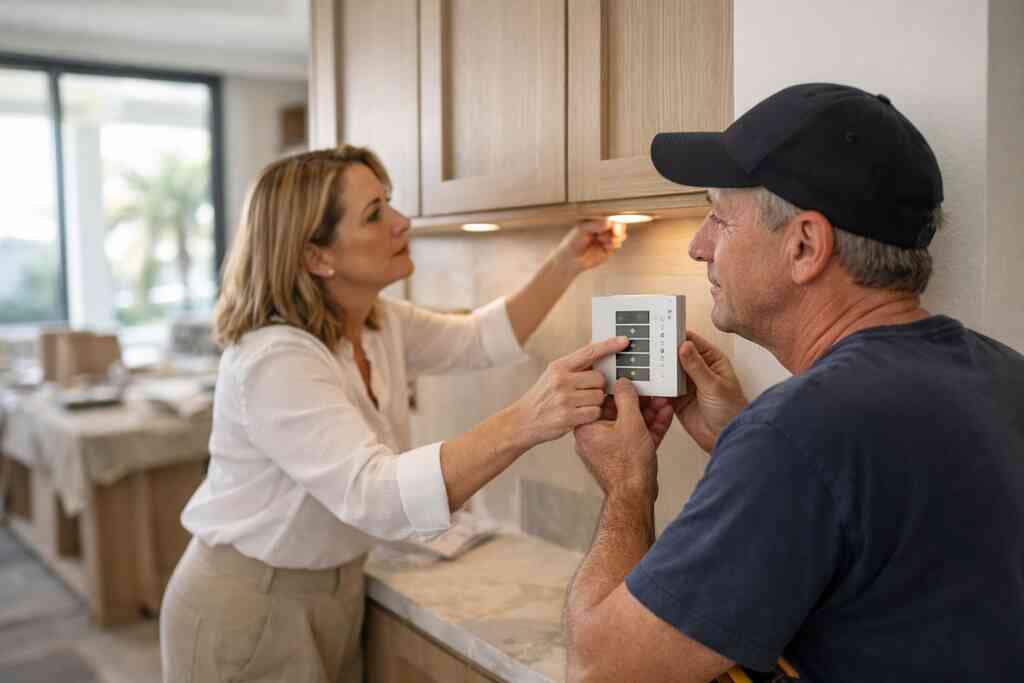
Lighting is one of the most important smart features in a luxury home. A well-planned lighting control system lets you manage many fixtures from a few simple interfaces. It also helps create layers of light for different times of day and different uses.
Good lighting control can include:
- Dimming for living spaces, kitchens, and bedrooms
- Scene settings for entertaining, reading, or winding down
- Consistent control across the entire home
- Cleaner wall plates with fewer switches
This feature matters because lighting affects both comfort and design. It also helps preserve the clean look that luxury renovations aim to achieve.
2. Automated shades and window treatments
Motorized shades are a natural fit in upscale homes. They improve privacy, reduce glare, and help manage heat gain, which is especially useful in sunny climates. They also create a more polished finish than manual treatments in rooms with tall windows or hard-to-reach glass.
Shades can be programmed to move at certain times of day or respond to light levels. In practice, that means less effort and more consistency. They also support the overall design by keeping window treatments neat and uniform.
3. Climate control with zoning
Luxury renovations often include advanced HVAC planning. Smart thermostats are useful, but zoning is what gives a home real comfort. Zoning allows different areas of the house to maintain different temperatures based on how the space is used.
This is especially valuable in larger homes, multi-level layouts, and additions. It can also help reduce energy waste when spaces are not in use. A strong plan should coordinate thermostat placement, supply runs, and control locations early in the renovation process.
4. Whole home audio
Music and sound systems are another feature that should be built into the design, not added at the end. Whole home audio can provide consistent sound in main living areas, outdoor spaces, and private rooms without cluttering the space with visible equipment.
A good system should consider:
- Speaker placement
- Acoustic conditions in each room
- Hidden equipment storage
- Easy control from phones, tablets, or wall panels
When audio is planned properly, it supports the atmosphere of the home without taking visual attention away from the finishes.
5. Smart security and access control
Security is a major part of smart home integration, but in luxury renovations it should also be discreet. Homeowners often want secure entry points, camera coverage, and remote monitoring without making the home feel like a facility.
Access control can include smart locks, doorbell systems, entry codes, and monitored cameras. The key is placement. Devices should be positioned where they are effective, but also where they do not disrupt curb appeal or interior design.
6. Structured network and Wi-Fi planning
A luxury smart home depends on a reliable network. Without strong connectivity, even the best devices can feel frustrating. That is why structured wiring and Wi-Fi planning matter so much during renovation.
This includes:
- Network equipment in a planned location
- Hardwired connections where possible
- Strong Wi-Fi coverage across the entire property
- Support for current and future devices
Many homeowners do not think about the network until the home is nearly complete. By then, the options may be more limited. Planning early makes the system more stable and easier to expand later.
7. Integrated entertainment spaces
Media rooms, family rooms, and outdoor lounges often benefit from integrated entertainment systems. These can combine television, surround sound, streaming, and control into one streamlined setup.
The best entertainment spaces feel simple to use. One button should turn on the right lights, activate the display, and set the sound level. That kind of experience comes from early coordination between design, electrical work, and low-voltage planning.
8. Energy and water monitoring
Smart home features are not only about convenience. They can also help with awareness and protection. Energy monitoring can show how systems are performing, while water leak detection can alert homeowners to hidden issues before they become major repairs.
In a luxury renovation, these systems are especially useful in kitchens, laundry rooms, mechanical spaces, and areas with plumbing below finished surfaces. They add peace of mind without changing the look of the home.
Why early planning matters most
The biggest mistake in a luxury remodel is treating smart home integration as a finishing touch. By the time fixtures are selected and drywall is installed, many of the best choices are harder to make.
Early planning helps with:
- Cleaner wiring paths
- Better equipment placement
- Fewer change orders
- A more cohesive final design
- Easier long-term maintenance
It also helps the renovation team coordinate electrical work, cabinetry, lighting, and technology in the right order. That coordination is what keeps the project efficient and the finished home polished.
A practical takeaway for homeowners
If you are planning a high-end renovation, start with function first and devices second. Ask how the home should feel and operate in daily life. Then build the system around those goals.
A strong smart home plan should be:
- Simple to use
- Visually discreet
- Flexible for future upgrades
- Designed around the architecture
- Aligned with the construction schedule
Luxury renovation is not only about beautiful finishes. It is also about how well the home works once the project is complete. When smart home integration is part of the design-build process from the beginning, the result is calmer, cleaner, and far more enjoyable to live in.
Top 8 Smart Home Integration Features for Luxury Renovations


Comments
Post a Comment