6 Smart Home Integration Upgrades for Custom Homes
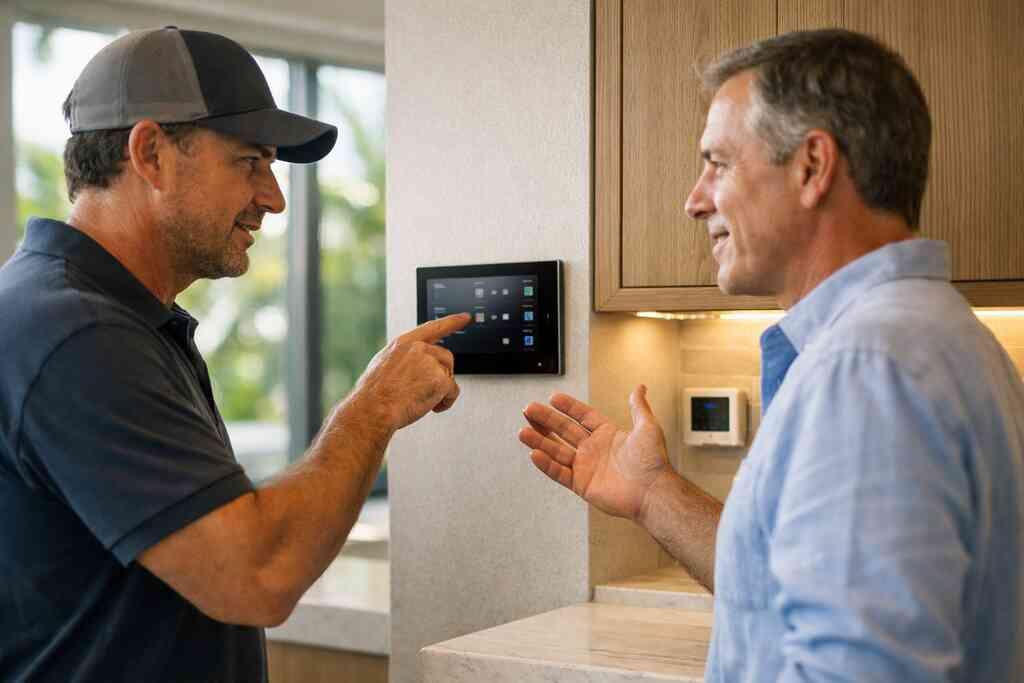
6 Smart Home Integration Upgrades for Custom Homes in 2026
Smart home integration for custom homes works best when it is planned early and built into the structure of the house. In 2026, the most successful upgrades are not just about devices. They are about the wiring, networking, control systems, and layout decisions that make the technology feel invisible and reliable.
If you are planning a new custom home or a major renovation, these are the upgrades that deserve attention before the walls are closed up. They can improve comfort, security, energy use, and day-to-day convenience without making the home feel overly complicated.
1. Hidden backbone wiring and structured cabling
The most important smart home upgrade is the one you do not see. Prewiring and structured cabling create the backbone for everything else. This includes data lines, speaker wire, camera wiring, control wiring, and pathways for future expansion.
When this is planned early, the home can support new systems later without cutting into finished walls. That matters in custom homes because technology changes fast. A solid wiring plan gives you more flexibility for future lighting controls, security systems, entertainment systems, and office equipment.
A good backbone also supports cleaner design. Instead of visible cords, bulky adapters, and awkward retrofits, the technology can be integrated into the architecture from the start.
2. Whole-home networking and strong Wi-Fi coverage
A luxury home needs more than a single router in a central hallway. Whole-home networking is now a basic requirement for dependable smart home performance. This includes mesh Wi-Fi, strategically placed access points, and network planning that accounts for square footage, wall materials, and outdoor spaces.
Reliable networking supports:
- Streaming and media rooms
- Home offices and remote work
- Security cameras and smart locks
- Lighting and shading controls
- Guest houses, pool areas, and additions
Without strong coverage, even high-end smart systems can feel frustrating. Delays, dropped connections, and dead zones quickly undermine the value of the investment. For custom homes, the network should be treated like essential infrastructure, not an afterthought.
3. Voice-controlled lighting with scene-based control
Lighting has one of the biggest effects on how a home feels. Voice-controlled lighting makes everyday tasks easier, but the real value comes from scene-based control. That means you can set lighting for cooking, entertaining, reading, relaxing, or winding down at night.
Good lighting design usually includes three layers:
- Ambient lighting for overall brightness
- Task lighting for specific activities
- Accent lighting to highlight architectural features
In a custom home, this approach helps finishes look better and spaces feel more polished. It is especially useful in kitchens, bathrooms, living rooms, and outdoor areas. Automated dimming and preset scenes can also reduce energy use while improving comfort.
4. Automated shading and daylight control
Automated shades are one of the most practical upgrades for a modern custom home. They help manage glare, protect furnishings, improve privacy, and keep indoor temperatures more stable.
This is especially useful in sunny climates, where direct light can make rooms too warm or wash out screens and finishes. Shading can be programmed by time of day, sun position, or room use. For example, you might want morning light in a breakfast area and glare reduction in a media room.
When shading is coordinated with lighting, the home feels more complete. The two systems work together instead of competing with each other. That creates a smoother experience and a more refined result.
5. Integrated security, entry, and surveillance systems
Smart security has become one of the most expected features in new custom homes. The goal is not just alarms. It is a coordinated system that connects access control, cameras, door sensors, motion detection, and remote monitoring.
An integrated system can make everyday life easier. You can see who is at the door, check whether the garage is closed, or confirm that the home is secure while away. It can also reduce clutter by limiting the need for separate apps and disconnected equipment.
The best security planning happens alongside architectural design. Camera angles, door hardware, and entry points should be considered early so the system feels seamless and effective. Privacy and placement matter as much as features.
6. Smart audio and entertainment systems built into the design
Whole-home audio and home theater planning are much easier when they are integrated from the beginning. Built-in speakers, hidden wiring, and dedicated equipment spaces allow the system to perform better and look cleaner.
This upgrade is about more than entertainment. Music in the kitchen, patio, or primary suite can make the home feel more livable. A well-planned media room or theater can also create a strong centerpiece for family time and entertaining.
In a custom home, it is worth thinking about:
- Speaker placement
- Equipment storage
- Acoustic treatment
- Control locations
- Power and ventilation for components
When audio and video systems are designed with the home rather than added on later, the result is more reliable and much easier to use.
Planning these upgrades the right way
The biggest mistake homeowners make is choosing devices before planning the system. Smart home integration works best when electrical, networking, lighting, shading, security, and entertainment decisions are coordinated early.
A well-planned system should do three things:
- Blend into the home’s design
- Work reliably every day
- Leave room for future updates
That is why collaboration matters during design and construction. When the team plans for low-voltage wiring, device placement, and system compatibility from the start, the home is easier to use and easier to maintain.
Final thoughts
The smartest custom homes in 2026 are not defined by how many gadgets they include. They are defined by how well the systems work together. Hidden wiring, strong networking, thoughtful lighting, automated shading, integrated security, and built-in audio all contribute to a home that feels comfortable, modern, and practical.
If you are evaluating smart home integration for a custom build or renovation, start with the backbone first. The visible technology can only perform well when the foundation behind it is planned with care.
Top 6 Smart Home Integration Upgrades for 2026 Custom Homes


Comments
Post a Comment